


 Cart
Cart
 sales@molnova.com


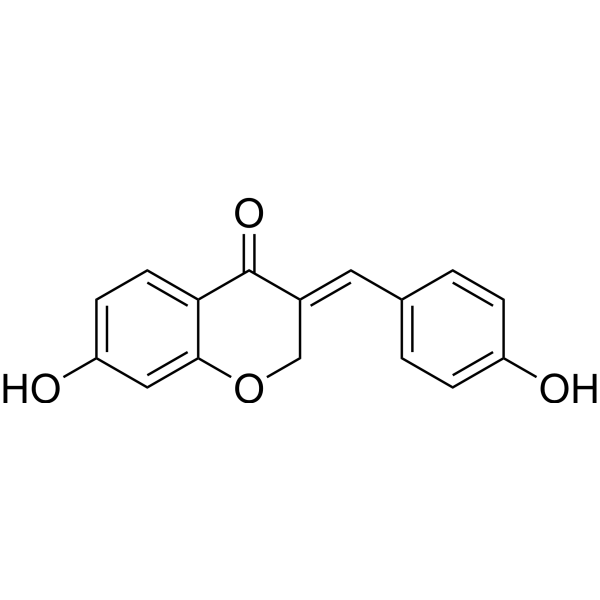
7-Hydroxy-3-(4-hydroxybenzylidene)chroman-4-one
CAS No. 110064-50-1
7-Hydroxy-3-(4-hydroxybenzylidene)chroman-4-one( —— )
Catalog No. M30845 CAS No. 110064-50-1
7-Hydroxy-3-(4'-hydroxybenzylidene)-chroman-4-one may have anti-inflammatory activity.
Purity : >98% (HPLC)
 COA
Datasheet
HNMR
HPLC
MSDS
Handing Instructions
COA
Datasheet
HNMR
HPLC
MSDS
Handing Instructions
| Size | Price / USD | Stock | Quantity |
| 5MG | 1483 | In Stock |


|
| 50MG | Get Quote | In Stock |
|
| 100MG | Get Quote | In Stock |
|
| 200MG | Get Quote | In Stock |
|
| 500MG | Get Quote | In Stock |
|
| 1G | Get Quote | In Stock |
|
Biological Information
-
Product Name7-Hydroxy-3-(4-hydroxybenzylidene)chroman-4-one
-
NoteResearch use only, not for human use.
-
Brief Description7-Hydroxy-3-(4'-hydroxybenzylidene)-chroman-4-one may have anti-inflammatory activity.
-
Description7-Hydroxy-3-(4'-hydroxybenzylidene)-chroman-4-one may have anti-inflammatory activity.
-
In Vitro——
-
In Vivo——
-
Synonyms——
-
PathwayOthers
-
TargetOther Targets
-
Recptor——
-
Research Area——
-
Indication——
Chemical Information
-
CAS Number110064-50-1
-
Formula Weight268.3
-
Molecular FormulaC16H12O4
-
Purity>98% (HPLC)
-
Solubility——
-
SMILES——
-
Chemical Name——
Shipping & Storage Information
-
Storage(-20℃)
-
ShippingWith Ice Pack
-
Stability≥ 2 years
Reference
molnova catalog



related products
-
Demethyleneberberine...
Demethyleneberberine chloride is a natural mitochondria-targeted antioxidant. Demethyleneberberine chloride alleviates mice colitis and inhibits the inflammatory responses by inhibiting NF-κB pathway and regulating the balance of Th cells. Demethyleneberberine chloride could serve as a AMPK activator for researching non-alcoholic fatty liver disease (NAFLD).
-
γ-TAC4 (30 - 61) - N...
γ-TAC4 (30 - 61) - NH2
-
Soyasapogenol D
Soyasapogenol D is a natural product.
