


 Cart
Cart
 sales@molnova.com


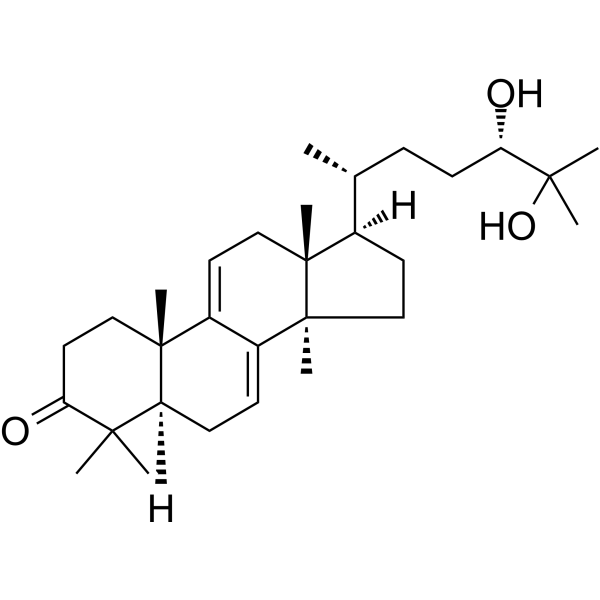
Ganodermanondiol
CAS No. 107900-76-5
Ganodermanondiol( —— )
Catalog No. M30844 CAS No. 107900-76-5
Ganodermanondiol exhibits potent cytoprotective effects on t-BHP-induced hepatotoxicity in human liver-derived HepG2 cells, presumably through Nrf2-mediated antioxidant enzymes and AMPK.
Purity : >98% (HPLC)
 COA
Datasheet
HNMR
HPLC
MSDS
Handing Instructions
COA
Datasheet
HNMR
HPLC
MSDS
Handing Instructions
| Size | Price / USD | Stock | Quantity |
| 5MG | 506 | In Stock |


|
| 10MG | 720 | In Stock |
|
| 100MG | Get Quote | In Stock |
|
| 200MG | Get Quote | In Stock |
|
| 500MG | Get Quote | In Stock |
|
| 1G | Get Quote | In Stock |
|
Biological Information
-
Product NameGanodermanondiol
-
NoteResearch use only, not for human use.
-
Brief DescriptionGanodermanondiol exhibits potent cytoprotective effects on t-BHP-induced hepatotoxicity in human liver-derived HepG2 cells, presumably through Nrf2-mediated antioxidant enzymes and AMPK.
-
DescriptionGanodermanondiol exhibits potent cytoprotective effects on t-BHP-induced hepatotoxicity in human liver-derived HepG2 cells, presumably through Nrf2-mediated antioxidant enzymes and AMPK.
-
In Vitro——
-
In Vivo——
-
Synonyms——
-
PathwayOthers
-
TargetOther Targets
-
Recptor——
-
Research Area——
-
Indication——
Chemical Information
-
CAS Number107900-76-5
-
Formula Weight456.7
-
Molecular FormulaC30H48O3
-
Purity>98% (HPLC)
-
Solubility——
-
SMILES——
-
Chemical Name——
Shipping & Storage Information
-
Storage(-20℃)
-
ShippingWith Ice Pack
-
Stability≥ 2 years
Reference
molnova catalog



related products
-
4-Hydroxybenzoyl cho...
4-Hydroxybenzoyl choline is a natural product for research related to life sciences.
-
Mepiquat Chloride
Mepiquat chloride (N,N-Dimethylpiperidinium chloride; PIX) is a potent plant growth regulator. Mepiquat chloride decreases plant height.
-
Inotuzumab
Inotuzumab (Humanized Anti-CD22 Recombinant Antibody) is a humanized IgG4 antibody targeting CD22.
