


 Cart
Cart
 sales@molnova.com


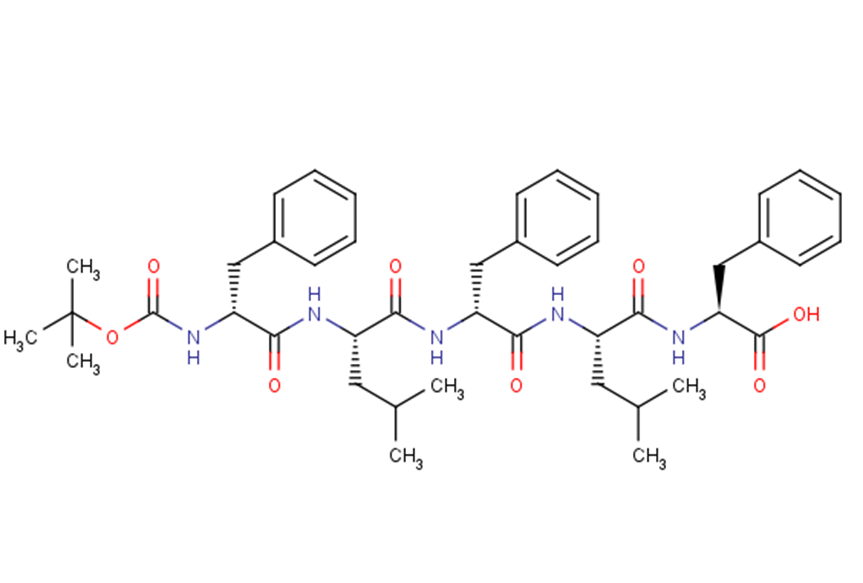
N-Boc-Phe-Leu-Phe-Leu-Phe
CAS No. 148182-34-7
N-Boc-Phe-Leu-Phe-Leu-Phe( —— )
Catalog No. M29911 CAS No. 148182-34-7
N-Boc-Phe-Leu-Phe-Leu-Phe (Boc-FLFLF) is a formyl peptide receptor 1 (FPR1) antagonist, which increases pain effects and inhibits antinociceptive activity of annexin. Boc-Phe-Leu-Phe-Leu-Phe is used extensively in FPR research.
Purity : >98% (HPLC)
 COA
Datasheet
HNMR
HPLC
MSDS
Handing Instructions
COA
Datasheet
HNMR
HPLC
MSDS
Handing Instructions
| Size | Price / USD | Stock | Quantity |
| 2MG | 42 | In Stock |


|
| 5MG | 69 | In Stock |
|
| 10MG | 123 | In Stock |
|
| 25MG | 208 | In Stock |
|
| 50MG | 303 | In Stock |
|
| 100MG | 451 | In Stock |
|
| 200MG | 634 | In Stock |
|
| 500MG | Get Quote | In Stock |
|
| 1G | Get Quote | In Stock |
|
Biological Information
-
Product NameN-Boc-Phe-Leu-Phe-Leu-Phe
-
NoteResearch use only, not for human use.
-
Brief DescriptionN-Boc-Phe-Leu-Phe-Leu-Phe (Boc-FLFLF) is a formyl peptide receptor 1 (FPR1) antagonist, which increases pain effects and inhibits antinociceptive activity of annexin. Boc-Phe-Leu-Phe-Leu-Phe is used extensively in FPR research.
-
DescriptionN-Boc-Phe-Leu-Phe-Leu-Phe (Boc-FLFLF) is a formyl peptide receptor 1 (FPR1) antagonist, which increases pain effects and inhibits antinociceptive activity of annexin. Boc-Phe-Leu-Phe-Leu-Phe is used extensively in FPR research.
-
In Vitro——
-
In Vivo——
-
Synonyms——
-
PathwayOthers
-
TargetOther Targets
-
RecptorFPR1
-
Research Area——
-
Indication——
Chemical Information
-
CAS Number148182-34-7
-
Formula Weight785.97
-
Molecular FormulaC44H59N5O8
-
Purity>98% (HPLC)
-
SolubilityIn Vitro:?DMSO : 100 mg/mL (127.23 mM)
-
SMILES——
-
Chemical Name——
Shipping & Storage Information
-
Storage(-20℃)
-
ShippingWith Ice Pack
-
Stability≥ 2 years
Reference
molnova catalog



related products
-
6-Methoxyeriodictyol...
5,7,3',4'-Tetrahydroxy-6-methoxyflavanone-7-glucoside (compound4) can be isolated from the Salvia plebeia R.Br.
-
Steviol-?19-?O-?gluc...
Steviol-?19-?O-?glucoside is a natural product from the steviol glycosides biosynthesis pathway in Stevia rebuadiana.
-
[Asp371]-Tyrosinase ...
Tyrosinase (369-377,YMDGTMSQV) is derived from the membrane protein tyrosinase by posttranslational conversion of the sequence YMNGTMSQV. Presentation of YMDGTMSQV in cells expressing full-length tyrosinase is TAP-(transporter associated with antigen processing) and proteosome-dependent.
