


 Cart
Cart
 sales@molnova.com


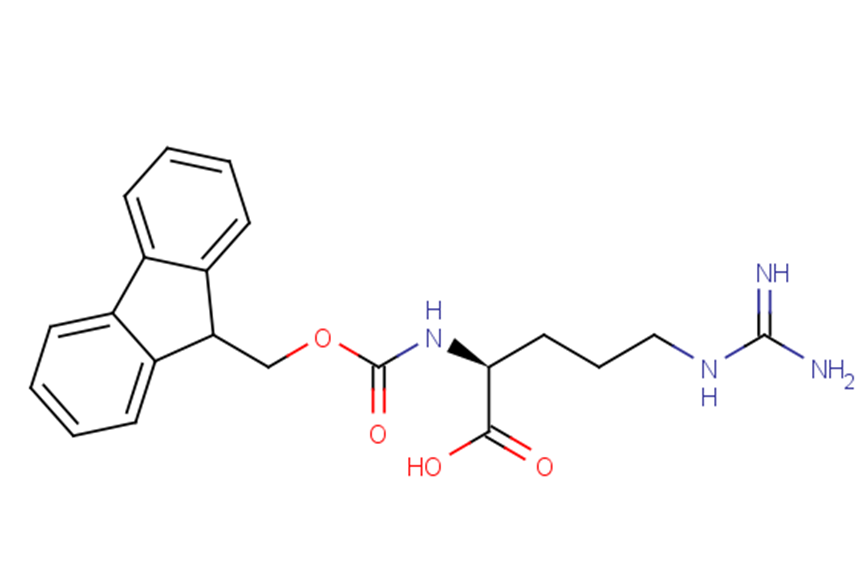
Fmoc-Arg-OH
CAS No. 91000-69-0
Fmoc-Arg-OH( —— )
Catalog No. M29866 CAS No. 91000-69-0
Fmoc-Arg-OH (Fmoc-L-Arginine), an Fmoc modified Arginine, is a used in peptide synthesis.
Purity : >98% (HPLC)
 COA
Datasheet
HNMR
HPLC
MSDS
Handing Instructions
COA
Datasheet
HNMR
HPLC
MSDS
Handing Instructions
| Size | Price / USD | Stock | Quantity |
| 1 mL x 10 mM in DMSO | 28 | In Stock |


|
| 100MG | Get Quote | In Stock |
|
| 200MG | Get Quote | In Stock |
|
| 500MG | Get Quote | In Stock |
|
| 1G | 27 | In Stock |
|
Biological Information
-
Product NameFmoc-Arg-OH
-
NoteResearch use only, not for human use.
-
Brief DescriptionFmoc-Arg-OH (Fmoc-L-Arginine), an Fmoc modified Arginine, is a used in peptide synthesis.
-
DescriptionFmoc-Arg-OH (Fmoc-L-Arginine), an Fmoc modified Arginine, is a used in peptide synthesis.
-
In Vitro——
-
In Vivo——
-
Synonyms——
-
PathwayOthers
-
TargetOther Targets
-
Recptor——
-
Research Area——
-
Indication——
Chemical Information
-
CAS Number91000-69-0
-
Formula Weight396.45
-
Molecular FormulaC21H24N4O4
-
Purity>98% (HPLC)
-
SolubilityIn Vitro:?DMSO : 62.5 mg/mL (157.65 mM)
-
SMILES——
-
Chemical Name——
Shipping & Storage Information
-
Storage(-20℃)
-
ShippingWith Ice Pack
-
Stability≥ 2 years
Reference
molnova catalog



related products
-
[Val4]-Angiotensin I...
[Val4] Angiotensin III is an angiotension III peptide. [Val4] Angiotensin III is a potent full agonist of Gαq and βarr2 response, with pEC50 values of 8.31 and 8.44, respectively.
-
Dynamin inhibitory p...
Control peptide version of dynamin inhibitory peptide, myristoylated, an inhibitor of the GTPase dynamin that competitively blocks binding of dynamin to amphiphysin, preventing endocytosis. In contrast to dynamin inhibitory peptide, has no significant effect on GABAA receptor-mediated miniature IPSPs.
-
C2 Ceramide
A potent modulator of cell proliferation and differentiation.
