


 Cart
Cart
 sales@molnova.com


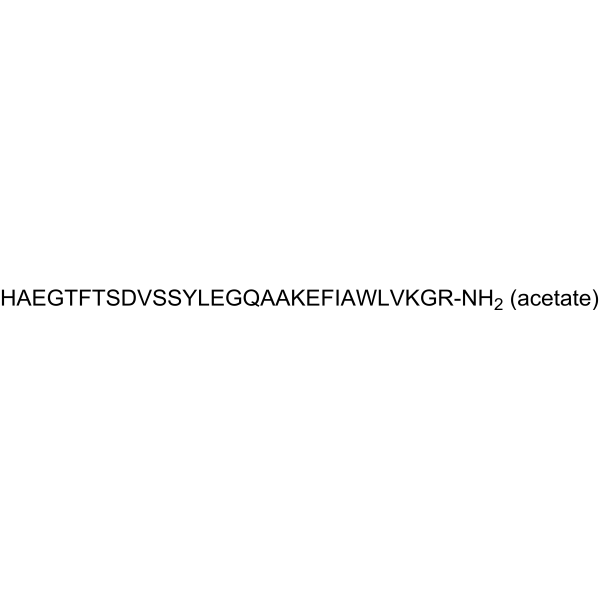
GLP-1(7-36) Acetate
CAS No. 1119517-19-9
GLP-1(7-36) Acetate( Human GLP-1-(7-36)-amide Acetate )
Catalog No. M29840 CAS No. 1119517-19-9
GLP-1(7-36) Acetate is a major intestinal hormone that stimulates glucose-induced insulin secretion from β cells.
Purity : >98% (HPLC)
 COA
Datasheet
HNMR
HPLC
MSDS
Handing Instructions
COA
Datasheet
HNMR
HPLC
MSDS
Handing Instructions
| Size | Price / USD | Stock | Quantity |
| 5MG | 563 | In Stock |


|
| 10MG | 896 | In Stock |
|
| 25MG | 1311 | In Stock |
|
| 50MG | 1748 | In Stock |
|
| 100MG | 2353 | In Stock |
|
| 200MG | Get Quote | In Stock |
|
| 500MG | Get Quote | In Stock |
|
| 1G | Get Quote | In Stock |
|
Biological Information
-
Product NameGLP-1(7-36) Acetate
-
NoteResearch use only, not for human use.
-
Brief DescriptionGLP-1(7-36) Acetate is a major intestinal hormone that stimulates glucose-induced insulin secretion from β cells.
-
DescriptionGLP-1(7-36) Acetate is a major intestinal hormone that stimulates glucose-induced insulin secretion from β cells.(In Vitro):Cells treated with phorbol 12-myristate 13-acetate for 2 h has significantly higher active GLP-1(7-36) concentrations in the media than those in the control. The glucose treatment also increases active GLP-1 secretion from cells in dose-dependent manner. Palmitic, oleic, linoleic or linolenic acid dose-dependently stimulated active GLP-1 secretion from cells. Active GLP-1 secretion is significantly greater with unsaturated fatty acids such as oleic, linoleic and linolenic acids than with palmitic acid. The treatment of NCI-H716 cells with CPE dose-dependently increases active GLP-1 concentrations in the media. A 37% increase is observed in active GLP-1 secretion from these cells at a concentration of 0.1 % CPE.(In Vivo):Gastric administration of glucose increases active GLP-1(7-36) amide levels in the portal blood after 10 min, followed by a marked decrease at 30 min. The gastric administration of TO also increases active GLP-1 levels after 10 min, and followed by a decrease to basal levels at 60 min. Individually, glucose and TO increase the secretion of GLP-1 in a dose-dependent manner. Furthermore, the co-administration of glucose and TO additively increase peak GLP-1 levels. CPE-administered mice have higher active GLP-1 levels in the portal blood at 10 and 30 min than those in the control mice. When glucose is administered with CPE, active GLP-1 and insulin levels in the portal blood are slightly higher in CPE-administered mice than in the control mice. High-fat diet-fed C57BL/6J mice develop hyperglycaemia and impair glucose tolerance.
-
In VitroCells treated with phorbol 12-myristate 13-acetate for 2 h has significantly higher active GLP-1(7-36), amide acetate concentrations in the media than those in the control. The glucose treatment also increases active GLP-1 secretion from cells in dose-dependent manner. Palmitic, oleic, linoleic or linolenic acid dose-dependently stimulated active GLP-1 secretion from cells. Active GLP-1 secretion is significantly greater with unsaturated fatty acids such as oleic, linoleic and linolenic acids than with palmitic acid. The treatment of NCI-H716 cells with CPE dose-dependently increases active GLP-1 concentrations in the media. A 37% increase is observed in active GLP-1 secretion from these cells at a concentration of 0.1 % CPE.
-
In VivoGastric administration of glucose increases active GLP-1(7-36) amide levels in the portal blood after 10 min, followed by a marked decrease at 30 min. The gastric administration of TO also increases active GLP-1 levels after 10 min, and followed by a decrease to basal levels at 60 min. Individually, glucose and TO increase the secretion of GLP-1 in a dose-dependent manner. Furthermore, the co-administration of glucose and TO additively increase peak GLP-1 levels. CPE-administered mice have higher active GLP-1 levels in the portal blood at 10 and 30 min than those in the control mice. When glucose is administered with CPE, active GLP-1 and insulin levels in the portal blood are slightly higher in CPE-administered mice than in the control mice. High-fat diet-fed C57BL/6J mice develop hyperglycaemia and impair glucose tolerance.
-
SynonymsHuman GLP-1-(7-36)-amide Acetate
-
PathwayGPCR/G Protein
-
TargetGlucagon Receptor
-
Recptor——
-
Research Area——
-
Indication——
Chemical Information
-
CAS Number1119517-19-9
-
Formula Weight3394.67
-
Molecular FormulaC149H226N40O45.xC2H4O2
-
Purity>98% (HPLC)
-
SolubilityH2O : 50 mg/mL (14.73 mM; Need ultrasonic)
-
SMILES——
-
Chemical NameSequence:His-Ala-Glu-Gly-Thr-Phe-Thr-Ser-Asp-Val-Ser-Ser-Tyr-Leu-Glu-Gly-Gln-Ala-Ala-Lys-Glu-Phe-Ile-Ala-Trp-Leu-Val-Lys-Gly-Arg-NH2
Shipping & Storage Information
-
Storage(-20℃)
-
ShippingWith Ice Pack
-
Stability≥ 2 years
Reference
Fujii Y et al. Ingestion of coffee polyphenols increases postprandial release of the active glucagon-like peptide-1(GLP-1(7-36)) amide in C57BL/6J mice. J Nutr Sci. 2015 Mar 3
molnova catalog



related products
-
GCGR-IN-17
A highly potent glucagon receptor antagonist with Ki of 14 nM for hGCGR.
-
Oxyntomodulin (porci...
GLP-1 receptor agonist. Endogenous preproglucagon-derived neuropeptide that modulates feeding and metabolism. Also secreted by intestinal L-cells. Increases cAMP production and inhibits gastric acid secretion in rat stomach. Also weak glucagon receptor agonist.
-
(S, R)-LSN 3318839
(S, R)-LSN 3318839 is an allosteric modulator of the glucagon-like peptide-3318839 receptor (GLP-1R) that has demonstrated powerful hypoglycemic effects in animal models alone or in combination with sitagliptin.
