


 Cart
Cart
 sales@molnova.com


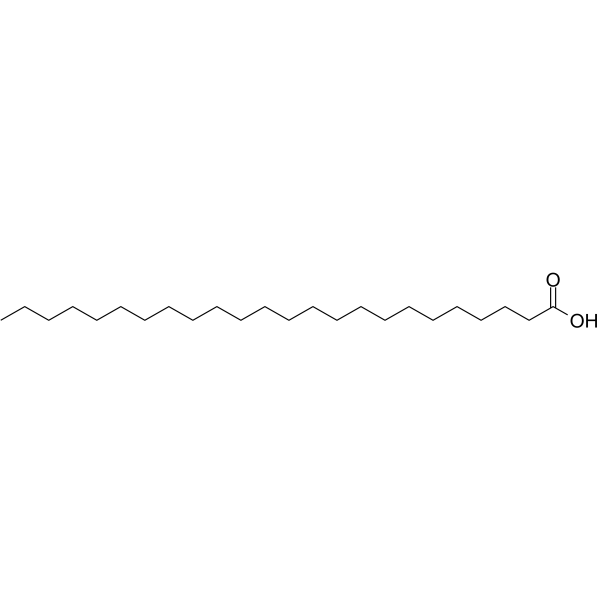
Lignoceric Acid
CAS No. 557-59-5
Lignoceric Acid( tetracosanoic acid )
Catalog No. M29404 CAS No. 557-59-5
Lignoceric Acid is a 24-carbon saturated (24:0) fatty acid and a by-product of lignin production, which is synthesized in the developing brain.
Purity : >98% (HPLC)
 COA
Datasheet
HNMR
HPLC
MSDS
Handing Instructions
COA
Datasheet
HNMR
HPLC
MSDS
Handing Instructions
| Size | Price / USD | Stock | Quantity |
| 100MG | 39 | Get Quote |


|
| 200MG | 56 | Get Quote |
|
| 500MG | Get Quote | Get Quote |
|
| 1G | Get Quote | Get Quote |
|
Biological Information
-
Product NameLignoceric Acid
-
NoteResearch use only, not for human use.
-
Brief DescriptionLignoceric Acid is a 24-carbon saturated (24:0) fatty acid and a by-product of lignin production, which is synthesized in the developing brain.
-
DescriptionLignoceric Acid is a 24-carbon saturated (24:0) fatty acid and a by-product of lignin production, which is synthesized in the developing brain.(In Vitro):The thermogenic flux induced by Lignoceric Acid was estimated by isothermal titration calorimetry in peroxisomes isolated from HepG2 cells and from fibroblasts obtained from patients with X-ALD and healthy subjects. Heat flux induced by lignoceric acid in HepG2 peroxisomes was exothermic, indicating normal peroxisomal metabolism.
-
In Vitro——
-
In Vivo——
-
Synonymstetracosanoic acid
-
PathwayProteasome/Ubiquitin
-
TargetEndogenous Metabolite
-
RecptorEndogenous Metabolite
-
Research Area——
-
Indication——
Chemical Information
-
CAS Number557-59-5
-
Formula Weight368.646
-
Molecular FormulaC24H48O2
-
Purity>98% (HPLC)
-
SolubilityIn Vitro:?Ethanol : 8.33 mg/mL (22.60 m)
-
SMILESCCCCCCCCCCCCCCCCCCCCCCCC(O)=O
-
Chemical Name——
Shipping & Storage Information
-
Storage(-20℃)
-
ShippingWith Ice Pack
-
Stability≥ 2 years
Reference
molnova catalog



related products
-
D-chiro-Inositol
D-chiro-Inositol is an epimer of myo-inositol that is found in certain mammalian glycosylphosphatidylinositol protein anchors and inositol phosphoglycans possessing insulin-like bioactivity.
-
Isoproterenol
Isoproterenol (Norisodrine) is a non-selective and orally active β-adrenoceptor agonist.Isoproterenol is a potent peripheral vasodilator and bronchodilator.
-
1,2-Dipalmitoyl-sn-g...
1,2-Dipalmitoyl-sn-glycerol 3-phosphate sodium, a phosphatidic acid, is a human endogenous metabolite.
