


 Cart
Cart
 sales@molnova.com


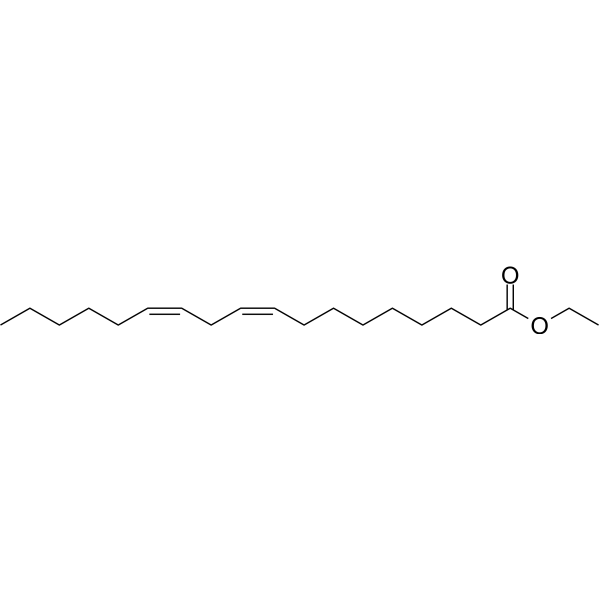
Ethyl linoleate
CAS No. 544-35-4
Ethyl linoleate( Linoleic Acid ethyl ester )
Catalog No. M29403 CAS No. 544-35-4
Ethyl linoleate is a natural product and can inhibit the expression of inflammatory mediators and the development of atherosclerotic lesions.
Purity : >98% (HPLC)
 COA
Datasheet
HNMR
HPLC
MSDS
Handing Instructions
COA
Datasheet
HNMR
HPLC
MSDS
Handing Instructions
| Size | Price / USD | Stock | Quantity |
| 1 mL x 10 mM in DMSO | 29 | In Stock |


|
| 100MG | Get Quote | In Stock |
|
| 200MG | Get Quote | In Stock |
|
| 500MG | 30 | In Stock |
|
| 1G | 33 | In Stock |
|
Biological Information
-
Product NameEthyl linoleate
-
NoteResearch use only, not for human use.
-
Brief DescriptionEthyl linoleate is a natural product and can inhibit the expression of inflammatory mediators and the development of atherosclerotic lesions.
-
DescriptionEthyl linoleate is a natural product and can inhibit the expression of inflammatory mediators and the development of atherosclerotic lesions.
-
In Vitro——
-
In Vivo——
-
SynonymsLinoleic Acid ethyl ester
-
PathwayOthers
-
TargetOther Targets
-
Recptor——
-
Research Area——
-
Indication——
Chemical Information
-
CAS Number544-35-4
-
Formula Weight308.506
-
Molecular FormulaC20H36O2
-
Purity>98% (HPLC)
-
SolubilityIn Vitro:?DMSO : 100 mg/mL (324.15 mM)
-
SMILESCCCCC\C=C/C\C=C/CCCCCCCC(=O)OCC
-
Chemical Name——
Shipping & Storage Information
-
Storage(-20℃)
-
ShippingWith Ice Pack
-
Stability≥ 2 years
Reference
molnova catalog



related products
-
Carbutamide
Carbutamide is a sulfonylurea antidiabetic agent with hypoglycemic activity.
-
Cucurbitacin IIb
Cucurbitacin IIb is one of the major active compounds in Hemsleyadine tablets which have been used for clinical treatment of bacillary dysentery, enteritis and acute tonsilitis.
-
LY 345899
LY 345899 is a Folate analog and is a methylenetetrahydrofolate dehydrogenase and MTHFD2 inhibitor (IC50: 96 nM and 663 nM, respectively and a Ki: 18 nM for MTHFD1).
