


 Cart
Cart
 sales@molnova.com


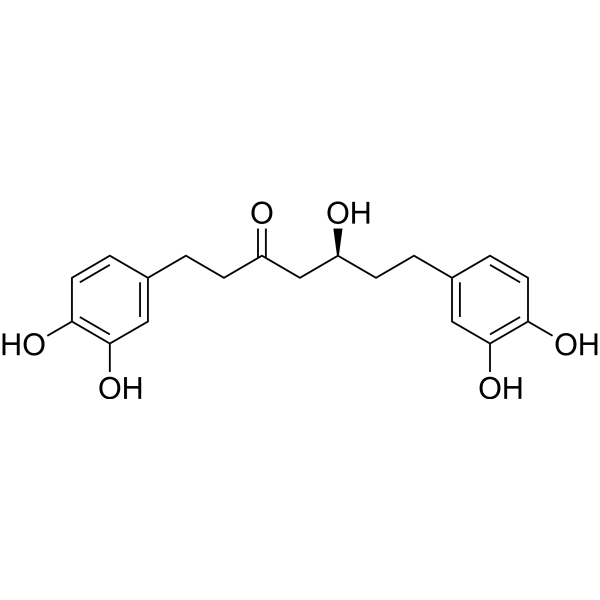
Hirsutanonol
CAS No. 41137-86-4
Hirsutanonol( —— )
Catalog No. M29305 CAS No. 41137-86-4
Hirsutanonol is a secondary metabolite from the bark of Alnus glutinosa. Hirsutanonol has potent antioxidant and free radical scavenging activities and exhibits an inhibition effect on mitochondrial lipid peroxidation. Hirsutanonol can be used for studies
Purity : >98% (HPLC)
 COA
Datasheet
HNMR
HPLC
MSDS
Handing Instructions
COA
Datasheet
HNMR
HPLC
MSDS
Handing Instructions
| Size | Price / USD | Stock | Quantity |
| 100MG | Get Quote | Get Quote |


|
| 200MG | Get Quote | Get Quote |
|
| 500MG | Get Quote | Get Quote |
|
| 1G | Get Quote | Get Quote |
|
Biological Information
-
Product NameHirsutanonol
-
NoteResearch use only, not for human use.
-
Brief DescriptionHirsutanonol is a secondary metabolite from the bark of Alnus glutinosa. Hirsutanonol has potent antioxidant and free radical scavenging activities and exhibits an inhibition effect on mitochondrial lipid peroxidation. Hirsutanonol can be used for studies
-
DescriptionHirsutanonol is a secondary metabolite from the bark of Alnus glutinosa. Hirsutanonol has potent antioxidant and free radical scavenging activities and exhibits an inhibition effect on mitochondrial lipid peroxidation. Hirsutanonol can be used for studies(In Vitro):Hirsutanonol shows significant inhibitory effects on 12-O-tetradecanoylphorbol-13-acetate (TPA)-induced cyclooxygenase-2 (COX-2) expression in immortalized human breast epithelial MCF10A cells. Hirustenone and hirsutanonol show promising anti-filarial activity both in vitro and in vivo studies.Hirsutanonol shows potent cytotoxic activities against murine B16 melanoma cells and human SNU-C1 gastric cancer cells, it also has a chemoprotective effect on human lymphocyte DNA. Hirsutanonol (1 μg/mL) decreased the frequency of micronuclei by 63.6 %, exerting a much stronger effect than the synthetic protector amifostine (17.2 %, 1 μg/mL).
-
In Vitro——
-
In Vivo——
-
Synonyms——
-
PathwayChromatin/Epigenetic
-
TargetCOX
-
RecptorCOX
-
Research Area——
-
Indication——
Chemical Information
-
CAS Number41137-86-4
-
Formula Weight346.4
-
Molecular FormulaC19H22O6
-
Purity>98% (HPLC)
-
Solubility——
-
SMILESO[C@@H](CCc1ccc(O)c(O)c1)CC(=O)CCc1ccc(O)c(O)c1
-
Chemical Name——
Shipping & Storage Information
-
Storage(-20℃)
-
ShippingWith Ice Pack
-
Stability≥ 2 years
Reference
molnova catalog



related products
-
Hexahydrocurcumin
Hexahydrocurcumin is a selective, orally active COX-2 inhibitor and inactive against COX-1.
-
Rebamipide mofetil
Rebamipide mofetil is an orally active prodrug of Rebamipide which is a mucoprotective agent.
-
Emapalumab
Emapalumab (NI-0501) is an IgG1 monoclonal antibody that humanizes human monoclonal antibodies against interferon gamma, blocking its binding to cell surface receptors and activating inflammatory signaling.
