


 Cart
Cart
 sales@molnova.com


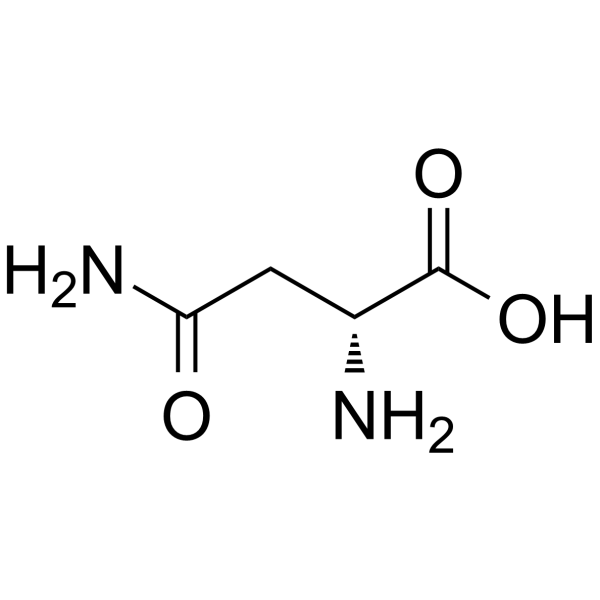
D-Asparagine
CAS No. 2058-58-4
D-Asparagine( H-D-Asn-OH )
Catalog No. M29293 CAS No. 2058-58-4
D-Asparagine is a source of nitrogen for yeast strains. D-Asparagine is a competitive inhibitor of L-Asparagine hydrolysis (Ki = 0.24 mM).
Purity : >98% (HPLC)
 COA
Datasheet
HNMR
HPLC
MSDS
Handing Instructions
COA
Datasheet
HNMR
HPLC
MSDS
Handing Instructions
| Size | Price / USD | Stock | Quantity |
| 100MG | Get Quote | In Stock |


|
| 200MG | Get Quote | In Stock |
|
| 500MG | Get Quote | In Stock |
|
| 1G | 28 | In Stock |
|
Biological Information
-
Product NameD-Asparagine
-
NoteResearch use only, not for human use.
-
Brief DescriptionD-Asparagine is a source of nitrogen for yeast strains. D-Asparagine is a competitive inhibitor of L-Asparagine hydrolysis (Ki = 0.24 mM).
-
DescriptionD-Asparagine is a source of nitrogen for yeast strains. D-Asparagine is a competitive inhibitor of L-Asparagine hydrolysis (Ki = 0.24 mM).
-
In Vitro——
-
In Vivo——
-
SynonymsH-D-Asn-OH
-
PathwayOthers
-
TargetOther Targets
-
Recptor——
-
Research Area——
-
Indication——
Chemical Information
-
CAS Number2058-58-4
-
Formula Weight132.119
-
Molecular FormulaC4H8N2O3
-
Purity>98% (HPLC)
-
SolubilityIn Vitro:?H2O : 33.33 mg/mL (252.27 mM)
-
SMILESN[C@H](CC(N)=O)C(O)=O
-
Chemical Name——
Shipping & Storage Information
-
Storage(-20℃)
-
ShippingWith Ice Pack
-
Stability≥ 2 years
Reference
molnova catalog



related products
-
1-Palmitoyl-2-oleoyl...
1-Palmitoyl-2-oleoyl-sn-glycero-3-PC is a phospholipid ubiquitous in cell membranes, with compositions in the range 0-60 mol% cholesterol.
-
Pinoresinol dimethyl...
Pinoresinol dimethyl ether ((+)-Eudesmin) is a non-phenolic furofuran lignan isolated from the stem bark of Magnolia kobus with neuritogenic activity.
-
pep2-EVKI
Inhibitor peptide that selectively disrupts binding of the AMPA receptor subunit GluA2 (at the C-terminal PDZ site) to protein interacting with C kinase (PICK1). Does not affect binding of GluA2 to GRIP or ABP and does not increase AMPA current amplitude or affect long term depression (LTD).
