


 Cart
Cart
 sales@molnova.com


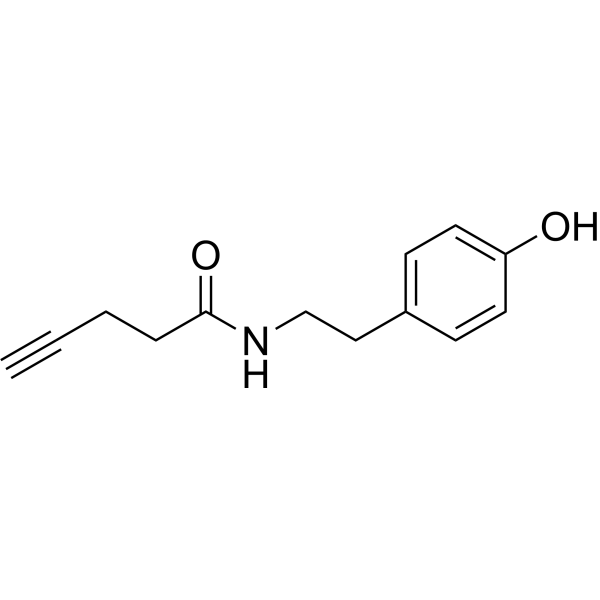
Alkyne tyramide
CAS No. 1694495-59-4
Alkyne tyramide( —— )
Catalog No. M28676 CAS No. 1694495-59-4
Alkyne tyramide is a clickable ascorbate peroxidase 2 (APEX2) probe which enable biotin-independent detection of labeled proteins.
Purity : >98% (HPLC)
 COA
Datasheet
HNMR
HPLC
MSDS
Handing Instructions
COA
Datasheet
HNMR
HPLC
MSDS
Handing Instructions
| Size | Price / USD | Stock | Quantity |
| 1 mL x 10 mM in DMSO | 37 | In Stock |


|
| 5MG | 29 | In Stock |
|
| 10MG | 40 | In Stock |
|
| 25MG | 61 | In Stock |
|
| 50MG | 99 | In Stock |
|
| 100MG | 160 | In Stock |
|
| 200MG | 237 | In Stock |
|
| 500MG | Get Quote | In Stock |
|
| 1G | Get Quote | In Stock |
|
Biological Information
-
Product NameAlkyne tyramide
-
NoteResearch use only, not for human use.
-
Brief DescriptionAlkyne tyramide is a clickable ascorbate peroxidase 2 (APEX2) probe which enable biotin-independent detection of labeled proteins.
-
DescriptionAlkyne tyramide is a clickable ascorbate peroxidase 2 (APEX2) probe which enable biotin-independent detection of labeled proteins.
-
In Vitro——
-
In Vivo——
-
Synonyms——
-
PathwayOthers
-
TargetOther Targets
-
Recptor——
-
Research Area——
-
Indication——
Chemical Information
-
CAS Number1694495-59-4
-
Formula Weight217.268
-
Molecular FormulaC13H15NO2
-
Purity>98% (HPLC)
-
SolubilityIn Vitro:?DMSO : 50 mg/mL (230.14 mM)
-
SMILESOc1ccc(CCNC(=O)CCC#C)cc1
-
Chemical Name——
Shipping & Storage Information
-
Storage(-20℃)
-
ShippingWith Ice Pack
-
Stability≥ 2 years
Reference
1.enteric-coated TRPM8 agonist D-3263 hydrochloride
molnova catalog



related products
-
Prinomide tromethami...
Prinomide tromethamine is an antirheumatic compound.
-
Pratensein
Pratensein as a novel transcriptional up-regulator of scavenger receptor class B type I in HepG2 cells.
-
Misonidazole
Misonidazole as a novel GPX inhibitors to cause oxidative stress in chemotherapy-resistant tumors.
