


 Cart
Cart
 sales@molnova.com


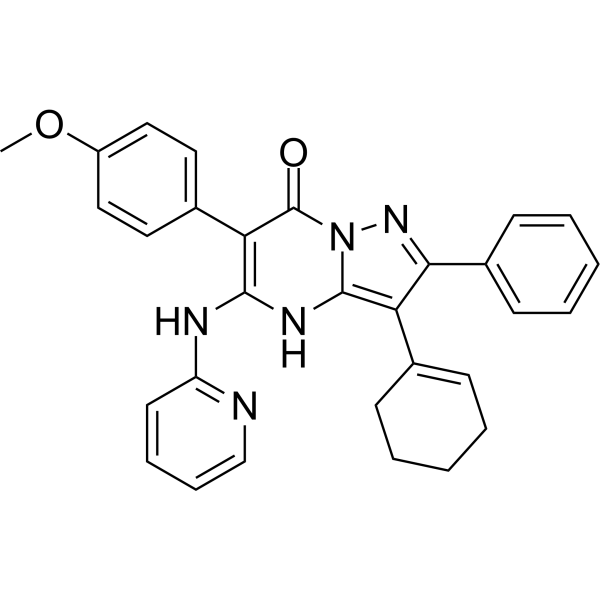
AG-270
CAS No. 2201056-66-6
AG-270( —— )
Catalog No. M28586 CAS No. 2201056-66-6
AG-270 is an allosteric and orally active inhibitor of MAT2A.
Purity : >98% (HPLC)
 COA
Datasheet
HNMR
HPLC
MSDS
Handing Instructions
COA
Datasheet
HNMR
HPLC
MSDS
Handing Instructions
| Size | Price / USD | Stock | Quantity |
| 2MG | 155 | In Stock |


|
| 5MG | 257 | In Stock |
|
| 10MG | 377 | In Stock |
|
| 25MG | 629 | In Stock |
|
| 50MG | 863 | In Stock |
|
| 100MG | 1200 | In Stock |
|
| 200MG | 1637 | In Stock |
|
| 500MG | Get Quote | In Stock |
|
| 1G | Get Quote | In Stock |
|
Biological Information
-
Product NameAG-270
-
NoteResearch use only, not for human use.
-
Brief DescriptionAG-270 is an allosteric and orally active inhibitor of MAT2A.
-
DescriptionAG-270 is an allosteric and orally active inhibitor of MAT2A.(In Vitro):AG-270 exhibits an IC50 of 20 nM in HCT116 MTAP-null cell SAM at 72 h.AG-270 demonstrates potent reduction in levels of intracellular SAM, as well as MTAP-null–selective antiproliferative activity in the HCT116 MTAP isogenic cell model in vitro.
-
In VitroAG-270 demonstrates potent reduction in levels of intracellular SAM, as well as MTAP-null–selective antiproliferative activity in the HCT116 MTAP isogenic cell model in vitro.AG-270 exhibits an IC50 of 20 nM in HCT116 MTAP-null cell SAM at 72 h.MAT2A is a key enzyme in the methionine salvage pathway, responsible for generating the universal methyl donor, S-adenosylmethionine (SAM).
-
In VivoAG-270 shows excellent microsomal, hepatocyte, and in vivo metabolic stability across species (human, mouse, rat, dog, and monkey). AG-270 exhibits T1/2 values of 5.9 h, 4.2 h, 4.8 h and 21.3 h in mouse, rat, monkey and dog, respectively.AG-270 (200 mg/kg, orally, q.d. for 38 days) results in dose-dependent reduction in tumor SAM levels and tumor growth of KP4 MTAP-null xenografts and is well tolerated, with mean body weight loss <5%.Combining AG-270 with taxanes and gemcitabine yielded additive-tosynergistic antitumor activity, with the docetaxel combination yielding 50% complete tumor regressions in select models; combination benefits are observed in PDX models derived from esophageal, NSCLC, and pancreatic cancers. Animal Model:Pancreatic KP4 MTAP-null xenograft mouse model.Dosage:10-200 mg/kg.Administration:Orally, q.d. for 38 days.Result:Led to dose-dependent reductions in tumor SAM levels and tumor growth of KP4 MTAP-null xenografts (TGI = 36% (10 mg/kg), 48% (30 mg/kg), 66% (100 mg/kg), 67% (200 mg/kg).
-
Synonyms——
-
PathwayOthers
-
TargetOther Targets
-
Recptor——
-
Research Area——
-
Indication——
Chemical Information
-
CAS Number2201056-66-6
-
Formula Weight489.57
-
Molecular FormulaC30H27N5O2
-
Purity>98% (HPLC)
-
SolubilityIn Vitro:?DMSO : 4 mg/mL (8.17 mM)
-
SMILESCOc(cc1)ccc1C(C(n1nc2-c3ccccc3)=O)=C(Nc3ncccc3)Nc1c2C1=CCCCC1
-
Chemical Name——
Shipping & Storage Information
-
Storage(-20℃)
-
ShippingWith Ice Pack
-
Stability≥ 2 years
Reference
1.Bagalagel, Alaa A.; Bogari, Hanin A.; Ahmed, Safwat A.; Diri, Reem M.; Elhady, Sameh S.[Heterocycles, 2018, vol. 96, # 4, p. 749 - 756]
molnova catalog



related products
-
1,4-Dihydroxy-2-carb...
1,4-Dihydroxy-2-carbomethoxy-3-prenylnaphthalene-1-O-beta-glucopyranoside may have DNA topoisomerases I and II inhibitory activity and cytotoxicity.
-
5-ROX
5-ROX, a rhodamine dye, exhibits strong fluorescence property in aqueous buffer with the λexit of 580 nm (ε=3.6×10^4/(M·cm)), and λemit of 604 nm (?=0.94).
-
Lathyrol
Lathyrol diterpenes is a modulator of P-glycoprotein dependent multidrug resistance.
