


 Cart
Cart
 sales@molnova.com


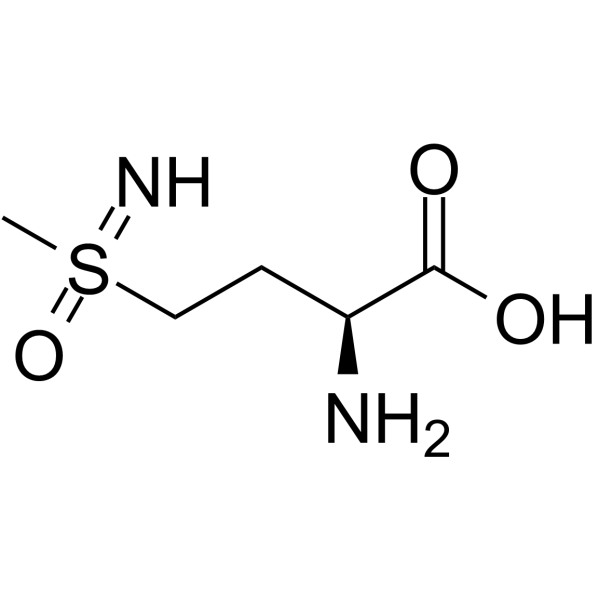
L-Methionine-DL-sulfoximine
CAS No. 15985-39-4
L-Methionine-DL-sulfoximine( MSX | MSO )
Catalog No. M28359 CAS No. 15985-39-4
L-Methionine-DL-sulfoximine inhibits glutamine synthetase and metabolically and morphologically primarily affects astroglia. L-Methionine-DL-sulfoximine can be used in convulsant studies.
Purity : >98% (HPLC)
 COA
Datasheet
HNMR
HPLC
MSDS
Handing Instructions
COA
Datasheet
HNMR
HPLC
MSDS
Handing Instructions
| Size | Price / USD | Stock | Quantity |
| 50MG | 33 | In Stock |


|
| 100MG | 47 | In Stock |
|
| 200MG | Get Quote | In Stock |
|
| 500MG | Get Quote | In Stock |
|
| 1G | Get Quote | In Stock |
|
Biological Information
-
Product NameL-Methionine-DL-sulfoximine
-
NoteResearch use only, not for human use.
-
Brief DescriptionL-Methionine-DL-sulfoximine inhibits glutamine synthetase and metabolically and morphologically primarily affects astroglia. L-Methionine-DL-sulfoximine can be used in convulsant studies.
-
DescriptionL-Methionine-DL-sulfoximine inhibits glutamine synthetase and metabolically and morphologically primarily affects astroglia. L-Methionine-DL-sulfoximine can be used in convulsant studies.
-
In Vitro——
-
In Vivo——
-
SynonymsMSX | MSO
-
PathwayOthers
-
TargetOther Targets
-
RecptorCCR8
-
Research Area——
-
Indication——
Chemical Information
-
CAS Number15985-39-4
-
Formula Weight180.22
-
Molecular FormulaC5H12N2O3S
-
Purity>98% (HPLC)
-
SolubilityIn Vitro:?H2O : 50 mg/mL (277.42 mM)
-
SMILESCS(=N)(=O)CC[C@H](N)C(O)=O
-
Chemical Name——
Shipping & Storage Information
-
Storage(-20℃)
-
ShippingWith Ice Pack
-
Stability≥ 2 years
Reference
1.Jenkins TJ, et al. Design, synthesis, and evaluation of naphthalene-sulfonamide antagonists of human CCR8. J Med Chem. 2007;50(3):566-584.
molnova catalog



related products
-
Gluconasturtiin
The herbs of Nasturtium officinale.
-
1,3-Benzoxazole-6-ca...
1,3-Benzoxazole-6-carboxylic acid is a chemical compound.
-
4-O-Methylochnaflavo...
4'-O-Methylochnaflavone is a biflavonoid isolated from Lonicera japonica, suppresses mouse lymphocyte proliferation.
