


 Cart
Cart
 sales@molnova.com


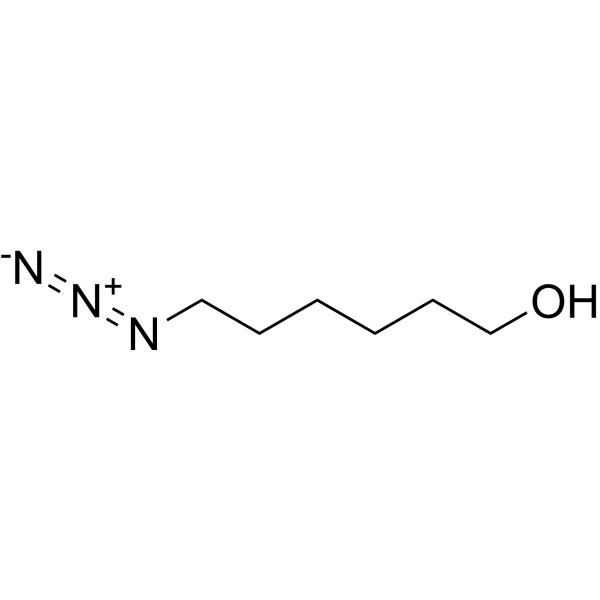
Azido-C6-OH
CAS No. 146292-90-2
Azido-C6-OH( —— )
Catalog No. M28206 CAS No. 146292-90-2
Azido-C6-OH is a cleavable ADC linker used to synthesize antibody-drug conjugates (ADCs).
Purity : >98% (HPLC)
 COA
Datasheet
HNMR
HPLC
MSDS
Handing Instructions
COA
Datasheet
HNMR
HPLC
MSDS
Handing Instructions
| Size | Price / USD | Stock | Quantity |
| 50MG | 27 | In Stock |


|
| 100MG | Get Quote | In Stock |
|
| 200MG | Get Quote | In Stock |
|
| 500MG | Get Quote | In Stock |
|
| 1G | Get Quote | In Stock |
|
Biological Information
-
Product NameAzido-C6-OH
-
NoteResearch use only, not for human use.
-
Brief DescriptionAzido-C6-OH is a cleavable ADC linker used to synthesize antibody-drug conjugates (ADCs).
-
DescriptionAzido-C6-OH is a cleavable ADC linker used to synthesize antibody-drug conjugates (ADCs).(In Vitro):ADCs are comprised of an antibody to which is attached an ADC cytotoxin through an ADC linker .
-
In VitroADCs are comprised of an antibody to which is attached an ADC cytotoxin through an ADC linker.
-
In Vivo——
-
Synonyms——
-
PathwayOthers
-
TargetOther Targets
-
RecptorAntioxidant|Antibacterial
-
Research Area——
-
Indication——
Chemical Information
-
CAS Number146292-90-2
-
Formula Weight143.19
-
Molecular FormulaC6H13N3O
-
Purity>98% (HPLC)
-
Solubility——
-
SMILESOCCCCCCN=[N+]=[N-]
-
Chemical Name——
Shipping & Storage Information
-
Storage(-20℃)
-
ShippingWith Ice Pack
-
Stability≥ 2 years
Reference
1.Paulo A, et al. The opposing effects of the flavonoids isoquercitrin and sissotrin, isolated from Pterospartum tridentatum, on oral glucose tolerance in rats. Phytother Res. 2008 Apr;22(4):539-43.
molnova catalog



related products
-
3-Methoxymirificin
3'-Methoxymirificin is a natural product for research related to life sciences.
-
ISOBERGAPTEN
ISOBERGAPTEN is a plant growth regulating substance it is the principal constituents responsible for the antimycobacterial activity of the roots of Heracleum maximum;?it may form an important class of natural defensive agents against fungi.
-
DCD-1L (human)
Dermcidin-1L (human) is an antibiotic peptide secreted by sweat glands. Dermcidin-1L (human) has antimicrobial activity. Dermcidin-1L (human) can be used for the research of inflammatory skin disorders.
