


 Cart
Cart
 sales@molnova.com


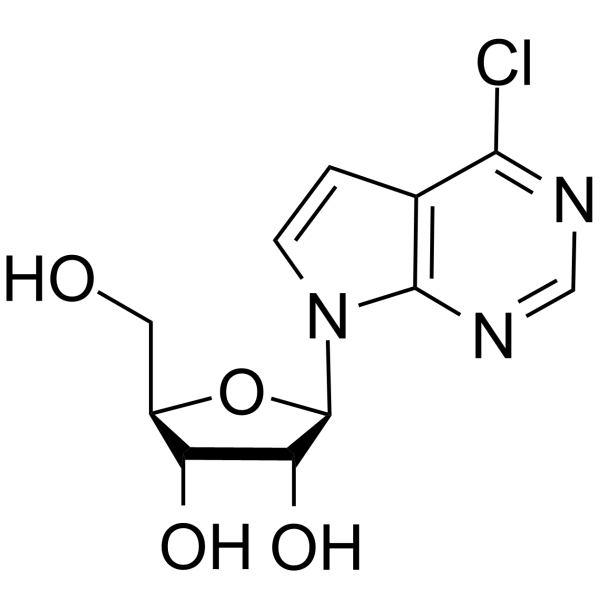
6-Chloro-7-deazapurine-β-D-riboside
CAS No. 16754-80-6
6-Chloro-7-deazapurine-β-D-riboside( —— )
Catalog No. M28127 CAS No. 16754-80-6
6-Chloro-7-deazapurine-β-D-riboside shows antifungal activity.
Purity : >98% (HPLC)
 COA
Datasheet
HNMR
HPLC
MSDS
Handing Instructions
COA
Datasheet
HNMR
HPLC
MSDS
Handing Instructions
| Size | Price / USD | Stock | Quantity |
| 50MG | 27 | In Stock |


|
| 100MG | Get Quote | In Stock |
|
| 200MG | Get Quote | In Stock |
|
| 500MG | Get Quote | In Stock |
|
| 1G | Get Quote | In Stock |
|
Biological Information
-
Product Name6-Chloro-7-deazapurine-β-D-riboside
-
NoteResearch use only, not for human use.
-
Brief Description6-Chloro-7-deazapurine-β-D-riboside shows antifungal activity.
-
Description6-Chloro-7-deazapurine-β-D-riboside shows antifungal activity.
-
In Vitro——
-
In Vivo——
-
Synonyms——
-
PathwayGPCR/G Protein
-
TargetAntibacterial
-
Recptorβ-Lactamase
-
Research Area——
-
Indication——
Chemical Information
-
CAS Number16754-80-6
-
Formula Weight285.68
-
Molecular FormulaC11H12ClN3O4
-
Purity>98% (HPLC)
-
SolubilityIn Vitro:?DMSO : 100 mg/mL (350.04 mM)
-
SMILESOC[C@H]1O[C@H]([C@H](O)[C@@H]1O)n1ccc2c(Cl)ncnc12
-
Chemical Name——
Shipping & Storage Information
-
Storage(-20℃)
-
ShippingWith Ice Pack
-
Stability≥ 2 years
Reference
1.David T Davies, et al. Discovery of ANT3310, a Novel Broad-Spectrum Serine β-Lactamase Inhibitor of the Diazabicyclooctane Class, Which Strongly Potentiates Meropenem Activity against Carbapenem-Resistant Enterobacterales and Acinetobacter baumannii. J Med Chem. 2020 Dec 24;63(24):15802-15820.
molnova catalog



related products
-
GSK-1322322
A novel antibacterial agent that targets bacterial peptide deformylase; demonstrates in vitro activity against MDR respiratory and skin infection pathogens.
-
Tigemonam
Tigemonam is a monobactam, a novel orally administered monobactam that protects against gram-negative aerobic bacterial pathogens and is at least as active against clinical isolates of Enterobacteriaceae as amitraz or carmonan (MIC90: 0.06-16 mg/l).
-
Antibiotic-5d
A synthetic antimicrobial compound that antibacterial activity in vitro against various Gram-positive and Gram-negative bacteria, fungi and yeast.
