


 Cart
Cart
 sales@molnova.com


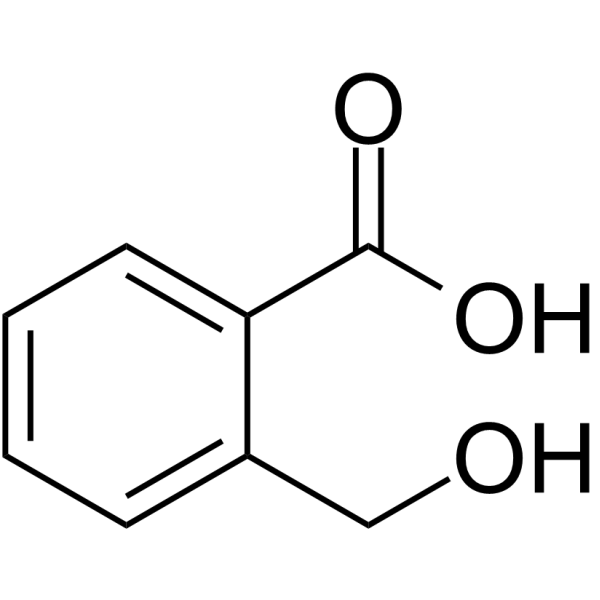
2-hydroxymethyl benzoic acid
CAS No. 612-20-4
2-hydroxymethyl benzoic acid( —— )
Catalog No. M28090 CAS No. 612-20-4
2-hydroxymethyl benzoic acid is a principal metabolite of the phthalidyl moiety in man.
Purity : >98% (HPLC)
 COA
Datasheet
HNMR
HPLC
MSDS
Handing Instructions
COA
Datasheet
HNMR
HPLC
MSDS
Handing Instructions
| Size | Price / USD | Stock | Quantity |
| 100MG | Get Quote | In Stock |


|
| 200MG | Get Quote | In Stock |
|
| 500MG | 37 | In Stock |
|
| 1G | Get Quote | In Stock |
|
Biological Information
-
Product Name2-hydroxymethyl benzoic acid
-
NoteResearch use only, not for human use.
-
Brief Description2-hydroxymethyl benzoic acid is a principal metabolite of the phthalidyl moiety in man.
-
Description2-hydroxymethyl benzoic acid is a principal metabolite of the phthalidyl moiety in man.
-
In Vitro——
-
In Vivo——
-
Synonyms——
-
PathwayProteasome/Ubiquitin
-
TargetEndogenous Metabolite
-
Recptorp38α|p38β
-
Research Area——
-
Indication——
Chemical Information
-
CAS Number612-20-4
-
Formula Weight152.149
-
Molecular FormulaC8H8O3
-
Purity>98% (HPLC)
-
SolubilityIn Vitro:?DMSO : ≥ 100 mg/mL (657.25 mM)
-
SMILESOCc1ccccc1C(O)=O
-
Chemical Name——
Shipping & Storage Information
-
Storage(-20℃)
-
ShippingWith Ice Pack
-
Stability≥ 2 years
Reference
1.Balagué C, et al. Profiling of dihydroorotate dehydrogenase, p38 and JAK inhibitors in the rat adjuvant-induced arthritis model: a translational study. Br J Pharmacol. 2012 Jun;166(4):1320-32.
molnova catalog



related products
-
Sphingomyelin
Sphingomyelin is a natural sphingolipid that existed in animal cell membranes. It implicates the regulation of transmembrane signaling.
-
8-Hydroxy-2'-deoxygu...
8-Oxo-dG is a good biomarker for risk assessment of various cancers and degenerative diseases.
-
2-Oxovaleric acid
2-Oxovaleric acid is a keto acid found in human blood.
