


 Cart
Cart
 sales@molnova.com


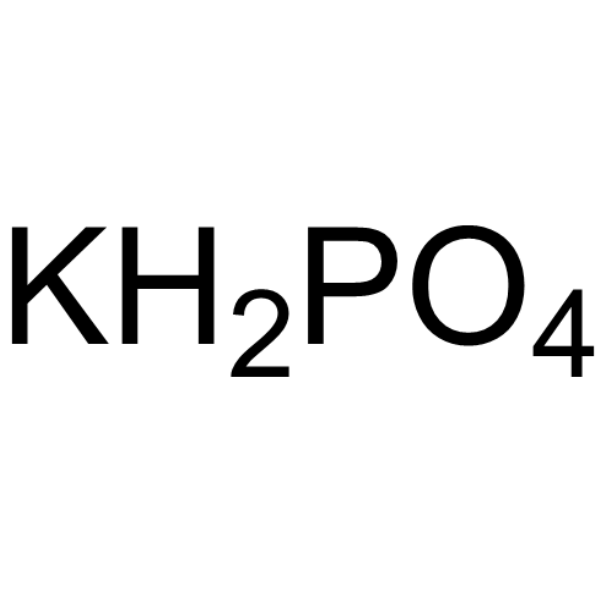
Potassium phosphate monobasic
CAS No. 7778-77-0
Potassium phosphate monobasic( —— )
Catalog No. M27688 CAS No. 7778-77-0
Potassium dihydrogen phosphate is a potassium salt in which dihydrogen phosphate(1-) is the counterion. It has a role as a fertilizer. It is a potassium salt and an inorganic phosphate.
Purity : >98% (HPLC)
 COA
Datasheet
HNMR
HPLC
MSDS
Handing Instructions
COA
Datasheet
HNMR
HPLC
MSDS
Handing Instructions
| Size | Price / USD | Stock | Quantity |
| 100MG | Get Quote | In Stock |


|
| 200MG | Get Quote | In Stock |
|
| 500MG | Get Quote | In Stock |
|
| 1G | Get Quote | In Stock |
|
Biological Information
-
Product NamePotassium phosphate monobasic
-
NoteResearch use only, not for human use.
-
Brief DescriptionPotassium dihydrogen phosphate is a potassium salt in which dihydrogen phosphate(1-) is the counterion. It has a role as a fertilizer. It is a potassium salt and an inorganic phosphate.
-
DescriptionPotassium dihydrogen phosphate is a potassium salt in which dihydrogen phosphate(1-) is the counterion. It has a role as a fertilizer. It is a potassium salt and an inorganic phosphate.
-
In Vitro——
-
In Vivo——
-
Synonyms——
-
PathwayOthers
-
TargetOther Targets
-
RecptorCereblon
-
Research Area——
-
Indication——
Chemical Information
-
CAS Number7778-77-0
-
Formula Weight136.084
-
Molecular FormulaH2KO4P
-
Purity>98% (HPLC)
-
Solubility——
-
SMILES[K+].OP(O)([O-])=O
-
Chemical Name——
Shipping & Storage Information
-
Storage(-20℃)
-
ShippingWith Ice Pack
-
Stability≥ 2 years
Reference
1.Jian Jin, et al. Compositions and methods for treating ezh2-mediated cancer. WO2018081530A1.
molnova catalog



related products
-
GALANGIN-3-METHYLETH...
GALANGIN-3-METHYLETHER has antibacterial activity it has inhibitory effects on Pseudomonas aeruginosa.?GALANGIN-3-METHYLETHER has hypolipidemic activity the action is due to the inhibition of pancreatic lipase.
-
Naringin dihydrochal...
Naringin Dihydrochalcone(Naringin DC) is an inhibitor of CYP enzymes, used as an artificial sweetener.
-
Pyrazole
1H-Pyrazole is a versatile building block with a vast applications in organic synthesis. The derivatives of Pyrazole are used in medicine for their analgesic anti-inflammatory antipyretic antiarrhythmic tranquilizing muscle relaxing psychoanaleptic anticonvulsant monoamineoxidase inhibiting antidiabetic and antibacterial activities.
