


 Cart
Cart
 sales@molnova.com


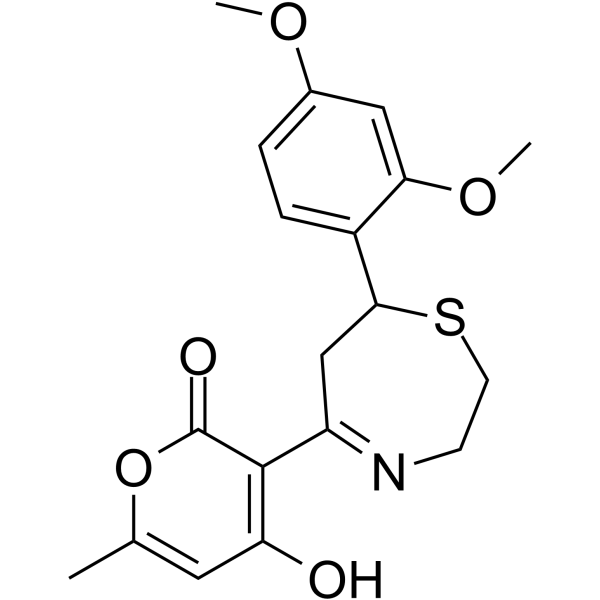
KF38789
CAS No. 257292-29-8
KF38789( KF 38789 )
Catalog No. M27643 CAS No. 257292-29-8
KF 38789 is a selective inhibitor of P-selectin-mediated cell adhesion and P-selectin immunoglobulin G chimeric protein.
Purity : >98% (HPLC)
 COA
Datasheet
HNMR
HPLC
MSDS
Handing Instructions
COA
Datasheet
HNMR
HPLC
MSDS
Handing Instructions
| Size | Price / USD | Stock | Quantity |
| 5MG | 117 | In Stock |


|
| 10MG | 187 | In Stock |
|
| 25MG | 357 | In Stock |
|
| 50MG | 520 | In Stock |
|
| 100MG | Get Quote | In Stock |
|
| 200MG | Get Quote | In Stock |
|
| 500MG | Get Quote | In Stock |
|
| 1G | Get Quote | In Stock |
|
Biological Information
-
Product NameKF38789
-
NoteResearch use only, not for human use.
-
Brief DescriptionKF 38789 is a selective inhibitor of P-selectin-mediated cell adhesion and P-selectin immunoglobulin G chimeric protein.
-
DescriptionKF 38789 is a selective inhibitor of P-selectin-mediated cell adhesion and P-selectin immunoglobulin G chimeric protein.(In Vitro):KF 38789, inhibited the binding of U937 cells to immobilized P-selectin immunoglobulin G chimeric protein (P-selectin-Ig) with an IC50 value of 1.97 microM. Cell adhesion to both E-selectin-Ig and L-selectin-Ig were not affected even by 100 microM of KF 38789. Moreover, KF 38789 inhibited P-selectin-induced superoxide production from human polymorphonuclear cells. Intravenously injected KF 38789 significantly inhibited the TG-induced accumulation of leukocytes in the mouse peritoneal cavity (p<0.01).(In Vivo):KF 38789 significantly reduced mechanical allodynia in the facial carrageenan-injected mice.
-
In VitroKF38789 inhibits P-selectin-induced superoxide production from human polymorphonuclear cells. Intravenously injected KF38789 significantly inhibits the thioglycollate (TG)-induced accumulation of leukocytes in the mouse peritoneal cavity.KF38789 displays a concentration-dependent inhibition of U937 cell adhesion to immobilized P-selectin-Ig with an IC50 value of 1.97±0.74 μM.KF38789 specifically inhibits P-selectin-dependent cell adhesion and the leukocyte recruitment in mouse peritonitis.KF38789 (5?μM) significantly reduces closure of a 500-μm gap between confluent sheets of Human corneal epithelial (HCE)-T cells over an 8-hr period (by ~40%).Corneal epithelial cell migration is reduced in the presence of KF38789 (5?μM) .
-
In VivoKF38789 can block P-selectin-mediated binding in vitro and leukocyte accumulation in vivo.Intraperitoneal injection of the P-selectin inhibitor KF38789 (daily intraperitoneal injection of 10mg/kg for 12 days) significantly reduces mechanical allodynia in the facial carrageenan-injected mice. Animal Model:BALB/c mice Dosage:1 mg/kg Administration:Intravenously administrated Result:Significantly reduced leukocyte accumulation.Animal Model:Twenty-four adult male C57BL/6J (B6) mice, about 6-8 weeks of age and weighing approximately 20-30 g Dosage:10 mg/kg, 1 mg/kg, 0.1 mg/kg, 0.01 mg/kg or 0.001 mg/kg Administration:Intraperitoneal injection daily for 12 days Result:Significantly reduced mechanical allodynia in the facial carrageenan-injected mice.
-
SynonymsKF 38789
-
PathwayOthers
-
TargetOther Targets
-
Recptorfatty acid 3 receptor (FA3R)
-
Research Area——
-
Indication——
Chemical Information
-
CAS Number257292-29-8
-
Formula Weight375.44
-
Molecular FormulaC19H21NO5S
-
Purity>98% (HPLC)
-
SolubilityIn Vitro:?DMSO : 25 mg/mL (66.59 mM)
-
SMILESCOc1ccc(C2CC(=NCCS2)c2c(O)cc(C)oc2=O)c(OC)c1
-
Chemical Name——
Shipping & Storage Information
-
Storage(-20℃)
-
ShippingWith Ice Pack
-
Stability≥ 2 years
Reference
1.Getachew B, et al. Butyrate Protects Against Salsolinol-Induced Toxicity in SH-SY5Y Cells: Implication for Parkinson's Disease. Neurotox Res. 2020 Oct;38(3):596-602.
molnova catalog



related products
-
Terpinine-4-ol
Terpinine-4-ol is a natural product from Pimpinella yunnanensis.
-
4-Hydroxymandelic ac...
p-Hydroxymandelic acid is an acidic metabolite of p-octopamine and p-synephrine (p-phenylephrine). It is also a naturally occurring metabolite of tyramine.
-
2'-Rhamnoechinacosid...
2'-Rhamnoechinacoside is a natural product from Cistanche tubulosa.
