


 Cart
Cart
 sales@molnova.com


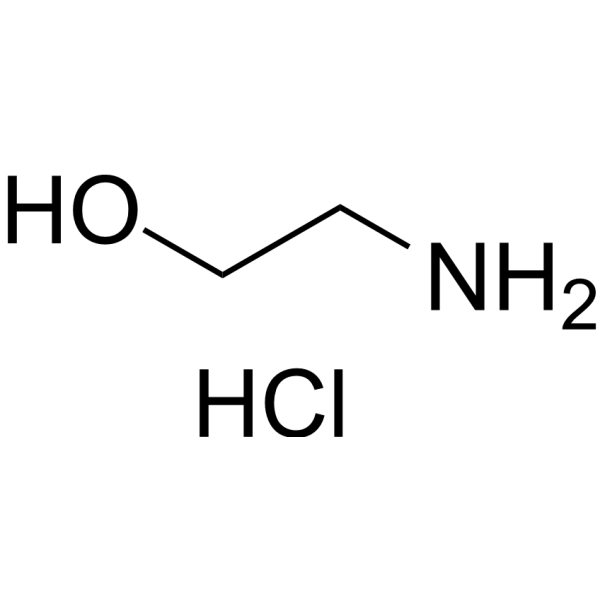
Ethanolamine hydrochloride
CAS No. 2002-24-6
Ethanolamine hydrochloride( 2-Aminoethanol hydrochloride )
Catalog No. M27552 CAS No. 2002-24-6
Ethanolamine, a viscous, hygroscopic amino alcohol with an ammoniacal odor, is widely distributed in biological tissue and is a component of lecithin.
Purity : >98% (HPLC)
 COA
Datasheet
HNMR
HPLC
MSDS
Handing Instructions
COA
Datasheet
HNMR
HPLC
MSDS
Handing Instructions
| Size | Price / USD | Stock | Quantity |
| 1 mL x 10 mM in DMSO | 43 | In Stock |


|
| 100MG | Get Quote | In Stock |
|
| 200MG | Get Quote | In Stock |
|
| 500MG | Get Quote | In Stock |
|
| 1G | 27 | In Stock |
|
Biological Information
-
Product NameEthanolamine hydrochloride
-
NoteResearch use only, not for human use.
-
Brief DescriptionEthanolamine, a viscous, hygroscopic amino alcohol with an ammoniacal odor, is widely distributed in biological tissue and is a component of lecithin.
-
DescriptionEthanolamine, a viscous, hygroscopic amino alcohol with an ammoniacal odor, is widely distributed in biological tissue and is a component of lecithin.
-
In Vitro——
-
In Vivo——
-
Synonyms2-Aminoethanol hydrochloride
-
PathwayOthers
-
TargetOther Targets
-
RecptorNurr1
-
Research Area——
-
Indication——
Chemical Information
-
CAS Number2002-24-6
-
Formula Weight97.54
-
Molecular FormulaC2H8ClNO
-
Purity>98% (HPLC)
-
SolubilityIn Vitro:?DMSO : 100 mg/mL (1025.22 mM)
-
SMILESCl.NCCO
-
Chemical Name——
Shipping & Storage Information
-
Storage(-20℃)
-
ShippingWith Ice Pack
-
Stability≥ 2 years
Reference
1.Montarolo F, et al. Effects of isoxazolo-pyridinone 7e, a potent activator of the Nurr1 signaling pathway, on experimental autoimmune encephalomyelitis in mice. PLoS One. 2014 Sep 29;9(9):e108791.
molnova catalog



related products
-
Delphinidin-3-O-gluc...
Delphinidin-3-O-glucoside chloride has antioxidant activity.
-
N-Methyl Moxifloxaci...
N-Methyl Moxifloxacin
-
[Ala1]-PAR-4 (1-6) (...
[Ala1]-PAR-4 (1-6) (mouse)
