


 Cart
Cart
 sales@molnova.com


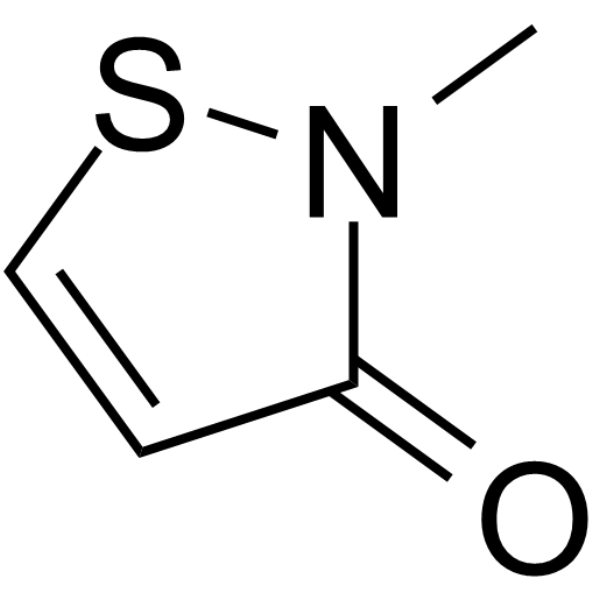
Methylisothiazolinone
CAS No. 2682-20-4
Methylisothiazolinone( —— )
Catalog No. M27154 CAS No. 2682-20-4
Methylisothiazolinone is a powerful synthetic biocide and preservative within the group of isothiazolinones.
Purity : >98% (HPLC)
 COA
Datasheet
HNMR
HPLC
MSDS
Handing Instructions
COA
Datasheet
HNMR
HPLC
MSDS
Handing Instructions
| Size | Price / USD | Stock | Quantity |
| 1 mL x 10 mM in DMSO | 28 | Get Quote |


|
| 100MG | Get Quote | Get Quote |
|
| 200MG | Get Quote | Get Quote |
|
| 500MG | 31 | Get Quote |
|
| 1G | Get Quote | Get Quote |
|
Biological Information
-
Product NameMethylisothiazolinone
-
NoteResearch use only, not for human use.
-
Brief DescriptionMethylisothiazolinone is a powerful synthetic biocide and preservative within the group of isothiazolinones.
-
DescriptionMethylisothiazolinone is a powerful synthetic biocide and preservative within the group of isothiazolinones.
-
In Vitro——
-
In Vivo——
-
Synonyms——
-
PathwayGPCR/G Protein
-
TargetAntibacterial
-
RecptorROCK
-
Research Area——
-
Indication——
Chemical Information
-
CAS Number2682-20-4
-
Formula Weight115.15
-
Molecular FormulaC4H5NOS
-
Purity>98% (HPLC)
-
SolubilityIn Vitro:?DMSO : 100 mg/mL (868.43 mM)
-
SMILESCn1sccc1=O
-
Chemical Name——
Shipping & Storage Information
-
Storage(-20℃)
-
ShippingWith Ice Pack
-
Stability≥ 2 years
Reference
1.Lefranc F, et al. Narciclasine, a plant growth modulator, activates Rho and stress fibers in glioblastoma cells. Mol Cancer Ther. 2009 Jul;8(7):1739-50.
molnova catalog



related products
-
Picloxydine
Picloxydine has antiplaque and antibacterial activity. Picloxydine has a destructive effect on the bacterial cell wall and plasma membrane, which leads to cell lysis and release of intracellular components.
-
Antifungal agent 6
Antifungal agent 6 is an antifungal agent.
-
Tubercidin
An antibiotic and adenosine analog isolated from the bacterium Streptomyces tubercidicus with potential antineoplastic activity.
