


 Cart
Cart
 sales@molnova.com


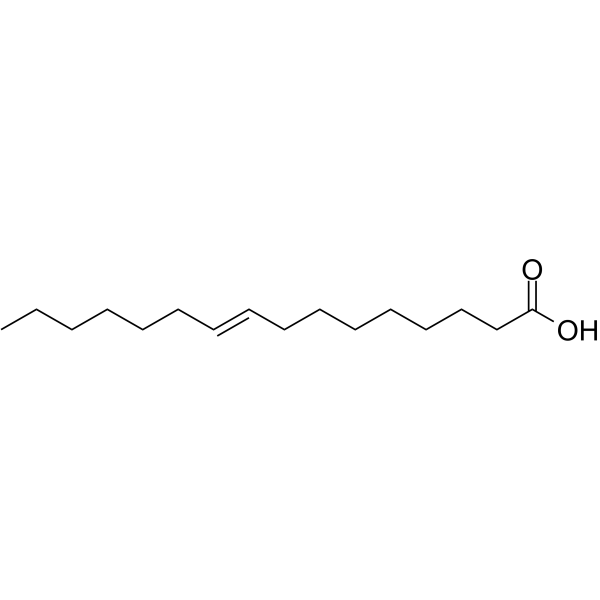
Palmitelaidic Acid
CAS No. 10030-73-6
Palmitelaidic Acid( 9-trans-Hexadecenoic acid | trans-Palmitoleic acid )
Catalog No. M27101 CAS No. 10030-73-6
Palmitelaidic Acid is one of the most abundant fatty acids in serum and tissue.
Purity : >98% (HPLC)
 COA
Datasheet
HNMR
HPLC
MSDS
Handing Instructions
COA
Datasheet
HNMR
HPLC
MSDS
Handing Instructions
| Size | Price / USD | Stock | Quantity |
| 5MG | 54 | In Stock |


|
| 10MG | 76 | In Stock |
|
| 25MG | 122 | In Stock |
|
| 50MG | 176 | In Stock |
|
| 100MG | 259 | In Stock |
|
| 200MG | 384 | In Stock |
|
| 500MG | Get Quote | In Stock |
|
| 1G | Get Quote | In Stock |
|
Biological Information
-
Product NamePalmitelaidic Acid
-
NoteResearch use only, not for human use.
-
Brief DescriptionPalmitelaidic Acid is one of the most abundant fatty acids in serum and tissue.
-
DescriptionPalmitelaidic Acid is one of the most abundant fatty acids in serum and tissue.(In Vitro):Palmitelaidic Acid, described as lipokine, increases glucose uptake by modulation of 5'AMP-activated protein kinase (AMPK), as well as increasing lipolysis by activation of peroxisome proliferator-activated receptor-α (PPARα), in adipose tissue.(In Vivo):C57BL6 and PPARα knockout (KO) mice were fed for 12 weeks with a standard diet (SD) or high-fat diet (HF), and in the last 2 weeks were treated with oleic or Palmitelaidic Acid. Palmitelaidic Acid promoted a faster uptake of glucose in the body, associated with higher insulin concentration; however, even when stimulated with insulin, Palmitelaidic Acid did not modulate the insulin pathway (AKT, IRS). Palmitelaidic Acid increased the phosphorylation of AMPK, upregulated glucokinase and downregulated SREBP-1. Regarding AMPK downstream, Palmitelaidic Acid increased the production of FGF-21 and stimulated the expression of PPARα. Palmitelaidic Acid treatment did not increase AMPK phosphorylation, modulate glucokinase or increase FGF-21 in liver of PPARα KO mice.
-
In VitroThe monounsaturated fatty acid palmitoleate (palmitoleic acid) is one of the most abundant fatty acids in serum and tissues, particularly adipose tissue and liver. Its endogenous production by stearoyl-CoA desaturase 1 gives rise to its cis isoform, cis-palmitoleate. Palmitoleic acid has been correlated with multiple cardiometabolic risk factors, including high blood pressure, total cholesterol, TGs, apoA-I, apoB, and endothelial dysfunction.
-
In VivoPalmitoleic acid promotes a faster uptake of glucose in the body, associated with higher insulin concentration. Palmitoleic acid increases the phosphorylation of AMPK, up-regulates glucokinase and down-regulates SREBP-1. Regarding AMPK downstream, palmitoleic acid increases the production of FGF-21 and stimulates the expression of PPARα. Palmitoleic acid reduces body weight increase, ameliorates the development of hyperglycemia and hypertriglyceridemia, and improves insulin sensitivity. Furthermore, palmitoleic acid down-regulates mRNA expressions of proinflammatory adipocytokine genes (TNFα and resistin) in white adipose tissue and lipogenic genes (SREBP-1, FAS, and SCD-1) in liver.
-
Synonyms9-trans-Hexadecenoic acid | trans-Palmitoleic acid
-
PathwayCytoskeleton/Cell Adhesion Molecules
-
TargetGlucokinase
-
Recptor——
-
Research Area——
-
Indication——
Chemical Information
-
CAS Number10030-73-6
-
Formula Weight254.414
-
Molecular FormulaC16H30O2
-
Purity>98% (HPLC)
-
SolubilityIn Vitro:?Ethanol : 100 mg/mL (393.07 m)
-
SMILESCCCCCC\C=C\CCCCCCCC(O)=O
-
Chemical Name——
Shipping & Storage Information
-
Storage(-20℃)
-
ShippingWith Ice Pack
-
Stability≥ 2 years
Reference
1.Jiasheng Zhou, et al. 430 ferrite stainless steel and production process thereof. CN113462967A
molnova catalog



related products
-
Dorzagliatin
Dorzagliatin (HMS-5552, HMS5552)?is a novel potent, fourth-generation glucokinase (GK) activator.
-
Ensartinib
Ensartinib (X-396) is an orally available small molecule inhibitor of the receptor tyrosine kinase anaplastic lymphoma kinase (ALK) with potential antineoplastic activity.
-
Oxfendazole
Oxfendazole is a broad spectrum benzimidazole anthelmintic.
