


 Cart
Cart
 sales@molnova.com


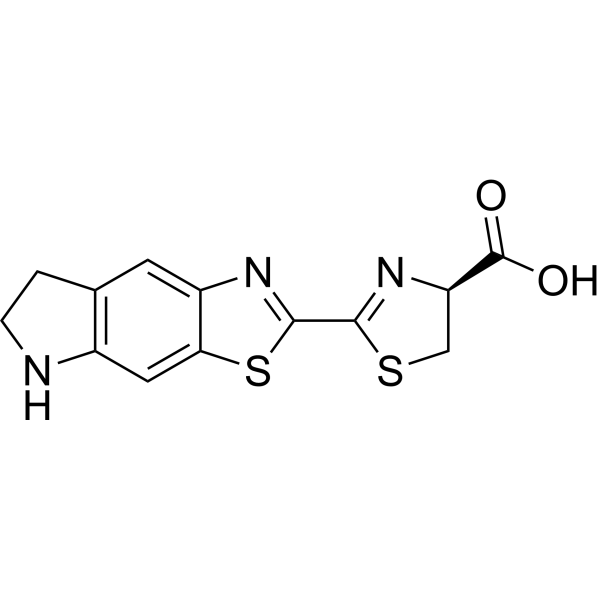
CycLuc1
CAS No. 1247879-16-8
CycLuc1( —— )
Catalog No. M26659 CAS No. 1247879-16-8
CycLuc1 is a brain penetrant luciferase substrate.
Purity : >98% (HPLC)
 COA
Datasheet
HNMR
HPLC
MSDS
Handing Instructions
COA
Datasheet
HNMR
HPLC
MSDS
Handing Instructions
| Size | Price / USD | Stock | Quantity |
| 1 mL x 10 mM in DMSO | 42 | In Stock |


|
| 5MG | 38 | In Stock |
|
| 10MG | 61 | In Stock |
|
| 100MG | Get Quote | In Stock |
|
| 200MG | Get Quote | In Stock |
|
| 500MG | Get Quote | In Stock |
|
| 1G | Get Quote | In Stock |
|
Biological Information
-
Product NameCycLuc1
-
NoteResearch use only, not for human use.
-
Brief DescriptionCycLuc1 is a brain penetrant luciferase substrate.
-
DescriptionCycLuc1 is a brain penetrant luciferase substrate.
-
In Vitro——
-
In Vivo——
-
Synonyms——
-
PathwayOthers
-
TargetOther Targets
-
RecptorP-selectin
-
Research Area——
-
Indication——
Chemical Information
-
CAS Number1247879-16-8
-
Formula Weight305.37
-
Molecular FormulaC13H11N3O2S2
-
Purity>98% (HPLC)
-
SolubilityIn Vitro:?DMSO : ≥ 83.33 mg/mL (272.87 )
-
SMILESOC(=O)[C@H]1CSC(=N1)c1nc2cc3CCNc3cc2s1
-
Chemical Name——
Shipping & Storage Information
-
Storage(-20℃)
-
ShippingWith Ice Pack
-
Stability≥ 2 years
Reference
1.S Ohta, et al. Inhibition of P-selectin specific cell adhesion by a low molecular weight, non-carbohydrate compound, KF38789. Inflamm Res. 2001 Nov;50(11):544-51.
molnova catalog



related products
-
Y-29794 Tosylate
Y-29794 Tosylate is an orally active, effective, and specific non-peptide-prolyl endopeptidase (PPCE) inhibitor.
-
3-Hydroxykynurenine
3-Hydroxykynurenine (3-hydroxy-DL-Kynurenine) is an active metabolite of tryptophan and inhibits yeast and rat liver aldehyde dehydrogenase by 97 and 69%.
-
Granuliberin R
Granuliberin R is a new mast cell degranulating peptide comes from amphibian, can be isolated from the skin of frog Rana rugosa. Granuliberin R is a dodecapeptide, can act on rat peritoneal mast cell to liberate granules and release histamine.
