


 Cart
Cart
 sales@molnova.com


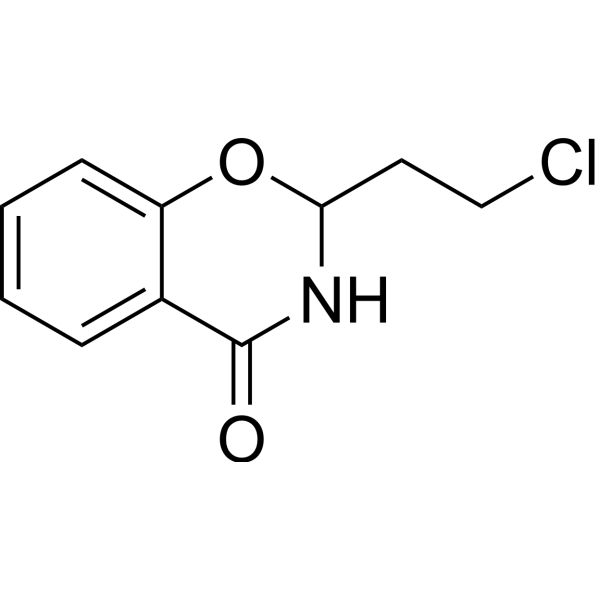
Chlorthenoxazine
CAS No. 132-89-8
Chlorthenoxazine( Chlorethylbenzmethoxazone )
Catalog No. M26647 CAS No. 132-89-8
Chlorthenoxazine has anti-inflammatory activity.
Purity : >98% (HPLC)
 COA
Datasheet
HNMR
HPLC
MSDS
Handing Instructions
COA
Datasheet
HNMR
HPLC
MSDS
Handing Instructions
| Size | Price / USD | Stock | Quantity |
| 1 mL x 10 mM in DMSO | 70 | In Stock |


|
| 5MG | 71 | In Stock |
|
| 10MG | 101 | In Stock |
|
| 25MG | 181 | In Stock |
|
| 50MG | 277 | In Stock |
|
| 100MG | 403 | In Stock |
|
| 200MG | Get Quote | In Stock |
|
| 500MG | Get Quote | In Stock |
|
| 1G | Get Quote | In Stock |
|
Biological Information
-
Product NameChlorthenoxazine
-
NoteResearch use only, not for human use.
-
Brief DescriptionChlorthenoxazine has anti-inflammatory activity.
-
DescriptionChlorthenoxazine has anti-inflammatory activity.
-
In Vitro——
-
In Vivo——
-
SynonymsChlorethylbenzmethoxazone
-
PathwayOthers
-
TargetOther Targets
-
RecptorAnti-infection| Bacterial
-
Research Area——
-
Indication——
Chemical Information
-
CAS Number132-89-8
-
Formula Weight211.65
-
Molecular FormulaC10H10ClNO2
-
Purity>98% (HPLC)
-
Solubility——
-
SMILESClCCC1NC(=O)c2ccccc2O1
-
Chemical Name——
Shipping & Storage Information
-
Storage(-20℃)
-
ShippingWith Ice Pack
-
Stability≥ 2 years
Reference
1.Yoshimura H, et al. Comparative in vitro activity of 16 antimicrobial agents against Actinobacillus pleuropneumoniae. Vet Res Commun. 2002 Jan;26(1):11-9.
molnova catalog



related products
-
(Glu13·17·20)-Osteoc...
(Glu13·17·20)-Osteocalcin(1-46)(mouse)
-
Phenyl-Ac-Gln-OH
Phenylacetylglutamine is a normal constituent of human urine but other mammals such as the dog cat rat monkey sheep and horse do not excrete this compound. Phenylacetylglutamine is a major nitrogenous metabolite that accumulates in uremia. Phenylacetylglutamine also is a microbial metabolite found in Christensenellaceae Lachnospiraceae and Ruminococcaceae.
-
STM2457
STM2457 is a first-in-class, highly potent, selective and orally active inhibitor of METTL3 . It can be used for the research of acute myeloid leukaemia (AML).
