


 Cart
Cart
 sales@molnova.com


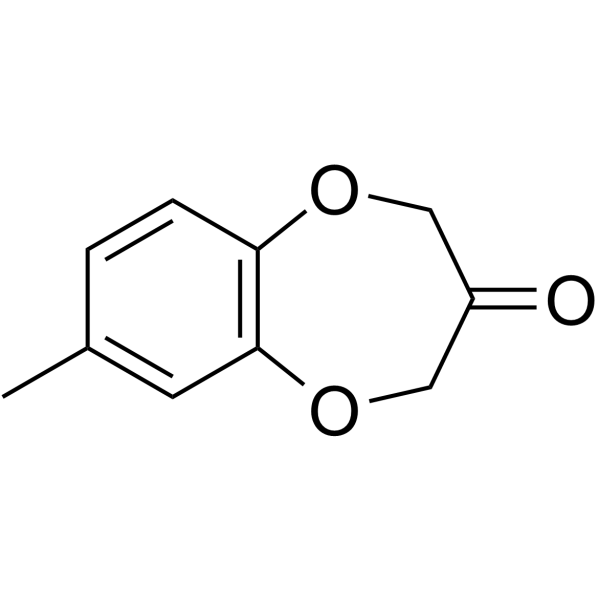
Watermelon ketone
CAS No. 28940-11-6
Watermelon ketone( 7-Methyl-2H-1,5-benzodioxepin-3(4H)-one )
Catalog No. M26585 CAS No. 28940-11-6
Watermelon ketone is a fragrance compound, with a special odorant. It has been widely used in the fragrance industry.
Purity : >98% (HPLC)
 COA
Datasheet
HNMR
HPLC
MSDS
Handing Instructions
COA
Datasheet
HNMR
HPLC
MSDS
Handing Instructions
| Size | Price / USD | Stock | Quantity |
| 1 mL x 10 mM in DMSO | 28 | In Stock |


|
| 100MG | Get Quote | In Stock |
|
| 200MG | Get Quote | In Stock |
|
| 500MG | Get Quote | In Stock |
|
| 1G | 36 | In Stock |
|
Biological Information
-
Product NameWatermelon ketone
-
NoteResearch use only, not for human use.
-
Brief DescriptionWatermelon ketone is a fragrance compound, with a special odorant. It has been widely used in the fragrance industry.
-
DescriptionWatermelon ketone is a fragrance compound, with a special odorant. It has been widely used in the fragrance industry.
-
In Vitro——
-
In Vivo——
-
Synonyms7-Methyl-2H-1,5-benzodioxepin-3(4H)-one
-
PathwayOthers
-
TargetOther Targets
-
RecptorhTRPV4| mTRPV4| rTRPV4| TRPM8
-
Research Area——
-
Indication——
Chemical Information
-
CAS Number28940-11-6
-
Formula Weight178.187
-
Molecular FormulaC10H10O3
-
Purity>98% (HPLC)
-
SolubilityIn Vitro:?DMSO : 100 mg/mL (561.20 mM)
-
SMILESCc1ccc2OCC(=O)COc2c1
-
Chemical Name——
Shipping & Storage Information
-
Storage(-20℃)
-
ShippingWith Ice Pack
-
Stability≥ 2 years
Reference
1.Vincent F, et al. Identification and characterization of novel TRPV4 modulators. Biochem Biophys Res Commun. 2009 Nov 20;389(3):490-4.
molnova catalog



related products
-
Epcoritamab
Epcoritamab (GEN3013) is a novel subcutaneous CD3xCD20 bispecific T-cell binding antibody that activates T-cells and directs them to kill malignant CD20(+) B-cells for the study of relapsed or refractory large B-cell lymphoma.
-
Isolindleyin
Isolindleyin is a natural product.
-
Stigmasterol glucosi...
Stigmasterol glucoside, a constituent of Adenanthera pavonina seed and leaf, may be a plant anticancer agent.
