


 Cart
Cart
 sales@molnova.com


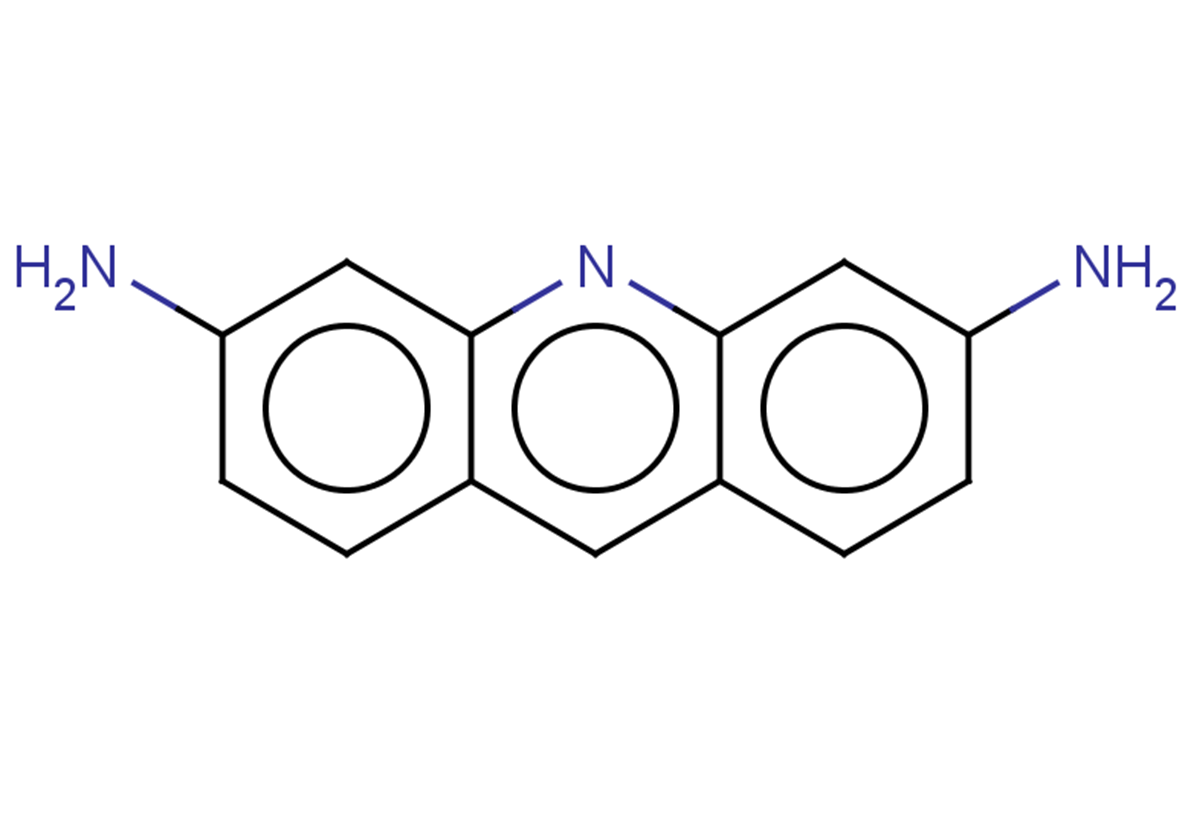
Proflavine
CAS No. 92-62-6
Proflavine( 3,6-Diaminoacridine )
Catalog No. M24977 CAS No. 92-62-6
Proflavine (3,6-Diaminoacridine) is a disinfectant bacteriostatic against many gram-positive bacteria and is a topical antiseptic used mainly in wound dressings.
Purity : >98% (HPLC)
 COA
Datasheet
HNMR
HPLC
MSDS
Handing Instructions
COA
Datasheet
HNMR
HPLC
MSDS
Handing Instructions
| Size | Price / USD | Stock | Quantity |
| 1 mL x 10 mM in DMSO | 56 | In Stock |


|
| 2MG | 33 | In Stock |
|
| 5MG | 53 | In Stock |
|
| 10MG | 85 | In Stock |
|
| 25MG | 170 | In Stock |
|
| 50MG | 272 | In Stock |
|
| 100MG | 431 | In Stock |
|
| 200MG | Get Quote | In Stock |
|
| 500MG | Get Quote | In Stock |
|
| 1G | Get Quote | In Stock |
|
Biological Information
-
Product NameProflavine
-
NoteResearch use only, not for human use.
-
Brief DescriptionProflavine (3,6-Diaminoacridine) is a disinfectant bacteriostatic against many gram-positive bacteria and is a topical antiseptic used mainly in wound dressings.
-
DescriptionProflavine (3,6-Diaminoacridine) is a disinfectant bacteriostatic against many gram-positive bacteria and is a topical antiseptic used mainly in wound dressings.
-
In Vitro——
-
In Vivo——
-
Synonyms3,6-Diaminoacridine
-
PathwayGPCR/G Protein
-
TargetAntibacterial
-
RecptorBacterial
-
Research Area——
-
Indication——
Chemical Information
-
CAS Number92-62-6
-
Formula Weight209.25
-
Molecular FormulaC13H11N3
-
Purity>98% (HPLC)
-
SolubilityDMSO:22 mg/ml (105.13 mM); Ethanol:2 mg/ml (9.56 mM)
-
SMILESNc1cc2nc3cc(N)ccc3cc2cc1
-
Chemical Name——
Shipping & Storage Information
-
Storage(-20℃)
-
ShippingWith Ice Pack
-
Stability≥ 2 years
Reference
molnova catalog



related products
-
PAβN dihydrochloride
PAβN dihydrochloride is an inhibitor of efflux pump. PAβN reduces the MICs in nine ciprofloxacin-resistant isolates, and in four of these, PAβN increases the susceptibility by twofold.?
-
Dianemycin
Dianemycin is a broad spectrum polyether antibiotic, inhibits gram-positive bacteria.
-
Lanopepden mesylate
Lanopepden mesylate is a peptide deformylase inhibitor against Staphylococcus aureus.
