


 Cart
Cart
 sales@molnova.com


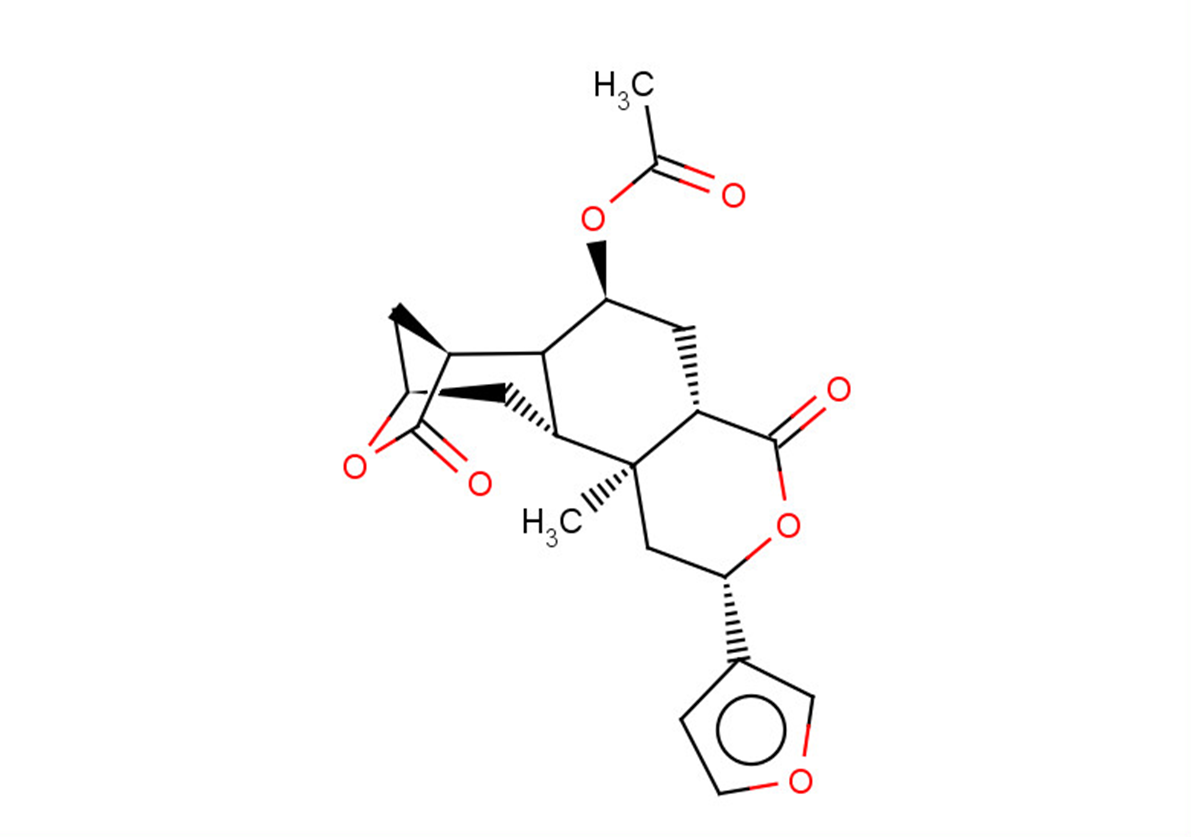
8-Epidiosbulbin E acetate
CAS No. 91095-48-6
8-Epidiosbulbin E acetate( —— )
Catalog No. M24951 CAS No. 91095-48-6
8-Epidiosbulbin E acetate exhibits broad-spectrum plasmid-curing activity against multidrug-resistant (MDR) bacteria, including vancomycin-resistant enterococci.
Purity : >98% (HPLC)
 COA
Datasheet
HNMR
HPLC
MSDS
Handing Instructions
COA
Datasheet
HNMR
HPLC
MSDS
Handing Instructions
| Size | Price / USD | Stock | Quantity |
| 1 mL x 10 mM in DMSO | 131 | In Stock |


|
| 5MG | 117 | In Stock |
|
| 10MG | 176 | In Stock |
|
| 25MG | 300 | In Stock |
|
| 50MG | 415 | In Stock |
|
| 100MG | 581 | In Stock |
|
| 200MG | Get Quote | In Stock |
|
| 500MG | Get Quote | In Stock |
|
| 1G | Get Quote | In Stock |
|
Biological Information
-
Product Name8-Epidiosbulbin E acetate
-
NoteResearch use only, not for human use.
-
Brief Description8-Epidiosbulbin E acetate exhibits broad-spectrum plasmid-curing activity against multidrug-resistant (MDR) bacteria, including vancomycin-resistant enterococci.
-
Description8-Epidiosbulbin E acetate exhibits broad-spectrum plasmid-curing activity against multidrug-resistant (MDR) bacteria, including vancomycin-resistant enterococci.
-
In Vitro——
-
In Vivo——
-
Synonyms——
-
PathwayMicrobiology/Virology
-
TargetAntifection
-
RecptorAnti-infection
-
Research Area——
-
Indication——
Chemical Information
-
CAS Number91095-48-6
-
Formula Weight388.4
-
Molecular FormulaC21H24O7
-
Purity>98% (HPLC)
-
SolubilityIn Vitro:?DMSO : 100 mg/mL (257.46 mM)
-
SMILESC[C@](C[C@@H](c1cocc1)O1)([C@H](C[C@H](C[C@H]23)OC2=O)[C@@H]3[C@H](C2)OC(C)=O)[C@H]2C1=O
-
Chemical Name——
Shipping & Storage Information
-
Storage(-20℃)
-
ShippingWith Ice Pack
-
Stability≥ 2 years
Reference



-
13,21-Dihydroeurycom...
13,21-Dihydroeurycomanone is a natural product isolated from the root of Eurycoma longifolia with antiparasitic activity such as Plasmodium falciparum and Toxoplasma gondii.
-
2,4,5,7-Tetrahydroxy...
2′-Hydroxygenistein is a natural product that can be isolated from Crotalaria pallida and C. assamica. 2′-Hydroxygenistein shows anti-inflammatory activity. 2′-Hydroxygenistein shows significant concentration-dependent inhibitory effects on the release of β-glucuronidase and lysozyme from rat neutrophils, with IC50 values of 5.9 ± 1.4 and 9.7 ± 3.5 μM, respectively.
-
Deoxylapachol
Deoxylapachol has anti-wood rot activity, it can inhibit the brown rot fungi Gloeophyllum sepiarium CBS 353.74 and Gloeophyllum trabeum CBS 318.50 and the white rot fungi Merulius tremellosus CBS 280.73 and Phlebia brevispora CBS 509.92. It also can induce fungal cell wall stress.
