


 Cart
Cart
 sales@molnova.com


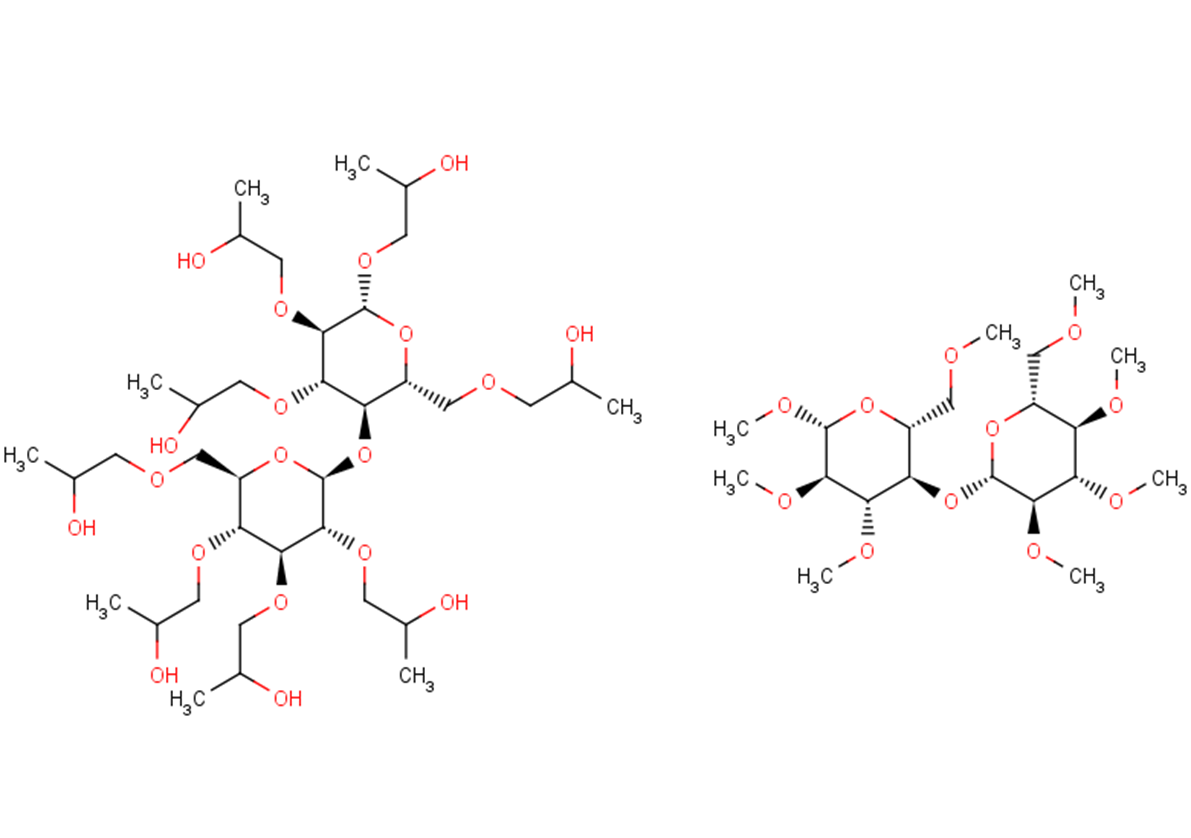
Hypromellose
CAS No. 9004-65-3
Hypromellose( (Hydroxypropyl)methyl cellulose | HPMC | Celacol HPM 5000 )
Catalog No. M24930 CAS No. 9004-65-3
Hypromellose is a water-soluble hydrophilic, non-ionic cellulose ether.
Purity : >98% (HPLC)
 COA
Datasheet
HNMR
HPLC
MSDS
Handing Instructions
COA
Datasheet
HNMR
HPLC
MSDS
Handing Instructions
| Size | Price / USD | Stock | Quantity |
| 5MG | 49 | In Stock |


|
| 100MG | Get Quote | In Stock |
|
| 200MG | Get Quote | In Stock |
|
| 500MG | Get Quote | In Stock |
|
| 1G | Get Quote | In Stock |
|
Biological Information
-
Product NameHypromellose
-
NoteResearch use only, not for human use.
-
Brief DescriptionHypromellose is a water-soluble hydrophilic, non-ionic cellulose ether.
-
DescriptionHypromellose is a water-soluble hydrophilic, non-ionic cellulose ether.
-
In VitroHypromellose provides the release of a drug in a controlled manner, effectively increasing the duration of release of a drug to prolong its therapeutic effect. Hypromellose (hydroxypropylmethylcellulose) has been used in sustained-release pharmaceutical products for many years. When used in matrix tablets, these polymers hydrate on contact with water to produce a viscous gel barrier within and surrounding the tablet. The properties of hypromellose that affect the rate of drug release include the rate of diffusion of water into the dry polymer, the rate of hypromellose hydration and gel formation, the viscosity of the hydrated hypromellose and rate of hypromellose gel erosion.
-
In VivoPunctal occlusion using hypromellose 2% is a low-cost and safe additional treatment for dry eye. Fluorescein and rose bengal staining tests show that there was a significant reduction in signs after occlusion using hypromellose. Hypromellose is effective in improving the blood glucose metabolism and suppressing oxidative stress in mice fed with a high fat diet. The antihyperglycemic and antioxidative effects of hypromellose could be partly attributed to the regulation of hepatic glucose-regulating enzyme activities and activation of the hepatic and erythrocyte antioxidant enzymes. Hypromellose may be useful as biomaterials in the development of functional food or as therapeutic agents against high fat-induced hyperglycemia and oxidative stress.
-
Synonyms(Hydroxypropyl)methyl cellulose | HPMC | Celacol HPM 5000
-
PathwayOthers
-
TargetOther Targets
-
RecptorOthers
-
Research Area——
-
Indication——
Chemical Information
-
CAS Number9004-65-3
-
Formula Weight1261.44
-
Molecular FormulaC56H108O30
-
Purity>98% (HPLC)
-
SolubilityDMSO:22 mg/mL (Need ultrasonic);H2O:9 mg/mL (Need ultrasonic)
-
SMILESCC(O)COC[C@H]1O[C@@H](O[C@H]2[C@H](OCC(O)C)[C@@H](OCC(O)C)[C@H](OCC(O)C)O[C@@H]2COCC(O)C)[C@H](OCC(O)C)[C@@H](OCC(O)C)[C@@H]1OCC(O)C.COC[C@H]3O[C@@H](O[C@H]4[C@H](OC)[C@@H](OC)[C@H](OC)O[C@@H]4COC)[C@H](OC)[C@@H](OC)[C@@H]3OC
-
Chemical Name——
Shipping & Storage Information
-
Storage(-20℃)
-
ShippingWith Ice Pack
-
Stability≥ 2 years
Reference
1.Li CL, et al. The use of hypromellose in oral drug delivery. J Pharm Pharmacol. 2005 May;57(5):533-46.
molnova catalog



related products
-
Neurotrophic Factor ...
Neurotrophic Factor for Retinal Cholinergic Neurons
-
Schizantherin E
Schisantherin E is a natural compound isolated from the active fraction of the fruits of Schisandra sphenanthera Rehd. et Wils.
-
p3K truncated, (Lys ...
p3K truncated, (Lys 58 Lys 60 Lys 63) Ea(54–68)
