


 Cart
Cart
 sales@molnova.com


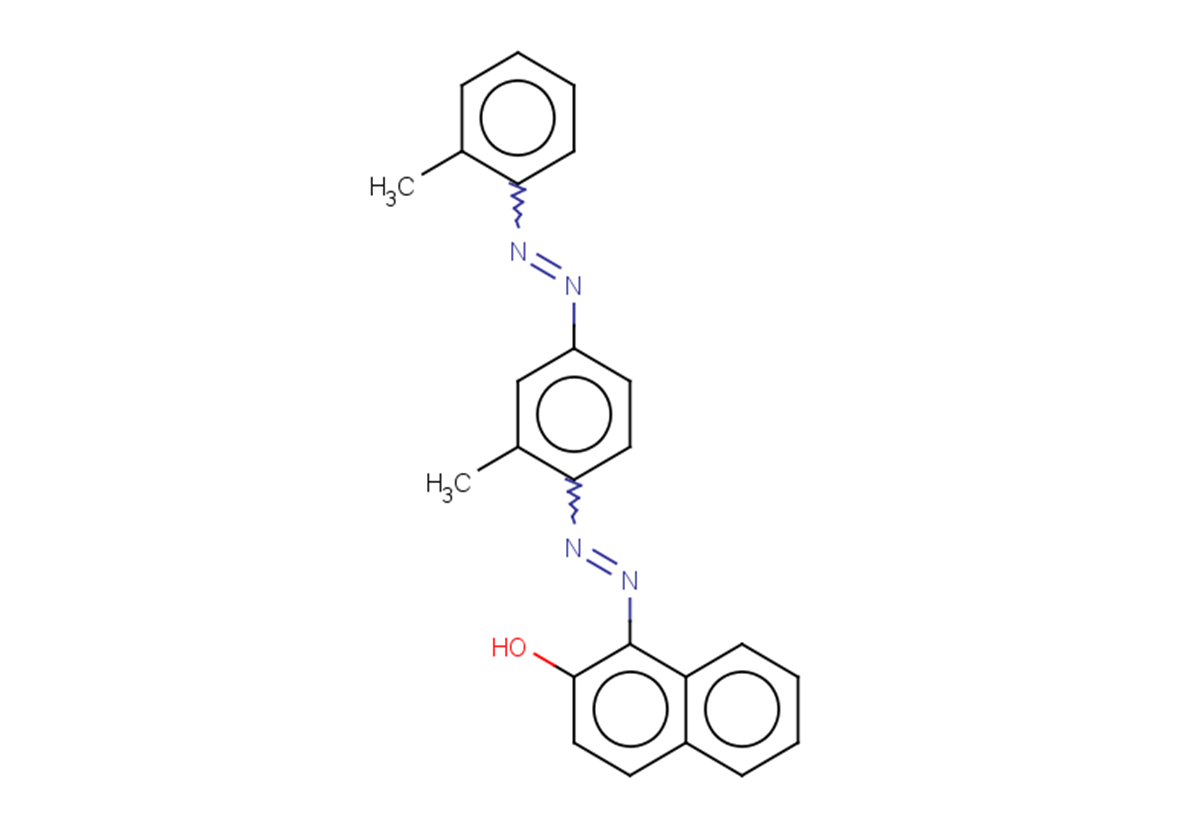
Sudan IV
CAS No. 85-83-6
Sudan IV( Solvent Red 24 | C.I. 26105 )
Catalog No. M24849 CAS No. 85-83-6
Sudan IV is a lysochrome (fat-soluble dye) diazo dye used for the staining of lipids, triglycerides and lipoproteins on frozen paraffin sections.
Purity : >98% (HPLC)
 COA
Datasheet
HNMR
HPLC
MSDS
Handing Instructions
COA
Datasheet
HNMR
HPLC
MSDS
Handing Instructions
| Size | Price / USD | Stock | Quantity |
| 1 mL x 10 mM in DMSO | 37 | In Stock |


|
| 100MG | Get Quote | In Stock |
|
| 200MG | Get Quote | In Stock |
|
| 500MG | 37 | In Stock |
|
| 1G | 51 | In Stock |
|
Biological Information
-
Product NameSudan IV
-
NoteResearch use only, not for human use.
-
Brief DescriptionSudan IV is a lysochrome (fat-soluble dye) diazo dye used for the staining of lipids, triglycerides and lipoproteins on frozen paraffin sections.
-
DescriptionSudan IV is a lysochrome (fat-soluble dye) diazo dye used for the staining of lipids, triglycerides and lipoproteins on frozen paraffin sections.
-
In Vitro——
-
In Vivo——
-
SynonymsSolvent Red 24 | C.I. 26105
-
PathwayOthers
-
TargetOther Targets
-
RecptorOthers
-
Research Area——
-
Indication——
Chemical Information
-
CAS Number85-83-6
-
Formula Weight380.44
-
Molecular FormulaC24H20N4O
-
Purity>98% (HPLC)
-
SolubilityDMSO:5 mg/mL (13.14 mM; Need ultrasonic)
-
SMILESCc(cccc1)c1N=Nc(cc1)cc(C)c1N=Nc(c1ccccc1cc1)c1O
-
Chemical Name——
Shipping & Storage Information
-
Storage(-20℃)
-
ShippingWith Ice Pack
-
Stability≥ 2 years
Reference
1.Refat NA, et al. The induction of cytochrome P450 1A1 by sudan dyes. J Biochem Mol Toxicol. 2008 Mar-Apr;22(2):77-84.
molnova catalog



related products
-
Mulberroside F
Mulberroside F shows inhibitory effects on tyrosinase activity and on the melanin formation of melan-a cells, it also exhibits superoxide scavenging activity that is involved in the protection against auto-oxidation, suggests that mulberroside F may be used as a skin whitening agent.
-
Methyl 7-hydroxyhept...
Methyl 7-hydroxyheptanoat is a product of microbial fatty acid metabolism.
-
Dipotassium glycyrrh...
Dipotassium glycyrrhizinate is an anionic surfactant having anti-allergic and anti-inflammatory activities.
