


 Cart
Cart
 sales@molnova.com


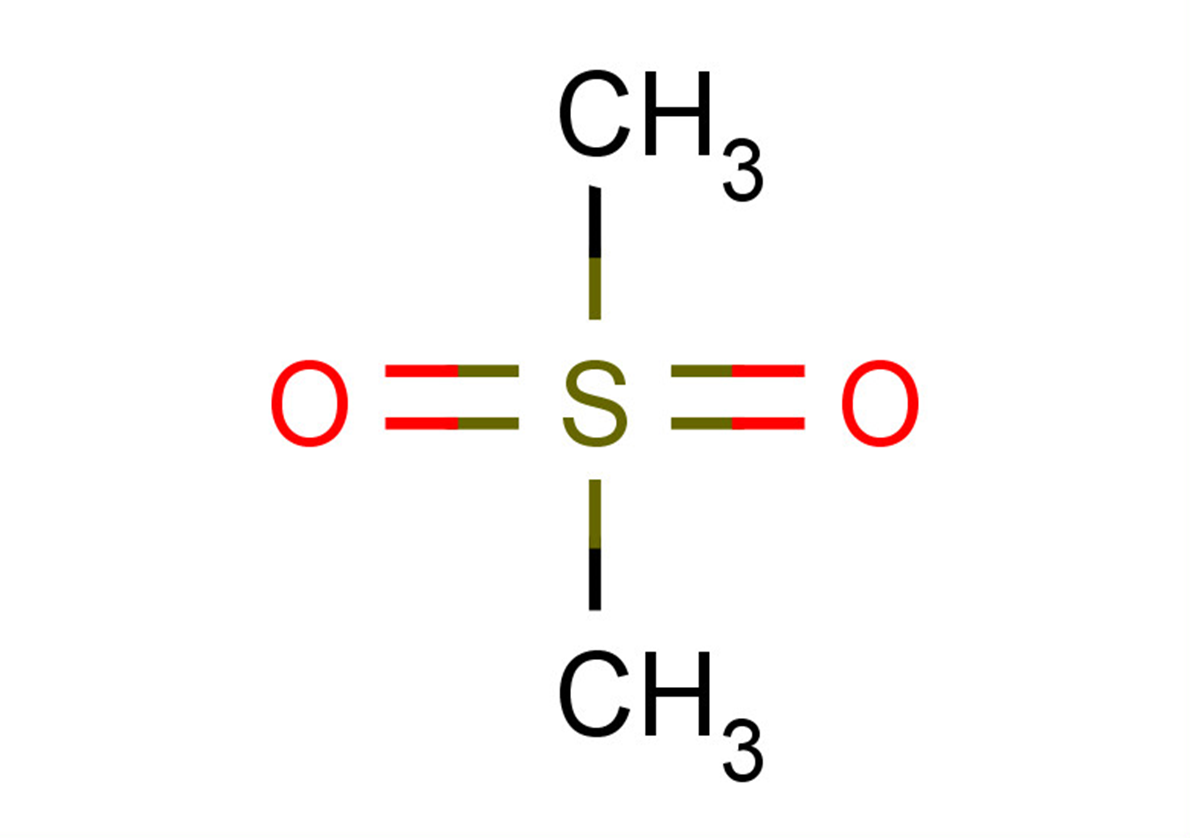
Dimethyl sulfone
CAS No. 67-71-0
Dimethyl sulfone( —— )
Catalog No. M24689 CAS No. 67-71-0
Dimethyl sulfone exists in all living organisms, ranging from bacteria to humans.
Purity : >98% (HPLC)
 COA
Datasheet
HNMR
HPLC
MSDS
Handing Instructions
COA
Datasheet
HNMR
HPLC
MSDS
Handing Instructions
| Size | Price / USD | Stock | Quantity |
| 5MG | 49 | In Stock |


|
| 100MG | Get Quote | In Stock |
|
| 200MG | Get Quote | In Stock |
|
| 500MG | Get Quote | In Stock |
|
| 1G | Get Quote | In Stock |
|
Biological Information
-
Product NameDimethyl sulfone
-
NoteResearch use only, not for human use.
-
Brief DescriptionDimethyl sulfone exists in all living organisms, ranging from bacteria to humans.
-
DescriptionDimethyl sulfone exists in all living organisms, ranging from bacteria to humans. It derives from dietary sources, from intestinal bacterial metabolism and from human endogenous methanethiol metabolism. Dimethyl sulfone is a metabolite occurring in plasma and CSF of normal human.
-
In Vitro——
-
In Vivo——
-
Synonyms——
-
PathwayProteasome/Ubiquitin
-
TargetEndogenous Metabolite
-
RecptorEndogenous Metabolite
-
Research Area——
-
Indication——
Chemical Information
-
CAS Number67-71-0
-
Formula Weight94.13
-
Molecular FormulaC2H6O2S
-
Purity>98% (HPLC)
-
SolubilityH2O:50 mg/mL (531.18 mM; Need ultrasonic)
-
SMILESCS(C)(=O)=O
-
Chemical Name——
Shipping & Storage Information
-
Storage(-20℃)
-
ShippingWith Ice Pack
-
Stability≥ 2 years
Reference
molnova catalog



related products
-
Nα-Acetyl-L-lysine
N-Alpha-acetyllysine is a N-acetylated amino acid. It is a normal constituent of human urine with concentrations in normal samples too small to allow its routine detection; however it has been found at increased levels in the urine of a patient with aminoacylase I deficiency.
-
2,4-Dimethylacetophe...
2',4'-Dimethylacetophenone is a chemical that can be used in biological research. The compound can be used in gas chromatography to detect aldosterone aroma in tobacco compounds and can be used to protect food products.
-
Dimethylmalonic acid
Dimethylmalonic acid(2,2-Dimethylmalonic acid) is a short-chain dicarboxylic acid found in human serum that can be used to prevent or retard denaturation of fish actinomyosin in freezing buffer solution (pH 7).
