


 Cart
Cart
 sales@molnova.com


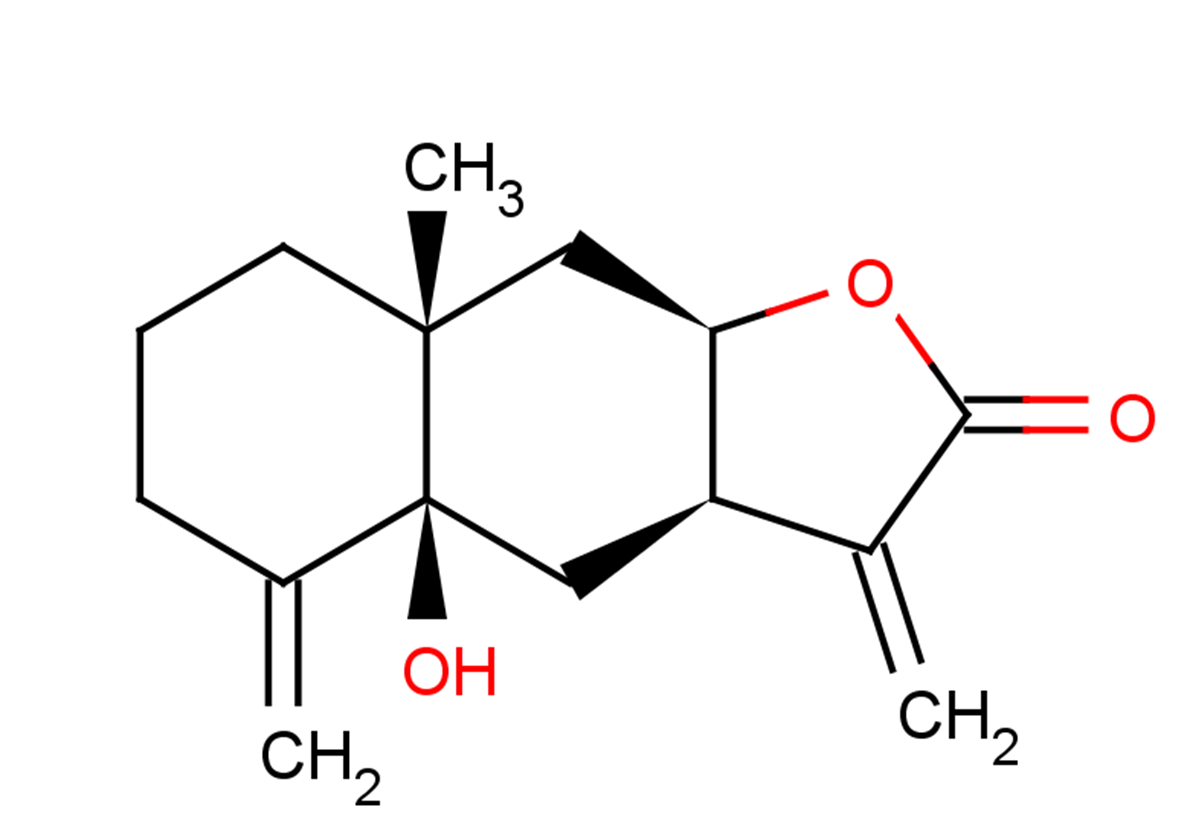
Telekin
CAS No. 6752-90-5
Telekin( —— )
Catalog No. M24688 CAS No. 6752-90-5
Telekin, a eudesmane-type sesquiterpene lactone compound isolated from Chinese folk medicine Carpesium divaricatum, has been reported to strongly inhibit the proliferation of cancer cells
Purity : >98% (HPLC)
 COA
Datasheet
HNMR
HPLC
MSDS
Handing Instructions
COA
Datasheet
HNMR
HPLC
MSDS
Handing Instructions
| Size | Price / USD | Stock | Quantity |
| 1 mL x 10 mM in DMSO | 262 | In Stock |


|
| 5MG | 287 | In Stock |
|
| 10MG | 430 | In Stock |
|
| 25MG | 710 | In Stock |
|
| 50MG | 977 | In Stock |
|
| 100MG | Get Quote | In Stock |
|
| 200MG | Get Quote | In Stock |
|
| 500MG | Get Quote | In Stock |
|
| 1G | Get Quote | In Stock |
|
Biological Information
-
Product NameTelekin
-
NoteResearch use only, not for human use.
-
Brief DescriptionTelekin, a eudesmane-type sesquiterpene lactone compound isolated from Chinese folk medicine Carpesium divaricatum, has been reported to strongly inhibit the proliferation of cancer cells
-
DescriptionTelekin, a eudesmane-type sesquiterpene lactone compound isolated from Chinese folk medicine Carpesium divaricatum, has been reported to strongly inhibit the proliferation of cancer cells.
-
In Vitro——
-
In Vivo——
-
Synonyms——
-
PathwayOthers
-
TargetOther Targets
-
RecptorOthers
-
Research Area——
-
Indication——
Chemical Information
-
CAS Number6752-90-5
-
Formula Weight248.32
-
Molecular FormulaC15H20O3
-
Purity>98% (HPLC)
-
Solubility——
-
SMILESC[C@@](CCCC1=C)(C[C@H]([C@H](C2)C3=C)OC3=O)[C@@]12O
-
Chemical Name——
Shipping & Storage Information
-
Storage(-20℃)
-
ShippingWith Ice Pack
-
Stability≥ 2 years
Reference
1.Zheng B , Wu L , Ma L , et al. Telekin induces apoptosis associated with the mitochondria-mediated pathway in human hepatocellular carcinoma cells[J]. Biological & Pharmaceutical Bulletin, 2013, 36(7):1118.
molnova catalog



related products
-
Acevaltrate
Acevaltrate displays high cytotoxicity against GLC(4), a human small-cell lung cancer cell line, and against COLO 320, a human colorectal cancer cell line, with IC50 values of 1-6 uM.
-
Cortistatin-17 (huma...
Cortistatin-17 (human) is a somatostatin neuropeptide with potential for studying diseases such as cancer, inflammation, autoimmunity, fibrosis, and pain.
-
Isosecotanapartholid...
The herbs of Artemisiaprinceps pampanini.
