


 Cart
Cart
 sales@molnova.com


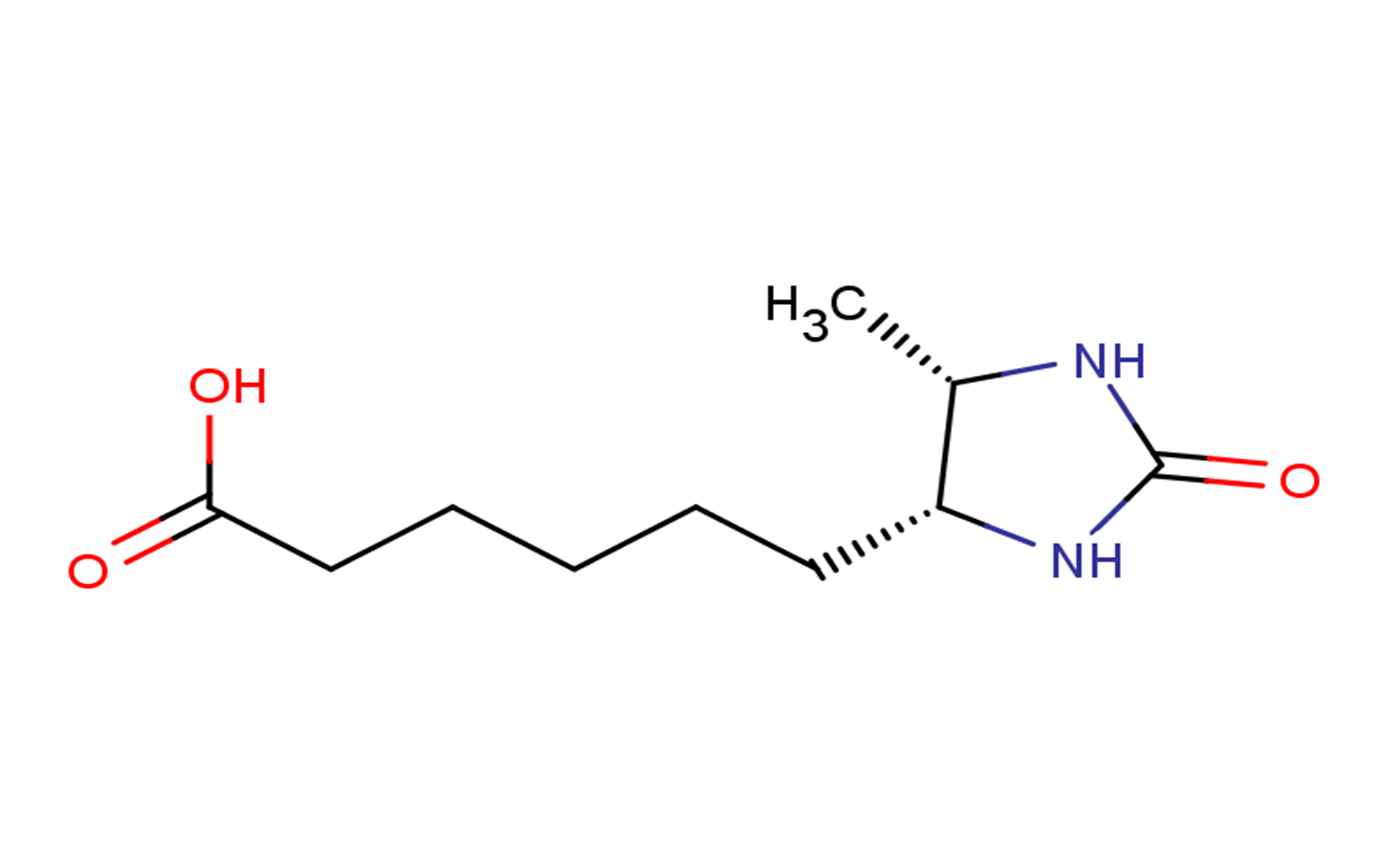
D-Desthiobiotin
CAS No. 533-48-2
D-Desthiobiotin( —— )
Catalog No. M24512 CAS No. 533-48-2
D-Desthiobiotin is a biotin derivative used in affinity chromatography and protein chromatography. It can also be used for protein, cell labeling, detection, and separation.
Purity : >98% (HPLC)
 COA
Datasheet
HNMR
HPLC
MSDS
Handing Instructions
COA
Datasheet
HNMR
HPLC
MSDS
Handing Instructions
| Size | Price / USD | Stock | Quantity |
| 1 mL x 10 mM in DMSO | 42 | In Stock |


|
| 50MG | 28 | In Stock |
|
| 100MG | Get Quote | In Stock |
|
| 200MG | Get Quote | In Stock |
|
| 500MG | Get Quote | In Stock |
|
| 1G | Get Quote | In Stock |
|
Biological Information
-
Product NameD-Desthiobiotin
-
NoteResearch use only, not for human use.
-
Brief DescriptionD-Desthiobiotin is a biotin derivative used in affinity chromatography and protein chromatography. It can also be used for protein, cell labeling, detection, and separation.
-
DescriptionD-Desthiobiotin is a biotin derivative used in affinity chromatography and protein chromatography. It can also be used for protein, cell labeling, detection, and separation.
-
In Vitro——
-
In Vivo——
-
Synonyms——
-
PathwayProteasome/Ubiquitin
-
TargetEndogenous Metabolite
-
RecptorHuman Endogenous Metabolite
-
Research Area——
-
Indication——
Chemical Information
-
CAS Number533-48-2
-
Formula Weight214.26
-
Molecular FormulaC10H18N2O3
-
Purity>98% (HPLC)
-
SolubilityDMSO:62.5 mg/mL (291.70 mM; Need ultrasonic)
-
SMILESO=C(O)CCCCC[C@H]([C@H](C)N1)NC1=O
-
Chemical Name——
Shipping & Storage Information
-
Storage(-20℃)
-
ShippingWith Ice Pack
-
Stability≥ 2 years
Reference
1.R?hlen DL, et al. Toward a Hybrid Biosensor System for Analysis of Organic and Volatile Fatty Acids in Fermentation Processes. Front Chem. 2018 Jul 17;6:284.
molnova catalog



related products
-
14-Diaminobutane
14-Diaminobutane is a GABA precursor in many biological systems and synthon for amido-ureas.
-
Magnesium acetate te...
Magnesium acetate tetrahydrate is the hydrated form of the anhydrous magnesium acetate salt.Magnesium acetate tetrahydrate is commonly used to synthesize other compounds, cocoa as an electrolyte supplement or as a reagent in molecular biology experiments.
-
(±)-Propionylcarniti...
(±)-Propionylcarnitine chloride (Propionyl-DL-carnitine chloride) is a mixture of short-chain acylcarnitines used as a dietary supplement for the study of chronic diabetes.
