


 Cart
Cart
 sales@molnova.com


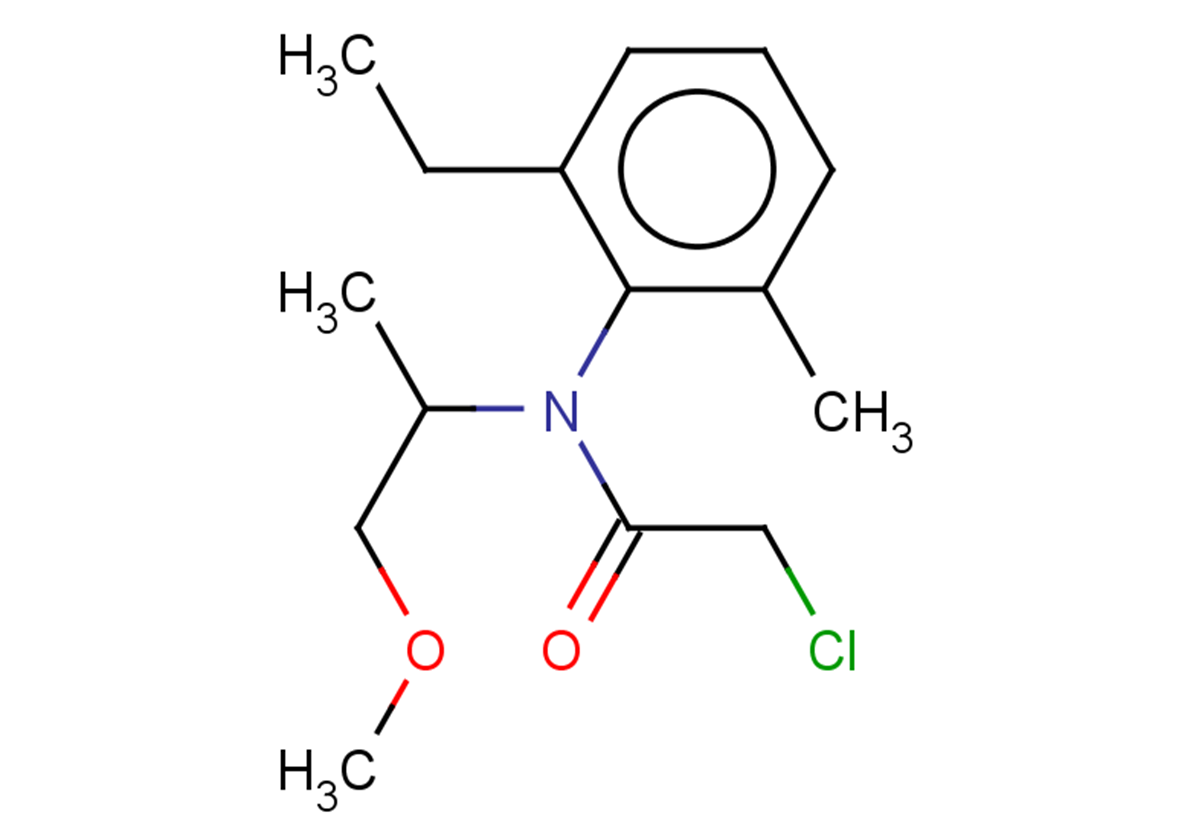
Metolachlor
CAS No. 51218-45-2
Metolachlor( —— )
Catalog No. M24478 CAS No. 51218-45-2
Metolachlor is an organic compound. Metolachlor is also widely used as an herbicide.
Purity : >98% (HPLC)
 COA
Datasheet
HNMR
HPLC
MSDS
Handing Instructions
COA
Datasheet
HNMR
HPLC
MSDS
Handing Instructions
| Size | Price / USD | Stock | Quantity |
| 1 mL x 10 mM in DMSO | 29 | In Stock |


|
| 25MG | 28 | In Stock |
|
| 100MG | Get Quote | In Stock |
|
| 200MG | Get Quote | In Stock |
|
| 500MG | Get Quote | In Stock |
|
| 1G | Get Quote | In Stock |
|
Biological Information
-
Product NameMetolachlor
-
NoteResearch use only, not for human use.
-
Brief DescriptionMetolachlor is an organic compound. Metolachlor is also widely used as an herbicide.
-
DescriptionMetolachlor is an organic compound. Metolachlor is also widely used as an herbicide.
-
In Vitro——
-
In Vivo——
-
Synonyms——
-
PathwayOthers
-
TargetOther Targets
-
RecptorOthers
-
Research Area——
-
Indication——
Chemical Information
-
CAS Number51218-45-2
-
Formula Weight283.79
-
Molecular FormulaC15H22ClNO2
-
Purity>98% (HPLC)
-
SolubilityDMSO:Soluble
-
SMILESCCc(cccc1C)c1N(C(C)COC)C(CCl)=O
-
Chemical Name——
Shipping & Storage Information
-
Storage(-20℃)
-
ShippingWith Ice Pack
-
Stability≥ 2 years
Reference
1.Coquillé N, et al. The influence of natural dissolved organic matter on herbicide toxicity to marine microalgae is species-dependent. Aquat Toxicol. 2018 Feb 27;198:103-117.
molnova catalog



related products
-
Deacetylorientalide
Deacetylorientalide (compound 19) is a germacrane-type sesquiterpenoid compound that can be found in from Sigesbeckia orientalis.
-
Isocoumarin
Isocoumarin
-
Anisocoumarin H
Anisocoumarin H is a coumarin that exhibits antifungal activity. Anisocoumarin H shows the activities against Microsporum gypseum, Trichophyton rubrum and Trichophyton mentagrophytes with MICs of 62.5 μg/mL.
