


 Cart
Cart
 sales@molnova.com


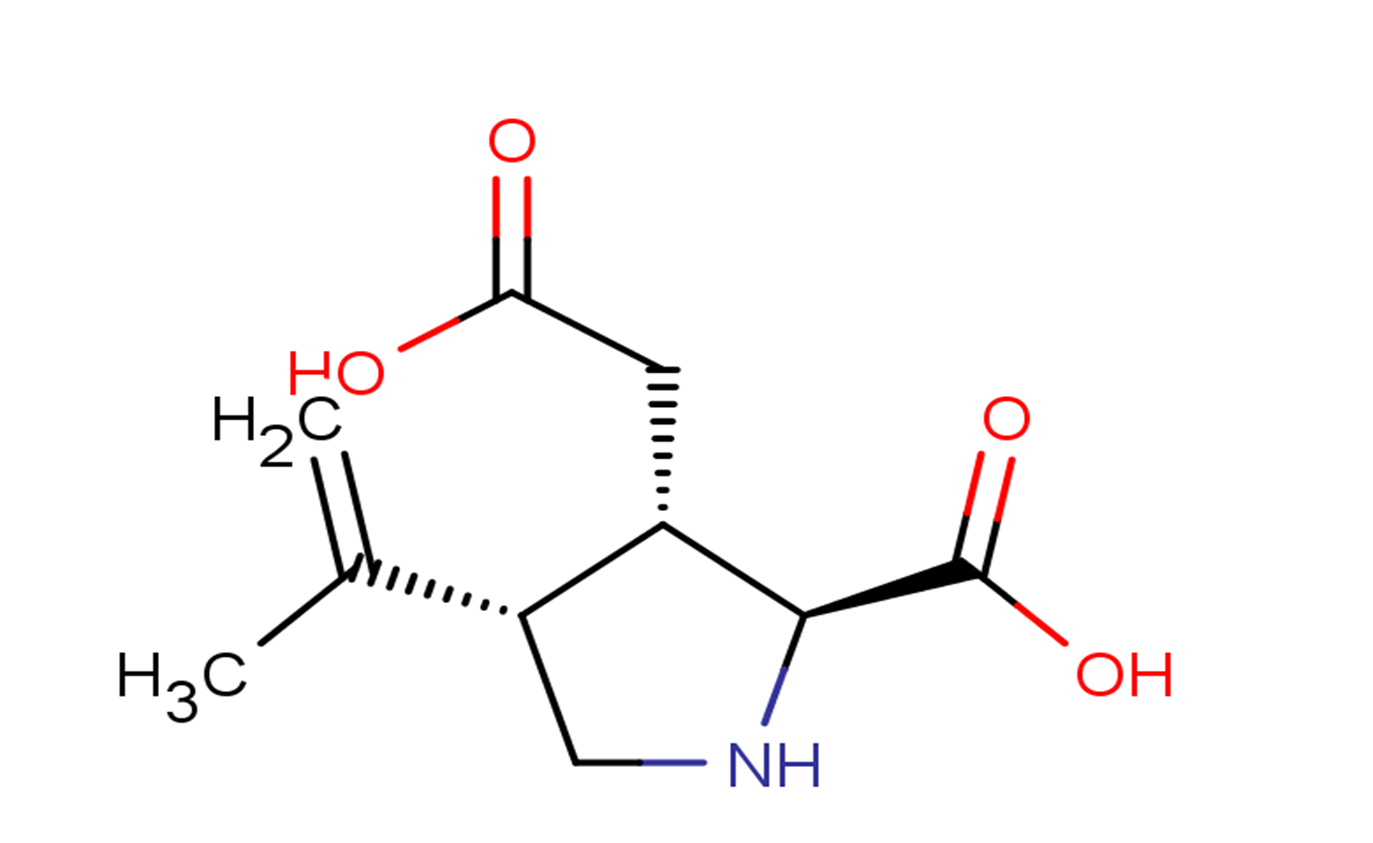
Kainic acid
CAS No. 487-79-6
Kainic acid( —— )
Catalog No. M24443 CAS No. 487-79-6
In the CNS, Kainic acid is an effective agonist at excitatory amino acid receptor subtypes.
Purity : >98% (HPLC)
 COA
Datasheet
HNMR
HPLC
MSDS
Handing Instructions
COA
Datasheet
HNMR
HPLC
MSDS
Handing Instructions
| Size | Price / USD | Stock | Quantity |
| 1 mL x 10 mM in DMSO | 56 | In Stock |


|
| 2MG | 33 | In Stock |
|
| 5MG | 53 | In Stock |
|
| 10MG | 101 | In Stock |
|
| 100MG | Get Quote | In Stock |
|
| 200MG | Get Quote | In Stock |
|
| 500MG | Get Quote | In Stock |
|
| 1G | Get Quote | In Stock |
|
Biological Information
-
Product NameKainic acid
-
NoteResearch use only, not for human use.
-
Brief DescriptionIn the CNS, Kainic acid is an effective agonist at excitatory amino acid receptor subtypes.
-
DescriptionIn the CNS, Kainic acid is an effective agonist at excitatory amino acid receptor subtypes.
-
In Vitro——
-
In VivoAnimal Model:8 weeks, 200-250 g male adult Wistar rats Dosage:5 mg/kg Administration:I.p.; hourly at least 3 h until status epilepticus Result:Induced seizures in rats.
-
Synonyms——
-
PathwayOthers
-
TargetOther Targets
-
RecptorOthers
-
Research Area——
-
Indication——
Chemical Information
-
CAS Number487-79-6
-
Formula Weight213.23
-
Molecular FormulaC10H15NO4
-
Purity>98% (HPLC)
-
SolubilityH2O:50 mg/mL (234.49 mM)
-
SMILESO=C(O)C[C@@H]1[C@@H](C(O)=O)NC[C@@H]1C(C)=C
-
Chemical Name——
Shipping & Storage Information
-
Storage(-20℃)
-
ShippingWith Ice Pack
-
Stability≥ 2 years
Reference
1.Matsuoka Y, et al. Kainic acid induction of heme oxygenase in vivo and in vitro. Neuroscience. 1998 Aug;85(4):1223-33.
molnova catalog



related products
-
Dihydrophaseic acid ...
The fruits of Zanthoxylum bungeanum.
-
Morin Hydrate
Morin hydrate(Aurantica) is a flavonoid isolated from Maclura pomifera (Osage orange), Maclura tinctoria (old fustic) and from leaves of Psidium guajava (common guava).
-
Tiragolumab
Tiragolumab(MTIG-7192A) is a monoclonal antibody that targets T-cell immunoglobulin and the ITIM structural domain (TIGIT).
