


 Cart
Cart
 sales@molnova.com


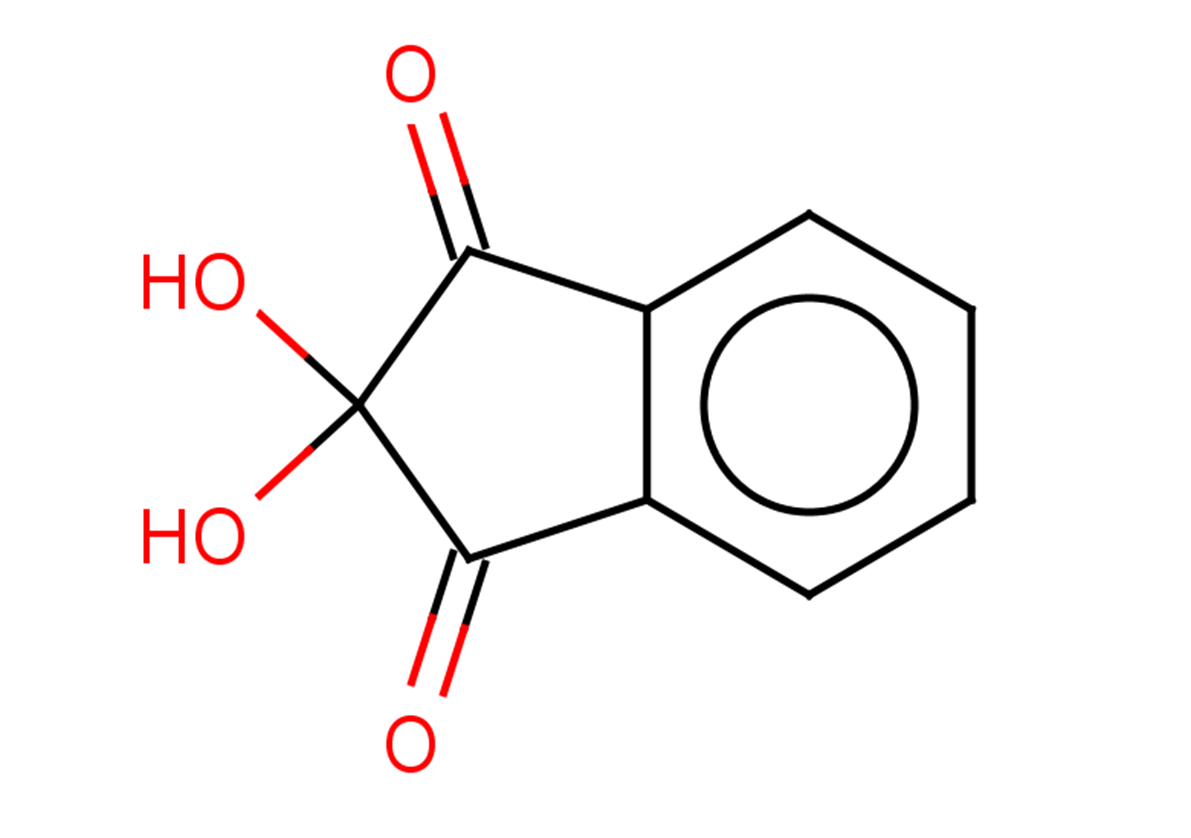
Ninhydrin
CAS No. 485-47-2
Ninhydrin( —— )
Catalog No. M24438 CAS No. 485-47-2
Ninhydrin is a chromogenic analytical probe for the quantification of proteins and amino acids.
Purity : >98% (HPLC)
 COA
Datasheet
HNMR
HPLC
MSDS
Handing Instructions
COA
Datasheet
HNMR
HPLC
MSDS
Handing Instructions
| Size | Price / USD | Stock | Quantity |
| 100MG | Get Quote | In Stock |


|
| 200MG | Get Quote | In Stock |
|
| 500MG | Get Quote | In Stock |
|
| 1G | 27 | In Stock |
|
Biological Information
-
Product NameNinhydrin
-
NoteResearch use only, not for human use.
-
Brief DescriptionNinhydrin is a chromogenic analytical probe for the quantification of proteins and amino acids.
-
DescriptionNinhydrin is a chromogenic analytical probe for the quantification of proteins and amino acids.
-
In VitroNinhydrin is used in amino acid analysis of proteins. Except proline, Most amino acids can be hydrolyzed and react with ninhydrin. The amino acids are then quantified colorimetrically after separation by chromatography.Ninhydrin reacts with primary and secondary amines producing a blue or purple reaction product: diketohydrindylidene-diketohydrindamine.
-
In Vivo——
-
Synonyms——
-
PathwayOthers
-
TargetOther Targets
-
Recptorchromogenic analytical probe
-
Research Area——
-
Indication——
Chemical Information
-
CAS Number485-47-2
-
Formula Weight178.14
-
Molecular FormulaC9H6O4
-
Purity>98% (HPLC)
-
SolubilityH2O:20 mg/mL (112.27 mM; ultrasonic and warming and heat to 60°C)
-
SMILESOC(C(c1c2cccc1)=O)(C2=O)O
-
Chemical Name——
Shipping & Storage Information
-
Storage(-20℃)
-
ShippingWith Ice Pack
-
Stability≥ 2 years
Reference
1.Omar MA, et al. Utility of?ninhydrin?reagent for spectrofluorimetric determination of heptaminol in human plasma.Luminescence.?2018 Sep;33(6):1107-1112.
molnova catalog



related products
-
1,5-dichloro-3-fluor...
1,5-dichloro-3-fluoro-2-nitrobenzene
-
14-Epiandrographolid...
14-Epiandrographolide is a compound derived from the above-ground parts of Andrographis paniculata that induces cell differentiation and can be used in the study of multiple sclerosis.
-
Atrial Natriuretic P...
Atrial Natriuretic Peptide (4-24), frog
