


 Cart
Cart
 sales@molnova.com


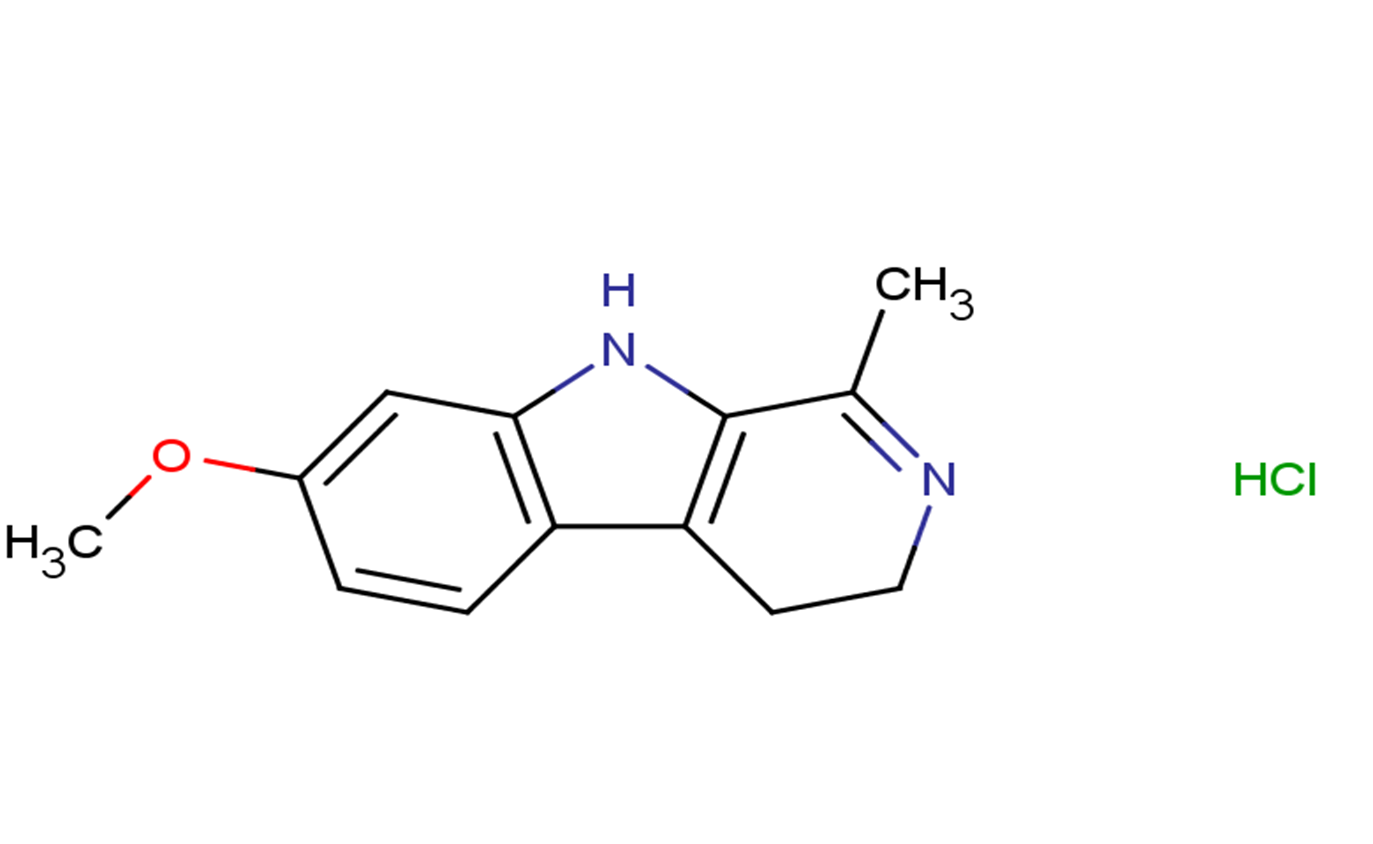
Harmaline hydrochloride
CAS No. 363-11-1
Harmaline hydrochloride( Harmidine hydrochloride )
Catalog No. M24323 CAS No. 363-11-1
Harmaline hydrochloride is a fluorescent indole alkaloid from the group of harmala alkaloids and beta-carbolines.
Purity : >98% (HPLC)
 COA
Datasheet
HNMR
HPLC
MSDS
Handing Instructions
COA
Datasheet
HNMR
HPLC
MSDS
Handing Instructions
| Size | Price / USD | Stock | Quantity |
| 1 mL x 10 mM in DMSO | 43 | In Stock |


|
| 10MG | 48 | In Stock |
|
| 25MG | 60 | In Stock |
|
| 50MG | 75 | In Stock |
|
| 100MG | 136 | In Stock |
|
| 200MG | Get Quote | In Stock |
|
| 500MG | Get Quote | In Stock |
|
| 1G | Get Quote | In Stock |
|
Biological Information
-
Product NameHarmaline hydrochloride
-
NoteResearch use only, not for human use.
-
Brief DescriptionHarmaline hydrochloride is a fluorescent indole alkaloid from the group of harmala alkaloids and beta-carbolines.
-
DescriptionHarmaline hydrochloride is a fluorescent indole alkaloid from the group of harmala alkaloids and beta-carbolines. It is the partially hydrogenated form of harmine.Harmaline produces a generalized tremor in normal rats by inducing rhythmic firing of inferior olivary neurons.
-
In Vitro——
-
In Vivo——
-
SynonymsHarmidine hydrochloride
-
PathwayOthers
-
TargetOther Targets
-
RecptorOthers
-
Research Area——
-
Indication——
Chemical Information
-
CAS Number363-11-1
-
Formula Weight250.72
-
Molecular FormulaC13H15ClN2O
-
Purity>98% (HPLC)
-
SolubilityDMSO:10 mM
-
SMILESCC1=NCCC2=C1NC3=C2C=CC(=C3)OC.Cl
-
Chemical Name——
Shipping & Storage Information
-
Storage(-20℃)
-
ShippingWith Ice Pack
-
Stability≥ 2 years
Reference
1.Wang Y, Wang C, Jiang C, Zeng H, He X. Novel mechanism of harmaline on inducing G2/M cell cycle arrest and apoptosis by up-regulating Fas/FasL in SGC-7901 cells. Sci Rep. 2015;5:18613. Published 2015 Dec 18. doi:10.1038/srep18613
molnova catalog



related products
-
5(6)-TAMRA SE
5(6)-TAMRA SE is the amine-reactive, mixed isomer form of TAMRA, which is a dye for oligonucleotide labeling and automated DNA sequencing applications.
-
UBP 310
GLUK5 kainate receptor antagonist.
-
EcDsbB-IN-12
EcDsbB-IN-12 targets disulfide bond forming enzyme,and is a novel potent specific inhibitor of EcDsbB.
