


 Cart
Cart
 sales@molnova.com


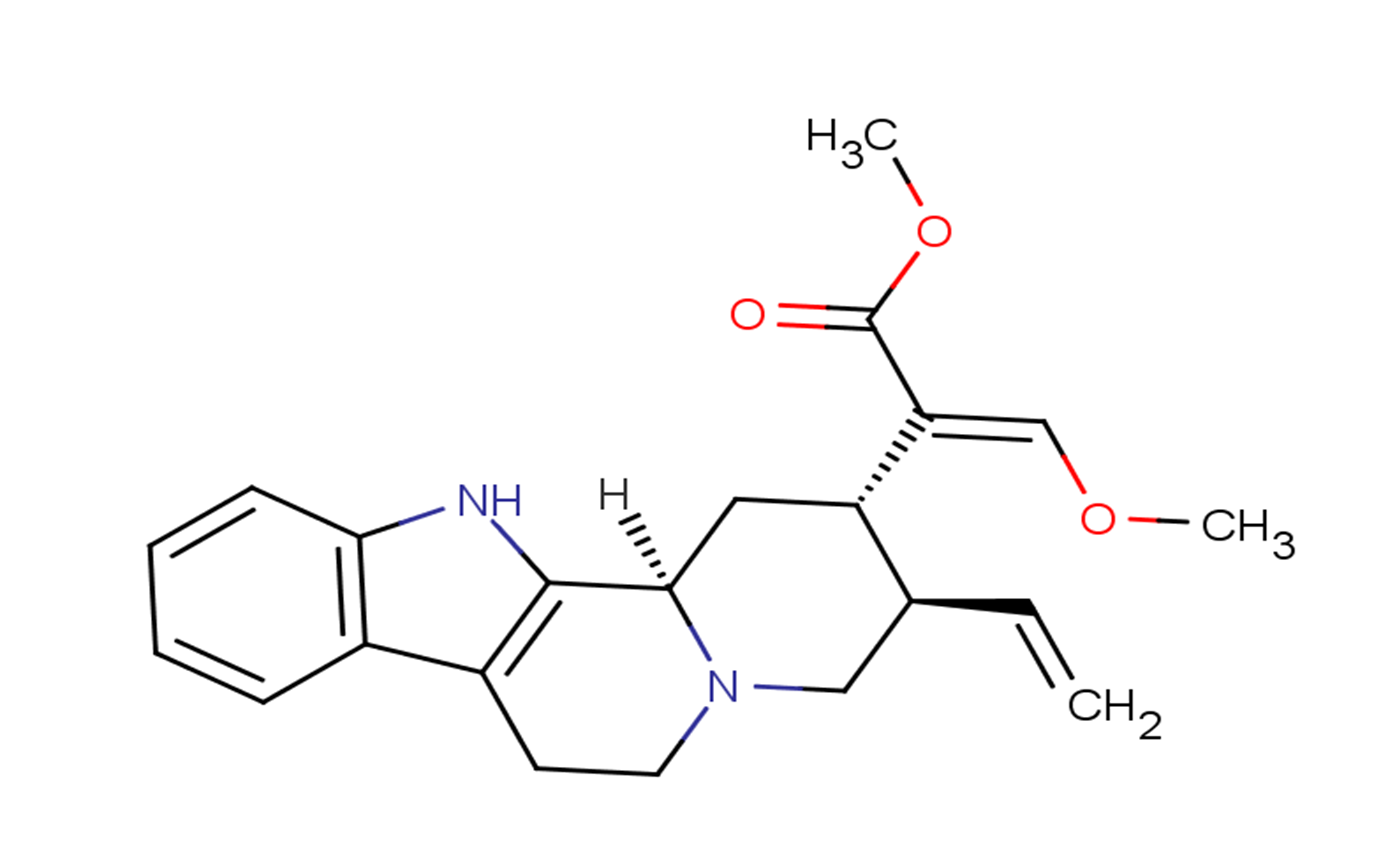
Hirsuteine
CAS No. 35467-43-7
Hirsuteine( —— )
Catalog No. M24309 CAS No. 35467-43-7
Hirsuteine is a natural product. It non-competitively antagonizes nicotine-mediated dopamine release by blocking ion permeation through nicotinic receptor channel complexes.
Purity : >98% (HPLC)
 COA
Datasheet
HNMR
HPLC
MSDS
Handing Instructions
COA
Datasheet
HNMR
HPLC
MSDS
Handing Instructions
| Size | Price / USD | Stock | Quantity |
| 1 mL x 10 mM in DMSO | 132 | In Stock |


|
| 5MG | 123 | In Stock |
|
| 10MG | 187 | In Stock |
|
| 25MG | 315 | In Stock |
|
| 100MG | Get Quote | In Stock |
|
| 200MG | Get Quote | In Stock |
|
| 500MG | Get Quote | In Stock |
|
| 1G | Get Quote | In Stock |
|
Biological Information
-
Product NameHirsuteine
-
NoteResearch use only, not for human use.
-
Brief DescriptionHirsuteine is a natural product. It non-competitively antagonizes nicotine-mediated dopamine release by blocking ion permeation through nicotinic receptor channel complexes.
-
DescriptionHirsuteine is a natural product. It non-competitively antagonizes nicotine-mediated dopamine release by blocking ion permeation through nicotinic receptor channel complexes.
-
In Vitro——
-
In Vivo——
-
Synonyms——
-
PathwayGPCR/G Protein
-
TargetDopamine Receptor
-
RecptorDopamine
-
Research Area——
-
Indication——
Chemical Information
-
CAS Number35467-43-7
-
Formula Weight366.45
-
Molecular FormulaC22H26N2O3
-
Purity>98% (HPLC)
-
SolubilityIn Vitro:?DMSO : 100 mg/mL (272.89 mM)
-
SMILESO=C(OC)/C([C@H]([C@H](CN1CC2)C=C)C[C@]1([H])C3=C2C(C=CC=C4)=C4N3)=C/OC
-
Chemical Name——
Shipping & Storage Information
-
Storage(-20℃)
-
ShippingWith Ice Pack
-
Stability≥ 2 years
Reference
1.Non-competitive antagonism by hirsuteine of nicotinic receptor-mediated dopamine release from rat pheochromocytoma cells.Jpn J Pharmacol. 1993 Apr;61(4):351-6.
molnova catalog



related products
-
Talquetamab
Talquetamab (JNJ-64407564) is a GPRC5D bispecific antibody for multiple myeloma (MM) that induces T-cell-mediated killing of GPRC5-expressing MM cells through T-cell recruitment and activation, demonstrating antitumor activity.
-
Nomifensine (maleate...
Nomifensine maleate is a selective inhibitor of dopamine uptake, used in adult attention deficit disorder.
-
5-Benzyloxygramine
5-Benzyloxygramine blocks the Dopamin receptors and antagonizes the effects of 5-HT on the rat uterus and the rabbit ear.
