


 Cart
Cart
 sales@molnova.com


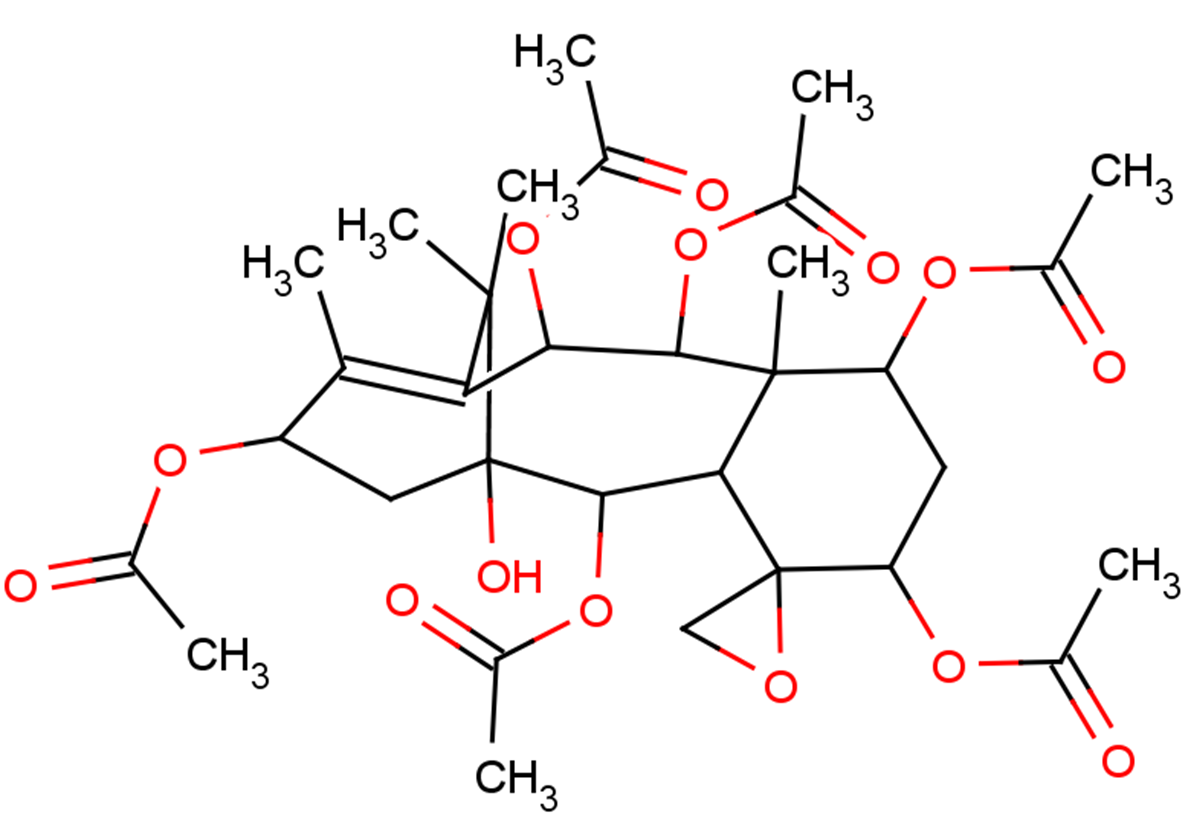
1-Hydroxybaccatin I
CAS No. 30244-37-2
1-Hydroxybaccatin I( —— )
Catalog No. M24227 CAS No. 30244-37-2
1-Hydroxybaccatin I possesses significant antinociceptive activity against p- benzoquinone-induced abdominal contractions.
Purity : >98% (HPLC)
 COA
Datasheet
HNMR
HPLC
MSDS
Handing Instructions
COA
Datasheet
HNMR
HPLC
MSDS
Handing Instructions
| Size | Price / USD | Stock | Quantity |
| 1 mL x 10 mM in DMSO | 256 | In Stock |


|
| 5MG | 180 | In Stock |
|
| 10MG | 282 | In Stock |
|
| 25MG | 489 | In Stock |
|
| 50MG | 682 | In Stock |
|
| 100MG | 918 | In Stock |
|
| 200MG | 1265 | In Stock |
|
| 500MG | Get Quote | In Stock |
|
| 1G | Get Quote | In Stock |
|
Biological Information
-
Product Name1-Hydroxybaccatin I
-
NoteResearch use only, not for human use.
-
Brief Description1-Hydroxybaccatin I possesses significant antinociceptive activity against p- benzoquinone-induced abdominal contractions.
-
Description1-Hydroxybaccatin I possesses significant antinociceptive activity against p- benzoquinone-induced abdominal contractions.
-
In Vitro——
-
In Vivo——
-
Synonyms——
-
PathwayOthers
-
TargetOther Targets
-
RecptorOthers
-
Research Area——
-
Indication——
Chemical Information
-
CAS Number30244-37-2
-
Formula Weight652.68
-
Molecular FormulaC32H44O14
-
Purity>98% (HPLC)
-
Solubility——
-
SMILESCC(C)(C(C1)(C(C(C2(C(CC3OC(C)=O)OC(C)=O)OC2)C3(C)C(C2OC(C)=O)OC(C)=O)OC(C)=O)O)C2=C(C)C1OC(C)=O
-
Chemical Name——
Shipping & Storage Information
-
Storage(-20℃)
-
ShippingWith Ice Pack
-
Stability≥ 2 years
Reference
molnova catalog



related products
-
Nordihydrocapsaicin
Nordihydrocapsaicin?is a capsaicinoid and analog and?congener?of?capsaicin?in?chili peppers?(Capsicum).
-
Euphorbetin
Euphorbetin exhibits anticoagulant activities.
-
Eugenol rutinoside
Eugenol rutinoside is a natural product found in dendropanax dentiger.
