


 Cart
Cart
 sales@molnova.com


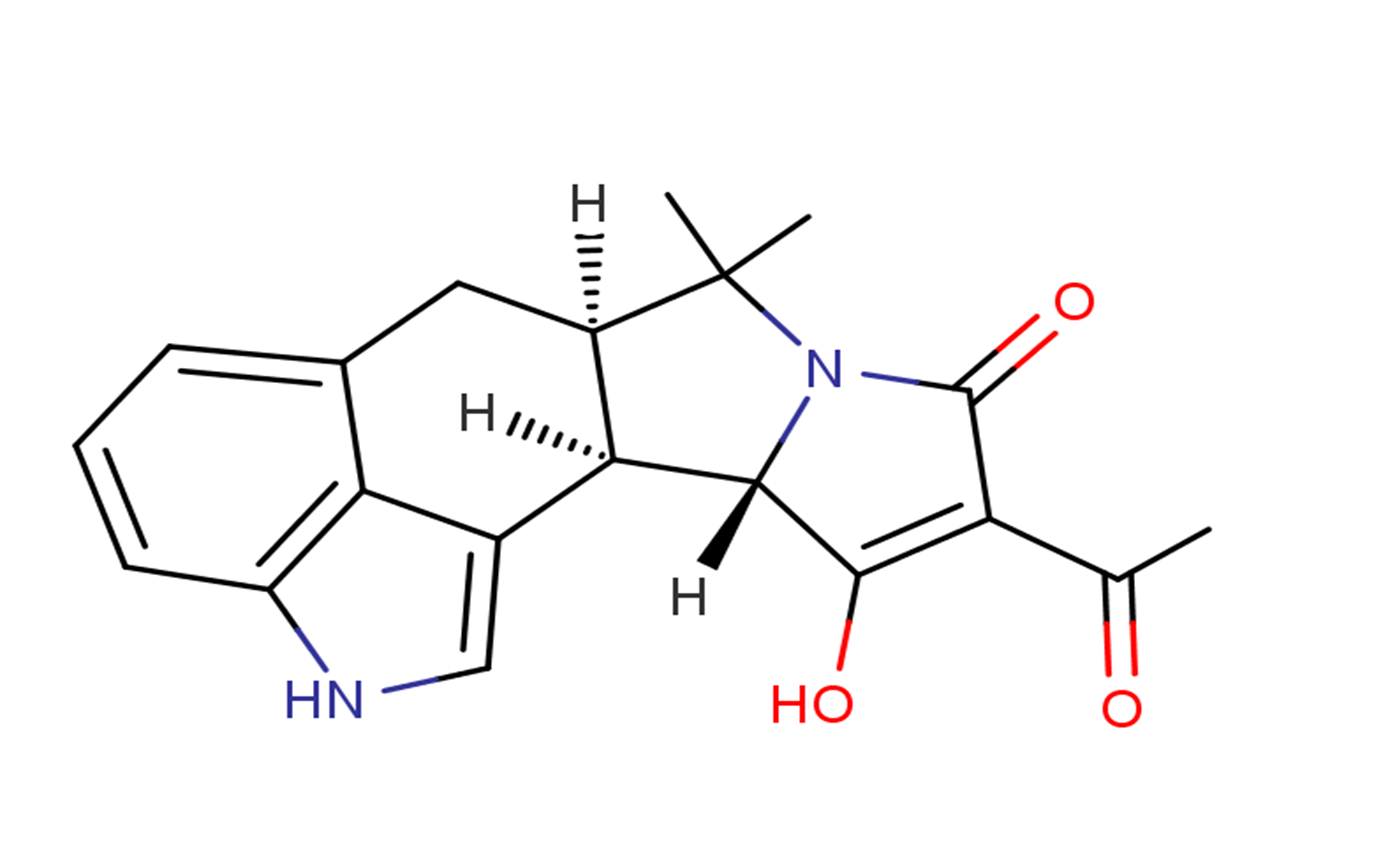
Cyclopiazonic acid
CAS No. 18172-33-3
Cyclopiazonic acid( —— )
Catalog No. M23827 CAS No. 18172-33-3
Cyclopiazonic acid (CPA) is a neurotoxic secondary metabolite (SM) made by A. flavus.
Purity : >98% (HPLC)
 COA
Datasheet
HNMR
HPLC
MSDS
Handing Instructions
COA
Datasheet
HNMR
HPLC
MSDS
Handing Instructions
| Size | Price / USD | Stock | Quantity |
| 1 mL x 10 mM in DMSO | 128 | In Stock |


|
| 2MG | 70 | In Stock |
|
| 5MG | 117 | In Stock |
|
| 100MG | Get Quote | In Stock |
|
| 200MG | Get Quote | In Stock |
|
| 500MG | Get Quote | In Stock |
|
| 1G | Get Quote | In Stock |
|
Biological Information
-
Product NameCyclopiazonic acid
-
NoteResearch use only, not for human use.
-
Brief DescriptionCyclopiazonic acid (CPA) is a neurotoxic secondary metabolite (SM) made by A. flavus.
-
DescriptionCyclopiazonic acid (CPA) is a neurotoxic secondary metabolite (SM) made by A. flavus. Cyclopiazonic acid (CPA) is an endoplasmic reticulum calcium ATPase (Ca2+ATPase; SERCA)nanomolar inhibitor and a potent inducer of cell death in plants.
-
In Vitro——
-
In Vivo——
-
Synonyms——
-
PathwayGPCR/G Protein
-
TargetCalcium Channel
-
RecptorCa2+ATPase
-
Research Area——
-
Indication——
Chemical Information
-
CAS Number18172-33-3
-
Formula Weight336.38
-
Molecular FormulaC20H20N2O3
-
Purity>98% (HPLC)
-
SolubilityDMSO:100 mg/mL?(297.28 mM;?Need ultrasonic)
-
SMILESO=C1C(C(C)=O)=C(O)[C@@]([C@]23[H])([H])N1C(C)(C)[C@]2([H])CC4=CC=CC5=C4C3=CN5
-
Chemical Name——
Shipping & Storage Information
-
Storage(-20℃)
-
ShippingWith Ice Pack
-
Stability≥ 2 years
Reference
1.Chalivendra SC, et al. Cyclopiazonic Acid Is a Pathogenicity Factor for Aspergillus flavus and a Promising Target for Screening Germplasm for Ear Rot Resistance. Mol Plant Microbe Interact. 2017 May;30(5):361-373.
molnova catalog



related products
-
Carboxyamidotriazole...
Carboxyamidotriazole Orotate is a cytostatic inhibitor of nonvoltage-operated calcium channels and calcium channel-mediated signaling pathways.
-
Cyproheptadine HCl
Cyproheptadine HCl is a hydrochloride salt form of cyproheptadine which is a histamine receptor antagonist.
-
Sal003
Sal003, an effective cell-permeable analog, inhibitis the eIF2α phosphatase.
