


 Cart
 sales@molnova.com


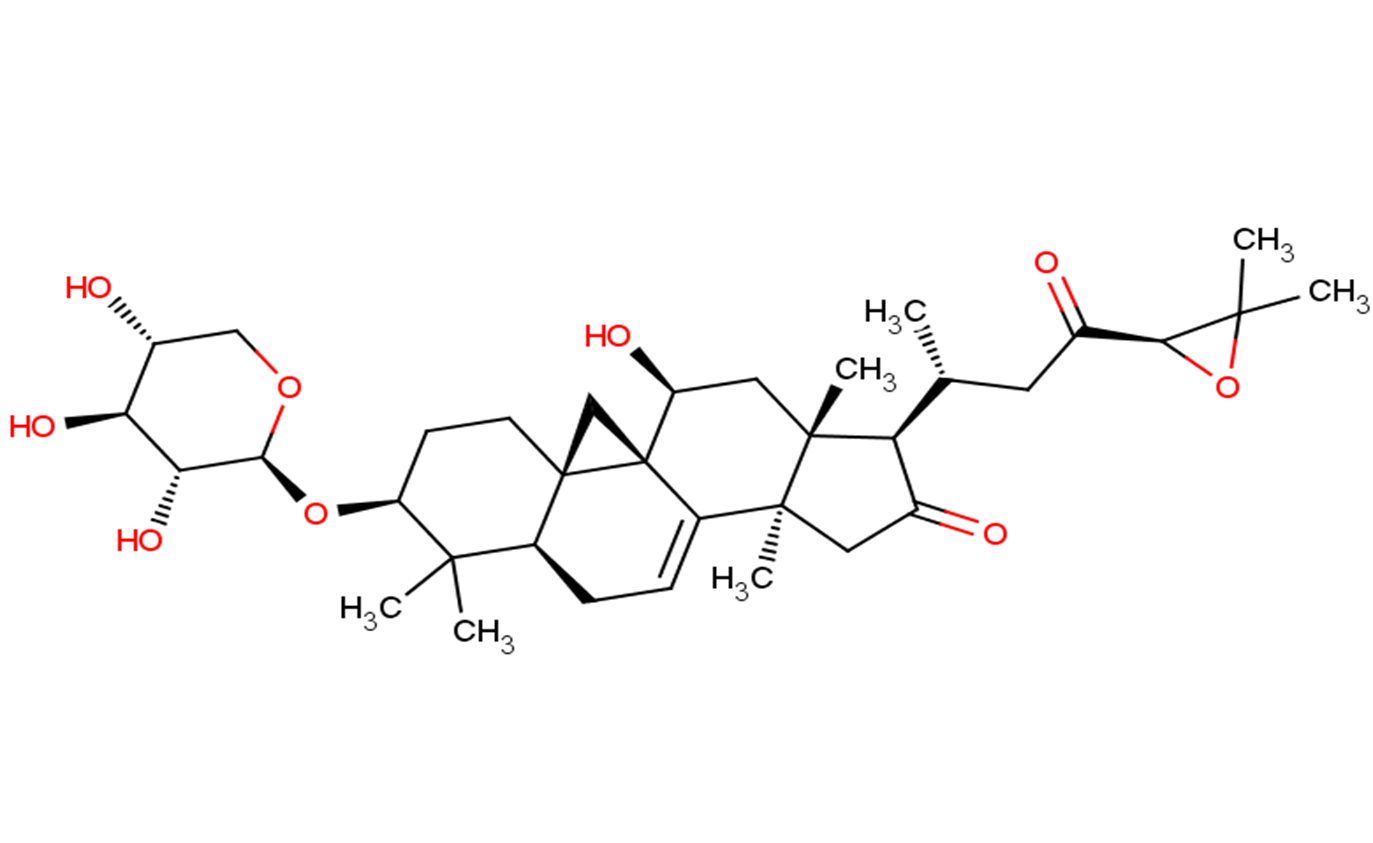
Cimicifugoside H1
CAS No. 163046-73-9
Cimicifugoside H1( —— )
Catalog No. M23728 CAS No. 163046-73-9
Cimicifugoside H1 shows the protective function to cerebral neuron during cerebral ischemia.
Purity : >98% (HPLC)
 COA
Datasheet
HNMR
HPLC
MSDS
Handing Instructions
| Size | Price / USD | Stock | Quantity |
| 5MG | 187 | In Stock |


|
| 10MG | 275 | In Stock |
|
| 25MG | 465 | In Stock |
|
| 50MG | 663 | In Stock |
|
| 100MG | 918 | In Stock |
|
| 200MG | Get Quote | In Stock |
|
| 500MG | Get Quote | In Stock |
|
| 1G | Get Quote | In Stock |
|
Biological Information
-
Product NameCimicifugoside H1
-
NoteResearch use only, not for human use.
-
Brief DescriptionCimicifugoside H1 shows the protective function to cerebral neuron during cerebral ischemia.
-
DescriptionCimicifugoside H1 shows the protective function to cerebral neuron during cerebral ischemia.
-
In Vitro——
-
In Vivo——
-
Synonyms——
-
PathwayOthers
-
TargetOther Targets
-
RecptorOthers
-
Research Area——
-
Indication——
Chemical Information
-
CAS Number163046-73-9
-
Formula Weight616.78
-
Molecular FormulaC35H52O9
-
Purity>98% (HPLC)
-
SolubilityDMSO:10 mM
-
SMILESC[C@H](CC(=O)[C@H]1C(O1)(C)C)[C@H]2C(=O)C[C@@]3([C@@]2(C[C@@H]([C@]45C3=CC[C@@H]6[C@]4(C5)CC[C@@H](C6(C)C)O[C@H]7[C@@H]([C@H]([C@@H](CO7)O)O)O)O)C)C
-
Chemical Name——
Shipping & Storage Information
-
Storage(-20℃)
-
ShippingWith Ice Pack
-
Stability≥ 2 years
Reference
1.Cycloartane triterpenoid of Cimicifuga foetida.Zhongguo Zhong Yao Za Zhi. 2009 Aug;34(15):1930-4.
molnova catalog



related products
-
Physalin X
Physalin X exhibited inhibitory activities on NO production with IC50 values of 68.50μM.
-
Maltoheptaose
Maltoheptaose is an activator of phosphorylase B for the preparation of heptulose-2-phosphate.
-
Rhodiocyanoside A
Rhodiocyanoside A has antiallergic activity, it exhibits inhibitory activity on the histamine release from rat peritoneal exudate cells sensitized with anti-DNP IgE and inhibits the PCA reaction in rats.
