


 Cart
Cart
 sales@molnova.com


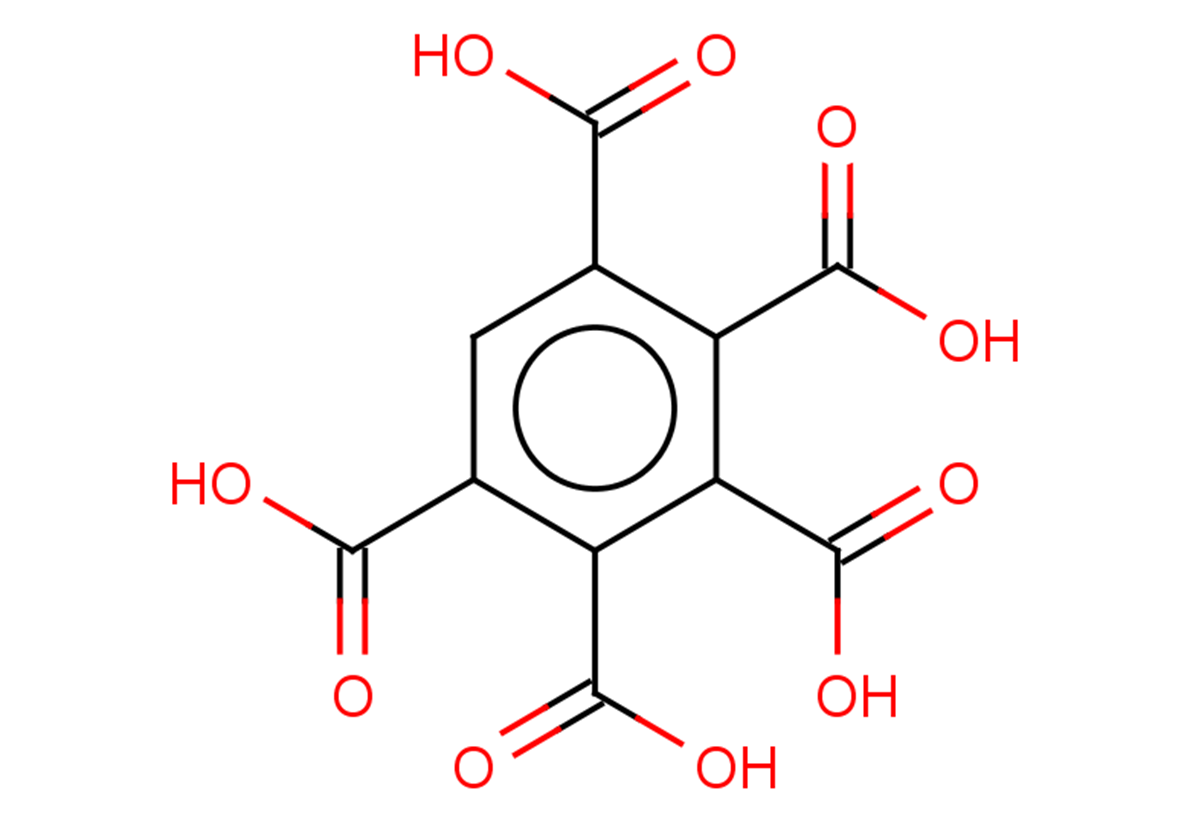
Benzenepentacarboxylic Acid
CAS No. 1585-40-6
Benzenepentacarboxylic Acid( Pentacarboxybenzene )
Catalog No. M23689 CAS No. 1585-40-6
Benzenepentacarboxylic acid is a novel fluorescent probe to detect and scavenge HO-. Benzenepentacarboxylic acid is utilized to prove and detect the generation of HO- in H2O2/TAED and H2O2/TBCC alkali systems.
Purity : >98% (HPLC)
 COA
Datasheet
HNMR
HPLC
MSDS
Handing Instructions
COA
Datasheet
HNMR
HPLC
MSDS
Handing Instructions
| Size | Price / USD | Stock | Quantity |
| 1 mL x 10 mM in DMSO | 48 | In Stock |


|
| 100MG | 47 | In Stock |
|
| 200MG | Get Quote | In Stock |
|
| 500MG | Get Quote | In Stock |
|
| 1G | Get Quote | In Stock |
|
Biological Information
-
Product NameBenzenepentacarboxylic Acid
-
NoteResearch use only, not for human use.
-
Brief DescriptionBenzenepentacarboxylic acid is a novel fluorescent probe to detect and scavenge HO-. Benzenepentacarboxylic acid is utilized to prove and detect the generation of HO- in H2O2/TAED and H2O2/TBCC alkali systems.
-
DescriptionBenzenepentacarboxylic acid is a novel fluorescent probe to detect and scavenge HO-. Benzenepentacarboxylic acid is utilized to prove and detect the generation of HO- in H2O2/TAED and H2O2/TBCC alkali systems.
-
In Vitro——
-
In Vivo——
-
SynonymsPentacarboxybenzene
-
PathwayOthers
-
TargetOther Targets
-
Recptorothers
-
Research Area——
-
Indication——
Chemical Information
-
CAS Number1585-40-6
-
Formula Weight298.16
-
Molecular FormulaC11H6O10
-
Purity>98% (HPLC)
-
SolubilityDMSO:48 mg/mL (150.93 mM)
-
SMILESOC(c1c(C(O)=O)c(C(O)=O)c(C(O)=O)c(C(O)=O)c1)=O
-
Chemical Name——
Shipping & Storage Information
-
Storage(-20℃)
-
ShippingWith Ice Pack
-
Stability≥ 2 years
Reference
1.Si F et al. Study on H2O2/TAED and H2O2/TBCC bleaching mechanism related to hydroxyl radical with a fluorescent probe. Carbohydr Polym. 2014 Mar 15;103:581-6.
molnova catalog



related products
-
Nemifitide diTFA
Nemifitide (diTFA) is is a synthetic pentapeptide antidepressant with a potential for rapid onset of action. Nemifitide (diTFA) is a peptide analog of melanocyte-inhibiting factor (MIF).
-
Hypoletin-7-O-β-D-xy...
Hypoletin-7-O-β-D-xylopyranoside is a natural compound with antioxidant activity.
-
VUT-MK142
VUT-MK142 is a new cardiomyogenic small molecule promoting the differentiation of pre-cardiac mesoderm into cardiomyocytes,which may be useful to differentiate stem cells into cardiomyocytes for cardiac repair.VUT-MK142 was identified as the most promising candidate with respect to cardiomyogenic activity.?
