


 Cart
Cart
 sales@molnova.com


INT
CAS No. 146-68-9
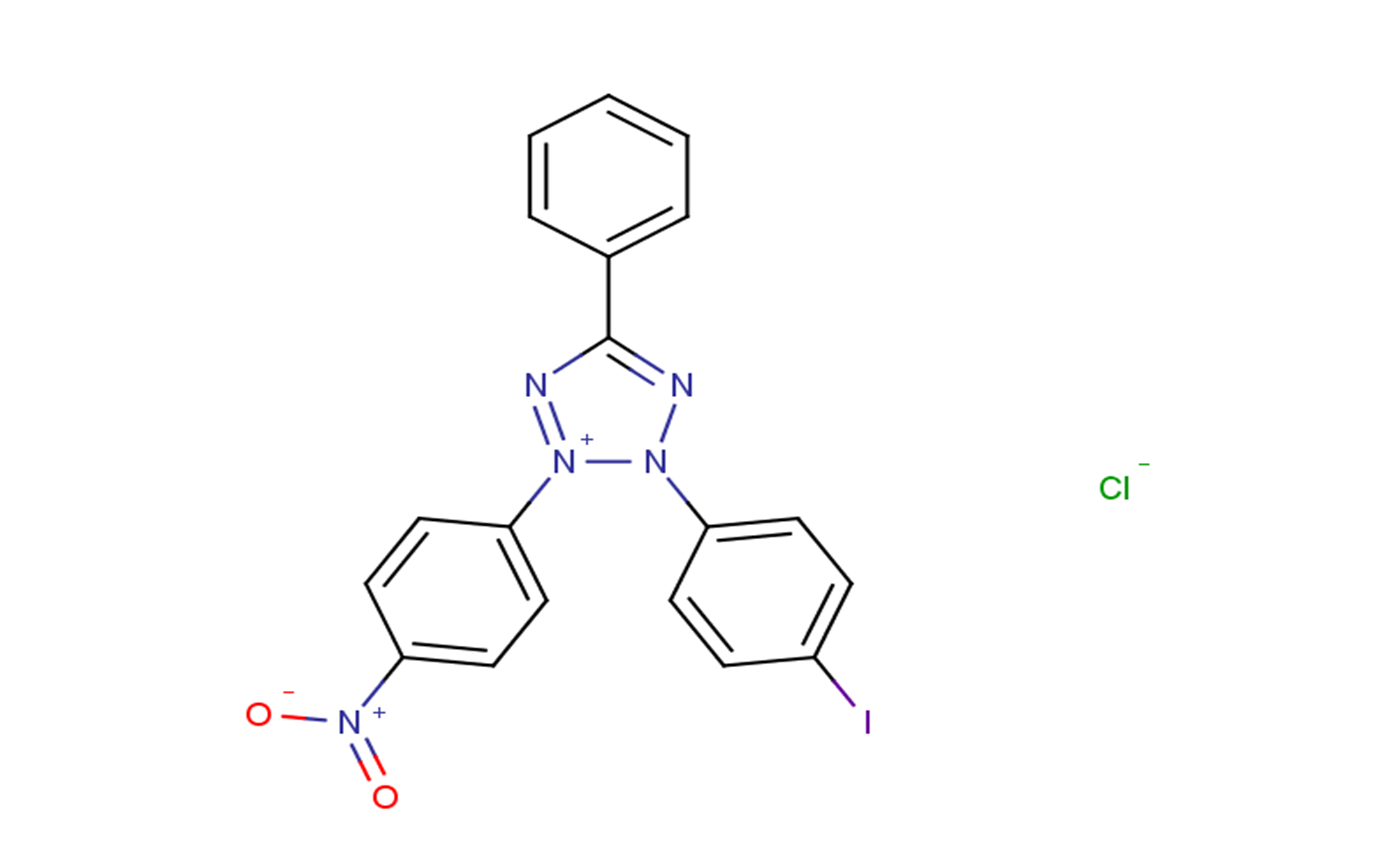
INT( Iodonitrotetrazolium chloride | p-Iodonitrotetrazolium Violet )
Catalog No. M23627 CAS No. 146-68-9
INT is used in various dehydrogenase colorimetric analysis of the electron acceptor.
Purity : >98% (HPLC)
 COA
Datasheet
HNMR
HPLC
MSDS
Handing Instructions
COA
Datasheet
HNMR
HPLC
MSDS
Handing Instructions
| Size | Price / USD | Stock | Quantity |
| 1 mL x 10 mM in DMSO | 43 | In Stock |


|
| 100MG | Get Quote | In Stock |
|
| 200MG | 28 | In Stock |
|
| 500MG | 38 | In Stock |
|
| 1G | Get Quote | In Stock |
|
Biological Information
-
Product NameINT
-
NoteResearch use only, not for human use.
-
Brief DescriptionINT is used in various dehydrogenase colorimetric analysis of the electron acceptor.
-
DescriptionINT is used in various dehydrogenase colorimetric analysis of the electron acceptor.
-
In Vitro——
-
In Vivo——
-
SynonymsIodonitrotetrazolium chloride | p-Iodonitrotetrazolium Violet
-
PathwayOthers
-
TargetOther Targets
-
RecptorOthers
-
Research Area——
-
Indication——
Chemical Information
-
CAS Number146-68-9
-
Formula Weight505.7
-
Molecular FormulaC19H13ClIN5O2
-
Purity>98% (HPLC)
-
SolubilityDMSO:42 mg/mL (83.05 mM)
-
SMILESC1=CC=C(C=C1)C2=NN([N+](=N2)C3=CC=C(C=C3)[N+](=O)[O-])C4=CC=C(C=C4)I.[Cl-]
-
Chemical Name——
Shipping & Storage Information
-
Storage(-20℃)
-
ShippingWith Ice Pack
-
Stability≥ 2 years
Reference
molnova catalog



related products
-
Enalapril IMpurity B
Organic synthesis, pharmaceutical intermediates, can be used in the synthesis of maleic acid enalaprilat (anti-hypertension).
-
2-Bromobiphenyl
2-Bromobiphenyl is a chemical compound.
-
Cyclo(Ala-Tyr)
Cyclo(Val-Tyr) is a product from the culture of Pseudomonas putida.
