


 Cart
Cart
 sales@molnova.com


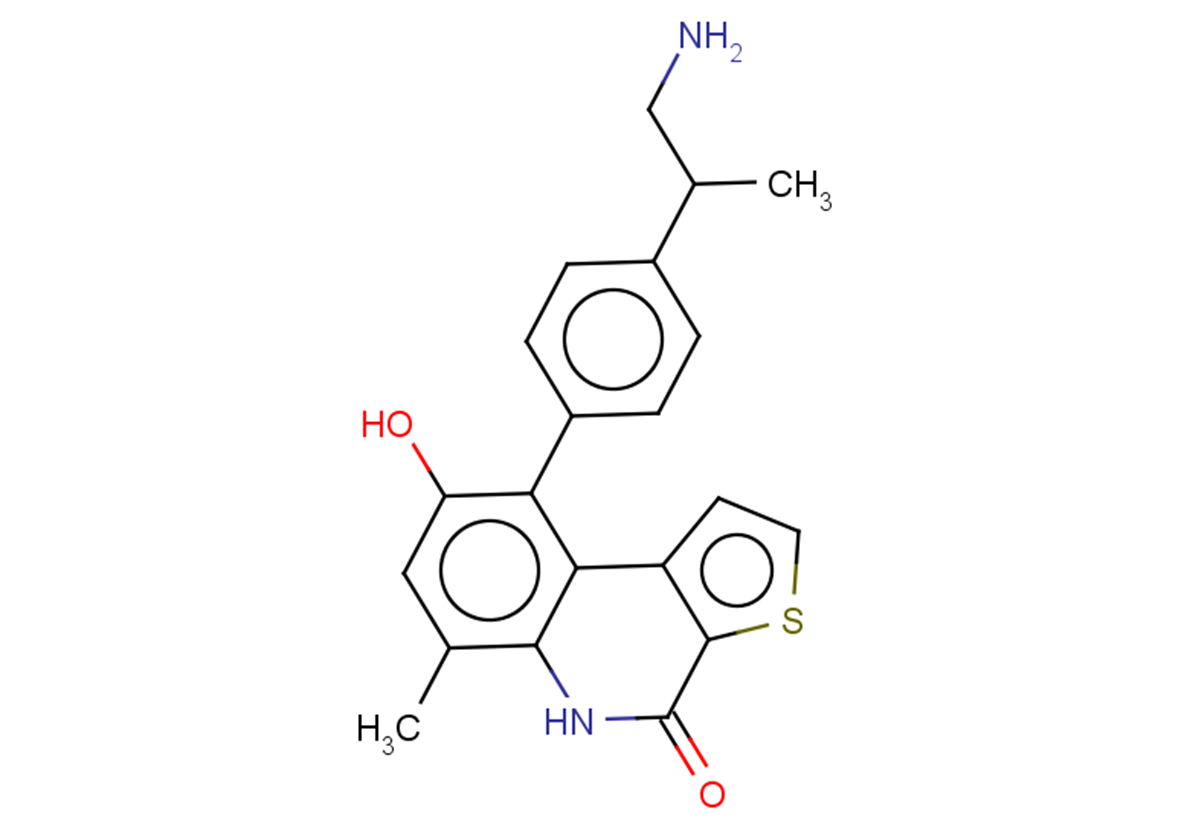
OTS514
CAS No. 1338540-63-8
OTS514( OTS514 | OTS 514 | OTS-514 | OTS514 Hydrochloride )
Catalog No. M23492 CAS No. 1338540-63-8
OTS514 is a potent TOPK inhibitor. OTS514 exhibits a growth-suppressive effect on small cell lung cancer. OTS514 effectively suppressed the growth of SCLC cell lines (IC50: 0.4 ~ 42.6 nM).
Purity : >98% (HPLC)
 COA
Datasheet
HNMR
HPLC
MSDS
Handing Instructions
COA
Datasheet
HNMR
HPLC
MSDS
Handing Instructions
| Size | Price / USD | Stock | Quantity |
| 1 mL x 10 mM in DMSO | 155 | In Stock |


|
| 5MG | 147 | In Stock |
|
| 10MG | 235 | In Stock |
|
| 25MG | 416 | In Stock |
|
| 50MG | 550 | In Stock |
|
| 100MG | 768 | In Stock |
|
| 200MG | 1014 | In Stock |
|
| 500MG | Get Quote | In Stock |
|
| 1G | Get Quote | In Stock |
|
Biological Information
-
Product NameOTS514
-
NoteResearch use only, not for human use.
-
Brief DescriptionOTS514 is a potent TOPK inhibitor. OTS514 exhibits a growth-suppressive effect on small cell lung cancer. OTS514 effectively suppressed the growth of SCLC cell lines (IC50: 0.4 ~ 42.6 nM).
-
DescriptionOTS514 is a potent TOPK inhibitor. OTS514 exhibits a growth-suppressive effect on small cell lung cancer. OTS514 effectively suppressed the growth of SCLC cell lines (IC50: 0.4 ~ 42.6 nM). Treatment with OTS514 suppressed forkhead box protein M1 (FOXM1) activity. OTS514 treatment reduced CD90-positive SCLC cells and showed a higher cytotoxic effect against lung sphere-derived CSC-like SCLC cells.
-
In VitroOTS514 (1.5625-100 nM) induces cell cycle arrest and apoptosis at nanomolar concentrations in a series of human myeloma cell lines (HMCL) and prevents outgrowth of a putative CD138+ stem cell population from multiple myeloma (MM) patient-derived peripheral blood mononuclear cells.Cell Viability Assay Cell Line:Human myeloma cell lines (MM1.S, MM1.R, RPMI 8226, 8226Dox40, KMS34, KMS34CFZ, KMS11, JJN3, LP-1, NCI H929, U266B1)Concentration:1.5625, 3.125, 6.25, 12.5, 25, 50, and 100 nM Incubation Time:72 hours Result:IC50 values ranged from 11.6 to 29.4 nM in parental cell lines, indicating a potent inhibitory effect. Only the RPMI 8226-Dox40 cell line, which overexpresses the multi-drug resistance transporter gene ABCB1, is resistant.
-
In VivoOTS514 (1-5 mg/kg; once a day for 2 weeks; intravenous administration) induces tumor regression in a xenograft model of A549 cells (TOPK-positive lung cancer cells). Animal Model:Female BALB/cSLC-nu/nu mice bearing a xenograft model of A549 cells Dosage:1, 2.5, and 5 mg/kg Administration:Intravenously treated; once every day for 2 weeks Result:Resulted in tumor growth inhibition (TGI) of 5.7, 43.3, and 65.3% on day 15, respectively, without any body weight loss.
-
SynonymsOTS514 | OTS 514 | OTS-514 | OTS514 Hydrochloride
-
PathwayOthers
-
TargetOther Targets
-
RecptorTOPK
-
Research Area——
-
Indication——
Chemical Information
-
CAS Number1338540-63-8
-
Formula Weight364.46
-
Molecular FormulaC21H20N2O2S
-
Purity>98% (HPLC)
-
SolubilityDMSO:90 mg/mL?(246.94 mM;?Need ultrasonic)
-
SMILESCC(CN)c(cc1)ccc1-c(c(-c1c2scc1)c(c(C)c1)NC2=O)c1O
-
Chemical Name——
Shipping & Storage Information
-
Storage(-20℃)
-
ShippingWith Ice Pack
-
Stability≥ 2 years
Reference
1.Ikeda Y, Park JH, Miyamoto T, Takamatsu N, Kato T, Iwasa A, Okabe S, Imai Y, Fujiwara K, Nakamura Y, Hasegawa K. T-LAK Cell-Originated Protein Kinase (TOPK) as a Prognostic Factor and a Potential Therapeutic Target in Ovarian Cancer. Clin Cancer Res. 2016 Dec 15;22(24):6110-6117. PubMed PMID: 27334838.
molnova catalog



related products
-
Malic acid
Malic acid supplementation may be useful for conservative treatment of calcium renal stone disease by virtue of its capacity to induce these effects.
-
TrxR1-IN-B19
TrxR1-IN-B19, a TrxR1 inhibitor, selectively kills gastric cancer cells by a small molecule via targeting TrxR1 and ROS-mediated ER stress activation.
-
ISX-1
ISX-1 inhibits adipogenesis and promotes osteoblastogenesis. ISX-1 can be used in studies about osteoporosis and osteopenia.
