


 Cart
Cart
 sales@molnova.com


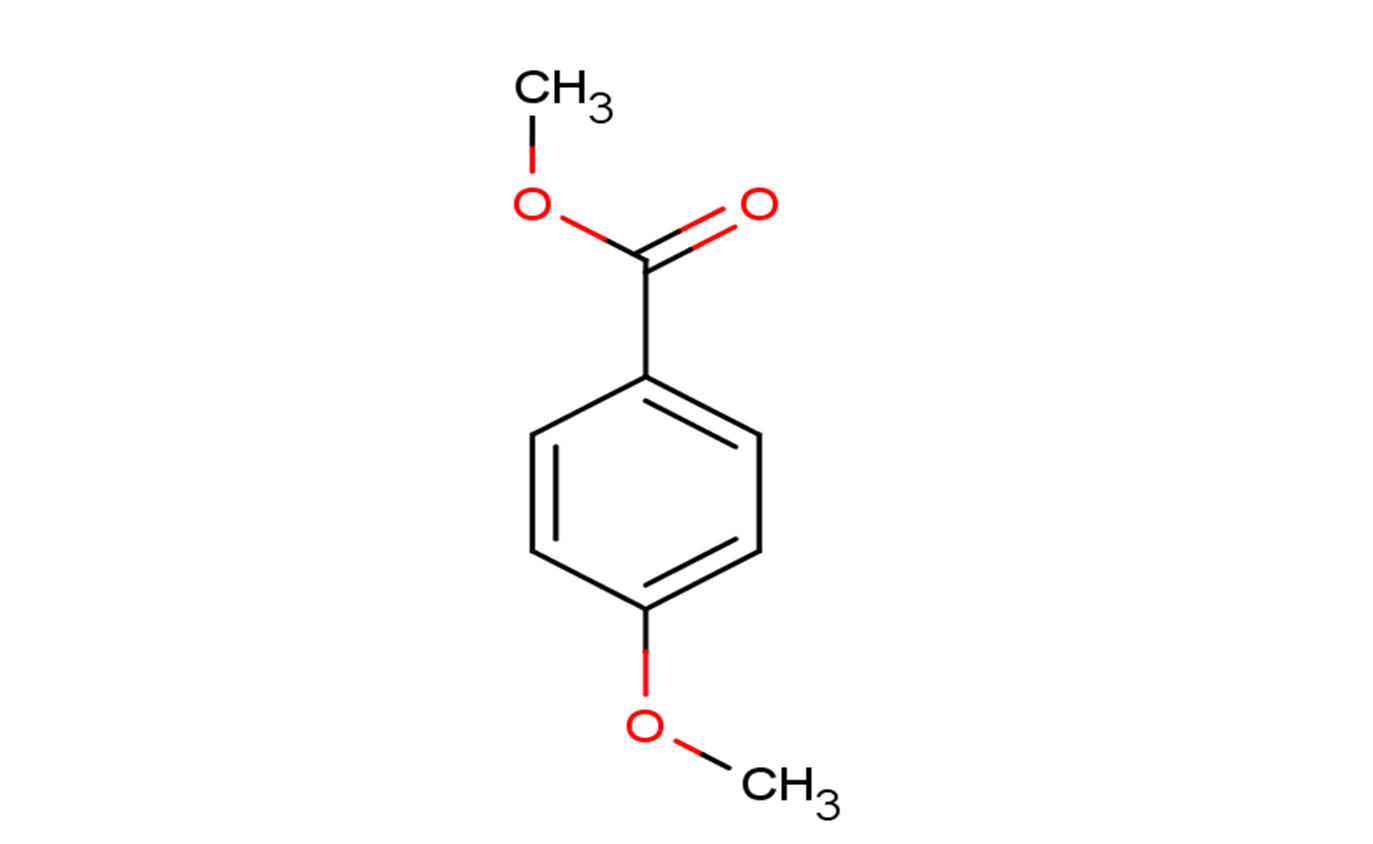
Methyl 4-anisate
CAS No. 121-98-2
Methyl 4-anisate( NSC 7324 | NSC-7324 | NSC7324 )
Catalog No. M23386 CAS No. 121-98-2
Methyl anisate is an endogenous metabolite.
Purity : >98% (HPLC)
 COA
Datasheet
HNMR
HPLC
MSDS
Handing Instructions
COA
Datasheet
HNMR
HPLC
MSDS
Handing Instructions
| Size | Price / USD | Stock | Quantity |
| 1 mL x 10 mM in DMSO | 28 | In Stock |


|
| 100MG | Get Quote | In Stock |
|
| 200MG | Get Quote | In Stock |
|
| 500MG | 35 | In Stock |
|
| 1G | Get Quote | In Stock |
|
Biological Information
-
Product NameMethyl 4-anisate
-
NoteResearch use only, not for human use.
-
Brief DescriptionMethyl anisate is an endogenous metabolite.
-
DescriptionMethyl anisate is an endogenous metabolite.
-
In Vitro——
-
In Vivo——
-
SynonymsNSC 7324 | NSC-7324 | NSC7324
-
PathwayProteasome/Ubiquitin
-
TargetEndogenous Metabolite
-
RecptorEndogenous Metabolite
-
Research Area——
-
Indication——
Chemical Information
-
CAS Number121-98-2
-
Formula Weight166.18
-
Molecular FormulaC9H10O3
-
Purity>98% (HPLC)
-
SolubilityDMSO:Soluble
-
SMILESO=C(OC)C1=CC=C(OC)C=C1
-
Chemical Name——
Shipping & Storage Information
-
Storage(-20℃)
-
ShippingWith Ice Pack
-
Stability≥ 2 years
Reference
1.Suckling DM, Sagar RL. Honeybees Apis mellifera can detect the scent of Mycobacterium tuberculosis. Tuberculosis (Edinb). 2011 Jul;91(4):327-8. doi: 10.1016/j.tube.2011.04.008. Epub 2011 May 4. PubMed PMID: 21546308.
molnova catalog



related products
-
3b-Hydroxy-5-choleno...
3b-Hydroxy-5-cholenoic acid is a monohydroxy bile acid of endogenous origin.
-
2,4-Di-tert-butylphe...
2,4-Di-tert-butylphenol is a common toxic secondary metabolite produced by various groups of organisms.
-
Atranorin
Atranorin shows significant antinociceptive and antiinflammatory activities, it has a relevant redox-active action, acting as a pro-oxidant or antioxidant agent depending on the radical.
