


 Cart
Cart
 sales@molnova.com


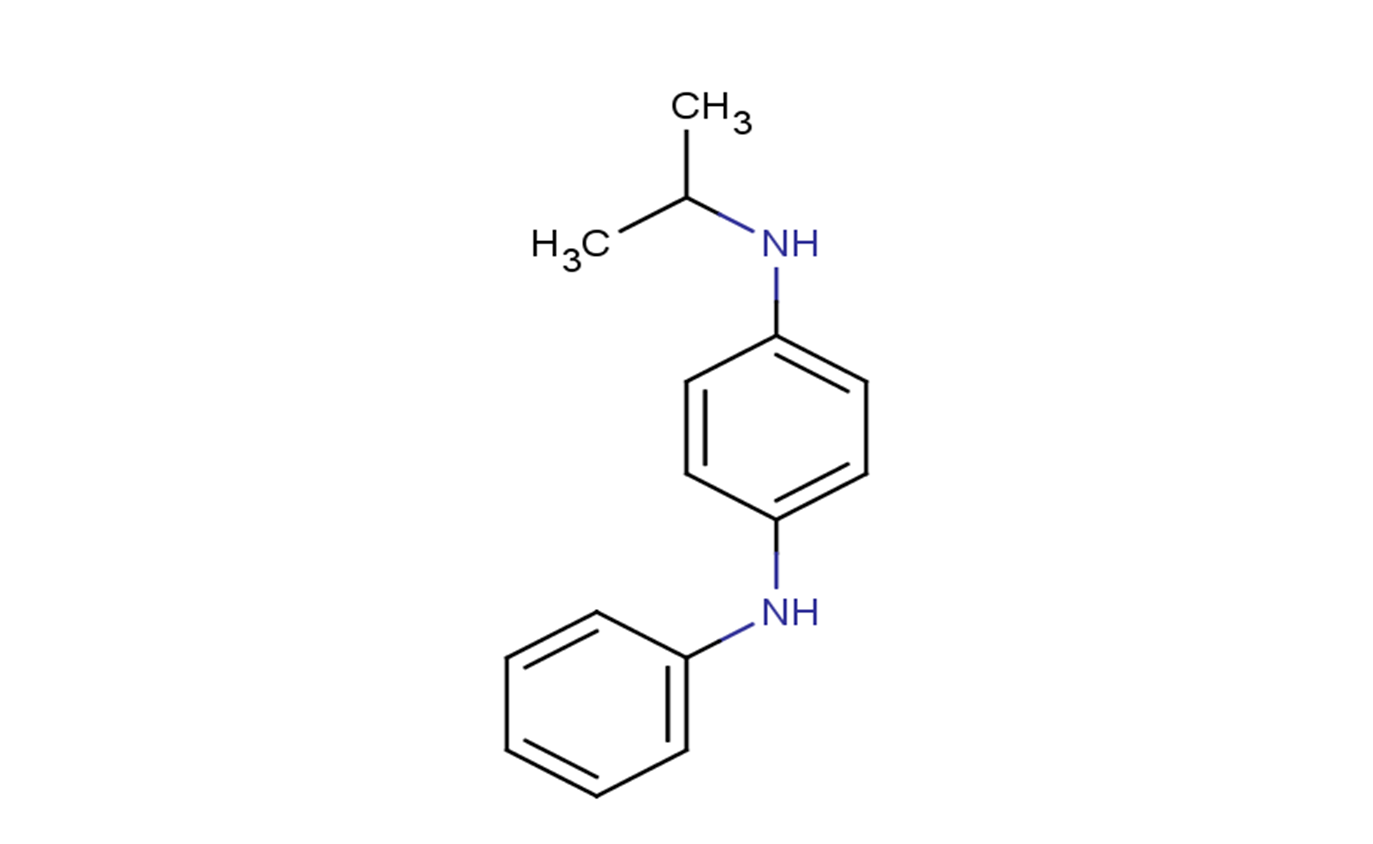
N-Isopropyl-N-Phenyl-1,4-Phenylenediamin
CAS No. 101-72-4
N-Isopropyl-N-Phenyl-1,4-Phenylenediamin( —— )
Catalog No. M23223 CAS No. 101-72-4
N-Isopropyl-N-Phenyl-1,4-Phenylenediamin is a rubber anti-aging agent.
Purity : >98% (HPLC)
 COA
Datasheet
HNMR
HPLC
MSDS
Handing Instructions
COA
Datasheet
HNMR
HPLC
MSDS
Handing Instructions
| Size | Price / USD | Stock | Quantity |
| 1 mL x 10 mM in DMSO | 28 | In Stock |


|
| 100MG | Get Quote | In Stock |
|
| 200MG | Get Quote | In Stock |
|
| 500MG | Get Quote | In Stock |
|
| 1G | 27 | In Stock |
|
Biological Information
-
Product NameN-Isopropyl-N-Phenyl-1,4-Phenylenediamin
-
NoteResearch use only, not for human use.
-
Brief DescriptionN-Isopropyl-N-Phenyl-1,4-Phenylenediamin is a rubber anti-aging agent.
-
DescriptionN-Isopropyl-N-Phenyl-1,4-Phenylenediamin is a rubber anti-aging agent.
-
In Vitro——
-
In Vivo——
-
Synonyms——
-
PathwayOthers
-
TargetOther Targets
-
RecptorOthers
-
Research Area——
-
Indication——
Chemical Information
-
CAS Number101-72-4
-
Formula Weight226.32
-
Molecular FormulaC15H18N2
-
Purity>98% (HPLC)
-
SolubilityDMSO:10 mM
-
SMILESCC(C)NC1=CC=C(C=C1)NC2=CC=CC=C2
-
Chemical Name——
Shipping & Storage Information
-
Storage(-20℃)
-
ShippingWith Ice Pack
-
Stability≥ 2 years
Reference
molnova catalog



related products
-
Gambogoic acid A
The herbs of Garcinia hanburyi Hook. f.
-
Scopine HCl
Scopine HCl salt is the metabolite of anisodine, which is a α1-adrenergic receptor agonist and used in the treatment of acute circulatory shock.
-
IL-1b (178-207) (hum...
IL-1b (178-207) (human)
