


 Cart
Cart
 sales@molnova.com


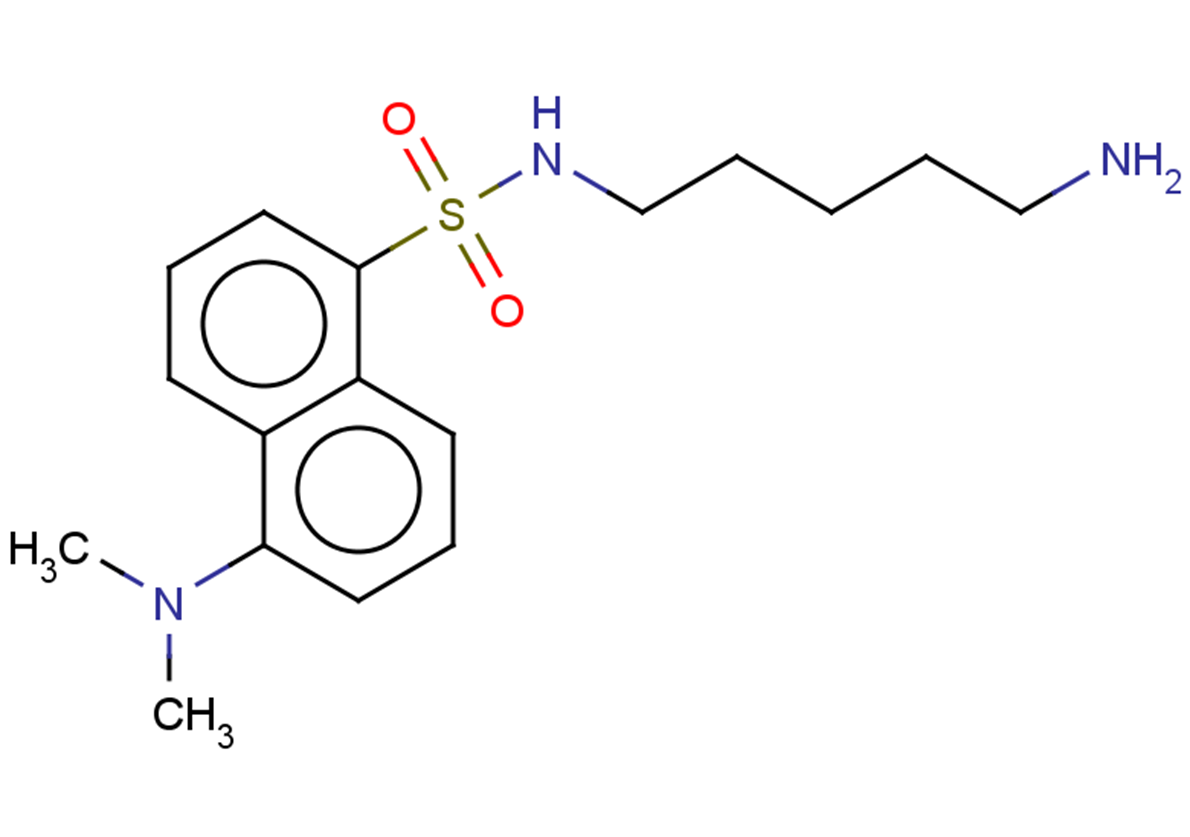
Dansylcadaverine
CAS No. 10121-91-2
Dansylcadaverine( Monodansyl cadaverine )
Catalog No. M23220 CAS No. 10121-91-2
Dansylcadaverine is a fluorescent probe.
Purity : >98% (HPLC)
 COA
Datasheet
HNMR
HPLC
MSDS
Handing Instructions
COA
Datasheet
HNMR
HPLC
MSDS
Handing Instructions
| Size | Price / USD | Stock | Quantity |
| 1 mL x 10 mM in DMSO | 29 | In Stock |


|
| 50MG | 27 | In Stock |
|
| 100MG | Get Quote | In Stock |
|
| 200MG | Get Quote | In Stock |
|
| 500MG | Get Quote | In Stock |
|
| 1G | Get Quote | In Stock |
|
Biological Information
-
Product NameDansylcadaverine
-
NoteResearch use only, not for human use.
-
Brief DescriptionDansylcadaverine is a fluorescent probe.
-
DescriptionDansylcadaverine is a fluorescent probe.
-
In VitroThe inhibitory activity of dansylcadaverine reflects its ability to serve as a substrate for transglutaminases and to block competitively the crosslinking of fibrin molecules.Dansylcadaverine, a cationic fluorescent probe binds to bacterial lipopolysaccharide and lipid A, and is displaced competitively by other compounds which possess affinity toward endotoxins.
-
In Vivo——
-
SynonymsMonodansyl cadaverine
-
PathwayOthers
-
TargetOther Targets
-
Recptorothers
-
Research Area——
-
Indication——
Chemical Information
-
CAS Number10121-91-2
-
Formula Weight335.46
-
Molecular FormulaC17H25N3O2S
-
Purity>98% (HPLC)
-
SolubilityDMSO:60 mg/mL (171.7 mM; Need ultrasonic)
-
SMILESCN(C)c1c(cccc2S(NCCCCCN)(=O)=O)c2ccc1
-
Chemical Name——
Shipping & Storage Information
-
Storage(-20℃)
-
ShippingWith Ice Pack
-
Stability≥ 2 years
Reference
1.Huff T, et al. Thymosin beta(4) serves as a glutaminyl substrate of transglutaminase. Labeling with fluorescentdansylcadaverine does not abolish interaction with G-actin. FEBS Lett. 1999 Dec 24;464(1-2):14-20.
molnova catalog



related products
-
Fibrinogen
Fibrinogen is a heterodimeric protein that can be cleaved by thrombin. Fibrinogen is a potential marker for cardiovascular disease and plays an important role in metabolism. Its absence can cause fibrinogenemia.
-
Nonaethylene glycol ...
Nonaethylene glycol monododecyl ether is a nonionic surfactant and polyethylene glycol (PEG) detergent. It can be used to form initial coalesced O/W emulsion droplets and for protein separation and purification.
-
Reserpin N-oxide
Reserpin N-oxide shows half the activity of Reserpine.
