


 Cart
Cart
 sales@molnova.com


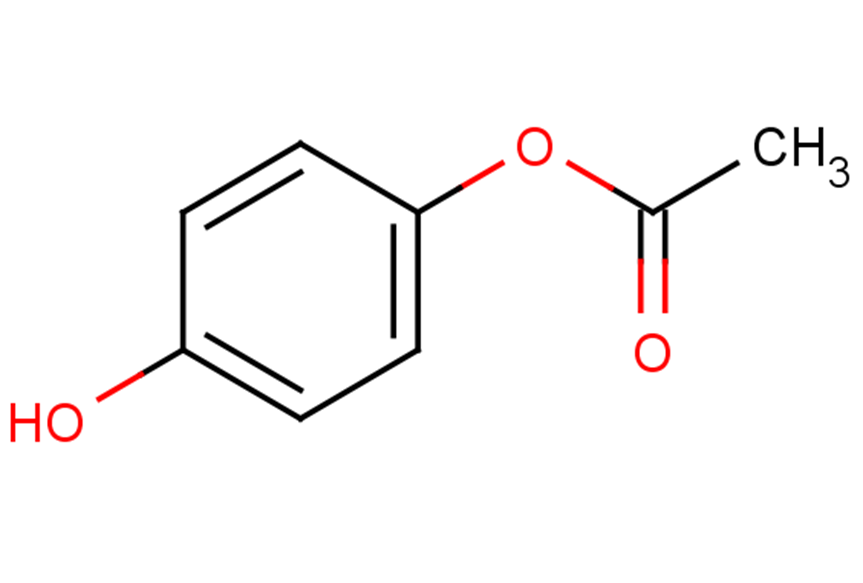
4-hydroxyphenyl acetate
CAS No. 3233-32-7
4-hydroxyphenyl acetate( —— )
Catalog No. M22549 CAS No. 3233-32-7
4-Acetoxyphenol Prevents RPE Oxidative Stress-Induced Necrosis by Functioning as an NRF2 Stabilizer4-AC is a natural antioxidant, which demonstrates strong abilities to protect RPE cells from oxidative stress-induced necrosis.
Purity : >98% (HPLC)
 COA
Datasheet
HNMR
HPLC
MSDS
Handing Instructions
COA
Datasheet
HNMR
HPLC
MSDS
Handing Instructions
| Size | Price / USD | Stock | Quantity |
| 1 mL x 10 mM in DMSO | 43 | In Stock |


|
| 100MG | 27 | In Stock |
|
| 200MG | Get Quote | In Stock |
|
| 500MG | Get Quote | In Stock |
|
| 1G | Get Quote | In Stock |
|
Biological Information
-
Product Name4-hydroxyphenyl acetate
-
NoteResearch use only, not for human use.
-
Brief Description4-Acetoxyphenol Prevents RPE Oxidative Stress-Induced Necrosis by Functioning as an NRF2 Stabilizer4-AC is a natural antioxidant, which demonstrates strong abilities to protect RPE cells from oxidative stress-induced necrosis.
-
Description4-Acetoxyphenol Prevents RPE Oxidative Stress-Induced Necrosis by Functioning as an NRF2 Stabilizer4-AC is a natural antioxidant, which demonstrates strong abilities to protect RPE cells from oxidative stress-induced necrosis. Mechanistically, 4-AC blocked the increase of cellular ROS induced by oxidative stress, and upregulated NQO1 and HO-1 genes by stabilizing and inducing the nuclear translocation of NRF2 transcription factor. The NQO1, HO-1, and NRF2 were further shown to be required for 4-AC protection of RPE cells from death induced by tBHP. The tBHQ, an NRF2 stabilizer, consistently mimicked the protective effect of 4-AC against tBHP-induced RPE death.
-
In Vitro4-Hydroxyphenyl acetate (5 μM; 24 h) protects retinal pigment epithelial (RPE) cells from oxidative stress-induced cell death.4-Hydroxyphenyl acetate (5 μM; 24 h; ARPE-19 cells) inhibits the increase of ROS in response to oxidative stress and up-regulated the expression of cytoprotective genes including NQO1 and HO-1 genes. Cell Viability Assay Cell Line:ARPE-19 cells Concentration:5 μM Incubation Time:24 hours Result:Protected up to 89%, 92%, and 90% of ARPE-19 cells exposed to 100, 200, and 300 μM tBHP, respectively.
-
In Vivo——
-
Synonyms——
-
PathwayNuclear Receptor/Transcription Factor
-
TargetKeap1-Nrf2
-
RecptorNRF2
-
Research Area——
-
Indication——
Chemical Information
-
CAS Number3233-32-7
-
Formula Weight152.15
-
Molecular FormulaC8H8O3?
-
Purity>98% (HPLC)
-
SolubilityIn Vitro:?DMSO : 100 mg/mL (657.25 mM)
-
SMILESCC(=O)Oc1ccc(O)cc1
-
Chemical Name——
Shipping & Storage Information
-
Storage(-20℃)
-
ShippingWith Ice Pack
-
Stability≥ 2 years
Reference
1. Jakub H , Alexander K , Julia C , et al. 4-Acetoxyphenol Prevents RPE Oxidative Stress–Induced Necrosis by Functioning as an NRF2 Stabilizer[J]. Invest Ophthalmol Vis, 2015, 56(9):5048-5059.
molnova catalog



related products
-
CPUY192018
CPUY192018 is an inhibitor of Keap1-Nrf2 protein-protein interactions and shows cytoprotective effects in NCM460 colon cells.CPUY192018 inhibits glycolysis, enhances resistance to oxidative stress, and can be used to study mitochondrial autophagy.
-
ML-385
A first-in-class small molecule inhibitor of NRF2 that binds to Neh1 DNA binding domain of NRF2 (IC50=1.9 uM) and inhibits the downstream target gene expression.
-
TBHQ
Tert-butylhydroquinone (tBHQ) is an antioxidant that induces an antioxidant response through the redox-sensitive transcription factor Nrf2.
