


 Cart
Cart
 sales@molnova.com


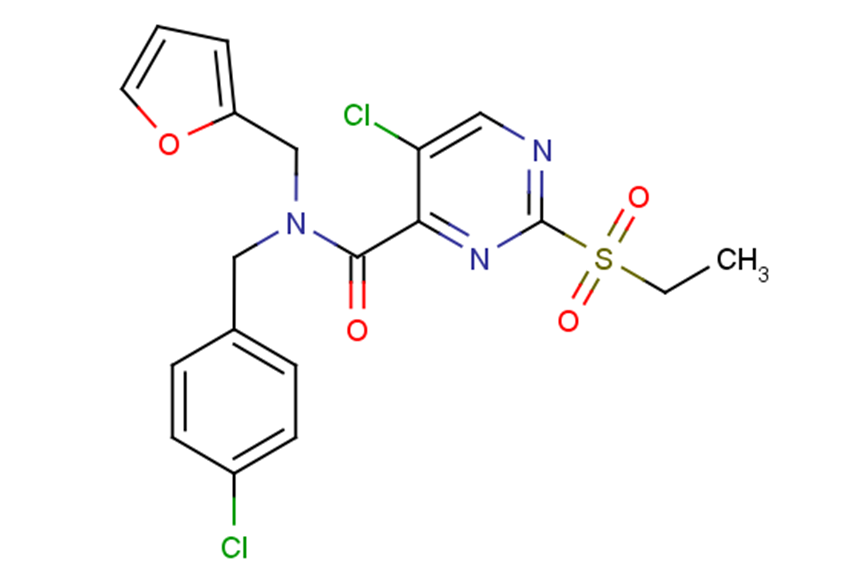
ZAP-180013
CAS No. 873080-25-2
ZAP-180013( —— )
Catalog No. M22545 CAS No. 873080-25-2
ZAP-180013 is an inhibitor of zeta-chain-associated protein kinase 70 (ZAP70,IC50 : 1.8 μM).
Purity : >98% (HPLC)
 COA
Datasheet
HNMR
HPLC
MSDS
Handing Instructions
COA
Datasheet
HNMR
HPLC
MSDS
Handing Instructions
| Size | Price / USD | Stock | Quantity |
| 1 mL x 10 mM in DMSO | 67 | In Stock |


|
| 5MG | 61 | In Stock |
|
| 10MG | 93 | In Stock |
|
| 25MG | 185 | In Stock |
|
| 50MG | 346 | In Stock |
|
| 100MG | 555 | In Stock |
|
| 200MG | Get Quote | In Stock |
|
| 500MG | Get Quote | In Stock |
|
| 1G | Get Quote | In Stock |
|
Biological Information
-
Product NameZAP-180013
-
NoteResearch use only, not for human use.
-
Brief DescriptionZAP-180013 is an inhibitor of zeta-chain-associated protein kinase 70 (ZAP70,IC50 : 1.8 μM).
-
DescriptionZAP-180013 is an inhibitor of zeta-chain-associated protein kinase 70 (ZAP70,IC50 : 1.8 μM).
-
In Vitro——
-
In Vivo——
-
Synonyms——
-
PathwayProteasome/Ubiquitin
-
TargetTyrosinase
-
RecptorZAP70
-
Research Area——
-
Indication——
Chemical Information
-
CAS Number873080-25-2
-
Formula Weight454.33
-
Molecular FormulaC19H17Cl2N3O4S
-
Purity>98% (HPLC)
-
SolubilityDMSO:250 mg/mL (550.26 mM; Need ultrasonic)
-
SMILESCCS(=O)(=O)c1ncc(Cl)c(n1)C(=O)N(Cc1ccco1)Cc1ccc(Cl)cc1
-
Chemical Name——
Shipping & Storage Information
-
Storage(-20℃)
-
ShippingWith Ice Pack
-
Stability≥ 2 years
Reference
1.Patrick R Visperas, et al. Identification of Inhibitors of the Association of ZAP-70 With the T Cell Receptor by High-Throughput Screen. SLAS Discov. 2017 Mar;22(3):324-331.
molnova catalog



related products
-
Endoxifen E-isomer h...
Endoxifen, a tamoxifen metabolite, is effective specific Estrogen Response Modifier (SERM).
-
Hexylresorcinol
Hexylresorcinol is an organic compound with local anaesthetic, antiseptic and anthelmintic properties, is a potent inhibitor of mushroom tyrosinase.
-
Tyrosinase-IN-2
Tyrosinase-IN-2 (compound 67) is a potent inhibitor of tyrosinase, a copper-containing metalloenzyme crucial for the rate-limiting step in melanin biosynthesis and enzymatic browning processes.
