


 Cart
Cart
 sales@molnova.com


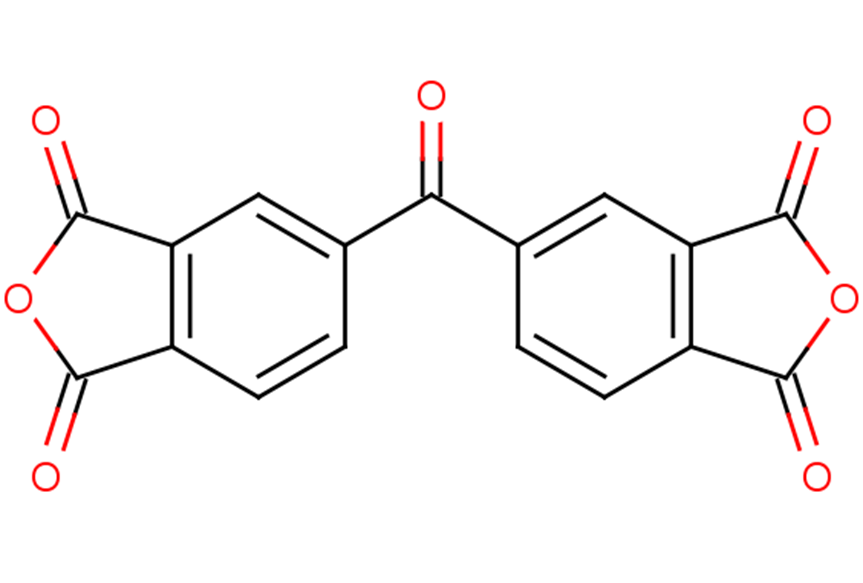
3,3',4,4'-Benzophenonetetracarboxylic dianhydride
CAS No. 2421-28-5
3,3',4,4'-Benzophenonetetracarboxylic dianhydride( —— )
Catalog No. M22536 CAS No. 2421-28-5
3,3',4,4'-Benzophenonetetracarboxylic dianhydride is a chemical compound.
Purity : >98% (HPLC)
 COA
Datasheet
HNMR
HPLC
MSDS
Handing Instructions
COA
Datasheet
HNMR
HPLC
MSDS
Handing Instructions
| Size | Price / USD | Stock | Quantity |
| 1 mL x 10 mM in DMSO | 28 | In Stock |


|
| 100MG | Get Quote | In Stock |
|
| 200MG | Get Quote | In Stock |
|
| 500MG | Get Quote | In Stock |
|
| 1G | 27 | In Stock |
|
Biological Information
-
Product Name3,3',4,4'-Benzophenonetetracarboxylic dianhydride
-
NoteResearch use only, not for human use.
-
Brief Description3,3',4,4'-Benzophenonetetracarboxylic dianhydride is a chemical compound.
-
Description3,3',4,4'-Benzophenonetetracarboxylic dianhydride is a chemical compound.
-
In Vitro——
-
In Vivo——
-
Synonyms——
-
PathwayOthers
-
TargetOther Targets
-
RecptorOthers
-
Research Area——
-
Indication——
Chemical Information
-
CAS Number2421-28-5
-
Formula Weight322.23
-
Molecular FormulaC17H6O7
-
Purity>98% (HPLC)
-
Solubility——
-
SMILESO=C(c1ccc2C(=O)OC(=O)c2c1)c1ccc2C(=O)OC(=O)c2c1
-
Chemical Name——
Shipping & Storage Information
-
Storage(-20℃)
-
ShippingWith Ice Pack
-
Stability≥ 2 years
Reference
molnova catalog



related products
-
GAD65 (78–97)
GAD65 (78–97)
-
Soraprazan
Soraprazan is a reversible, and fast-acting gastric H+/K+ ATPase inhibitor.
-
IMM-01
IMM-01 is a novel class of small-molecule agonists of the mammalian Diaphanous (mDia)-related formins, which act downstream of Rho GTPases to assemble actin filaments, and their organization with microfilaments to establish and maintain cell polarity during migration and asymmetric division.
