


 Cart
Cart
 sales@molnova.com


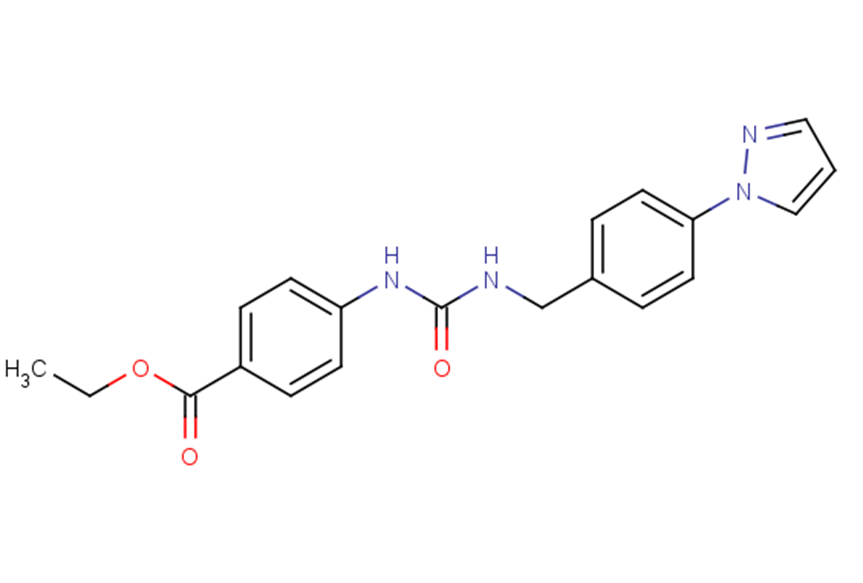
Z433927330
CAS No. 1005883-72-6
Z433927330( —— )
Catalog No. M22458 CAS No. 1005883-72-6
Z433927330 is a potent and selective Aquaporin-7 (AQP7) inhibitor(IC50s of 0.2).Z433927330 inhibits glycerol permeability(IC50 : 0.6 μM).
Purity : >98% (HPLC)
 COA
Datasheet
HNMR
HPLC
MSDS
Handing Instructions
COA
Datasheet
HNMR
HPLC
MSDS
Handing Instructions
| Size | Price / USD | Stock | Quantity |
| 1 mL x 10 mM in DMSO | 93 | In Stock |


|
| 5MG | 88 | In Stock |
|
| 10MG | 141 | In Stock |
|
| 25MG | 278 | In Stock |
|
| 50MG | 400 | In Stock |
|
| 100MG | 551 | In Stock |
|
| 200MG | 728 | In Stock |
|
| 500MG | Get Quote | In Stock |
|
| 1G | Get Quote | In Stock |
|
Biological Information
-
Product NameZ433927330
-
NoteResearch use only, not for human use.
-
Brief DescriptionZ433927330 is a potent and selective Aquaporin-7 (AQP7) inhibitor(IC50s of 0.2).Z433927330 inhibits glycerol permeability(IC50 : 0.6 μM).
-
DescriptionZ433927330 is a potent and selective Aquaporin-7 (AQP7) inhibitor(IC50s of 0.2).Z433927330 inhibits glycerol permeability(IC50 : 0.6 μM).
-
In Vitro——
-
In Vivo——
-
Synonyms——
-
PathwayOthers
-
TargetOther Targets
-
RecptormAQP7|mAQP3|mAQP9
-
Research Area——
-
Indication——
Chemical Information
-
CAS Number1005883-72-6
-
Formula Weight364.4
-
Molecular FormulaC20H20N4O3
-
Purity>98% (HPLC)
-
SolubilityDMSO:280 mg/mL (768.39 mM)
-
SMILESCCOC(=O)c1ccc(NC(=O)NCc2ccc(cc2)-n2cccn2)cc1
-
Chemical Name——
Shipping & Storage Information
-
Storage(-20℃)
-
ShippingWith Ice Pack
-
Stability≥ 2 years
Reference
1.Z433927330, et al. Identification and characterization of potent and selective aquaporin-3 and aquaporin-7 inhibitors. J Biol Chem. 2019 May 3;294(18):7377-7387.
molnova catalog



related products
-
Thionin acetate
Thionin acetate is a metachromatic cationic histology dye used in biological staining widely.
-
Sesamoside
Sesamoside has antinociceptive activity.
-
Axitinib-13C-d3
Axitinib-13C,d3 is a 13C-labeled and deuterium labeled Axitinib. Axitinib is a multi-targeted tyrosine kinase inhibitor with IC50s of 0.1, 0.2, 0.1-0.3, 1.6 nM for VEGFR1, VEGFR2, VEGFR3 andPDGFRβ, respectively.
