


 Cart
Cart
 sales@molnova.com


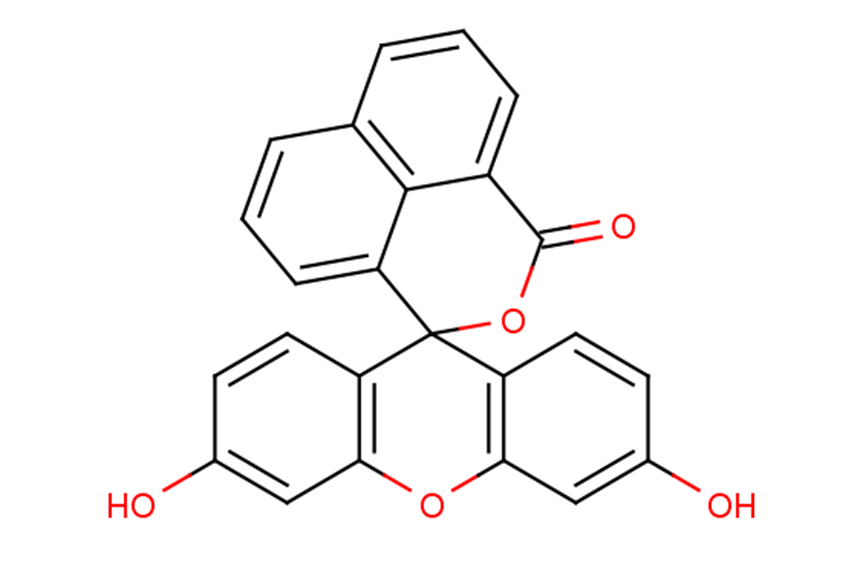
Resorcinolnaphthalein
CAS No. 41307-63-5
Resorcinolnaphthalein( —— )
Catalog No. M22438 CAS No. 41307-63-5
Resorcinolnaphthalein is a specific enhancer of angiotensin-converting enzyme 2 (ACE2) (EC50 value of 19.5 μM). ACE2 activity in a dose-dependent manner enhanced by Resorcinolnaphthalein (100 μM) and XNT (EC50 values of 19.5 μM and 20.1 μM, respectively).
Purity : >98% (HPLC)
 COA
Datasheet
HNMR
HPLC
MSDS
Handing Instructions
COA
Datasheet
HNMR
HPLC
MSDS
Handing Instructions
| Size | Price / USD | Stock | Quantity |
| 1 mL x 10 mM in DMSO | 41 | In Stock |


|
| 10MG | 37 | In Stock |
|
| 25MG | 61 | In Stock |
|
| 100MG | Get Quote | In Stock |
|
| 200MG | Get Quote | In Stock |
|
| 500MG | Get Quote | In Stock |
|
| 1G | Get Quote | In Stock |
|
Biological Information
-
Product NameResorcinolnaphthalein
-
NoteResearch use only, not for human use.
-
Brief DescriptionResorcinolnaphthalein is a specific enhancer of angiotensin-converting enzyme 2 (ACE2) (EC50 value of 19.5 μM). ACE2 activity in a dose-dependent manner enhanced by Resorcinolnaphthalein (100 μM) and XNT (EC50 values of 19.5 μM and 20.1 μM, respectively).
-
DescriptionResorcinolnaphthalein is a specific enhancer of angiotensin-converting enzyme 2 (ACE2) (EC50 value of 19.5 μM). ACE2 activity in a dose-dependent manner enhanced by Resorcinolnaphthalein (100 μM) and XNT (EC50 values of 19.5 μM and 20.1 μM, respectively).ACE2 is an effective enzyme in attenuating fibrosis and structural remodeling. Enhancement of ACE2 activity has beneficial effects on the cardiovascular system and protects against hypertension induced pathophysiology.resorcinolnaphthalein enhanced ACE2 activity in a dose-dependent manner. Acute in vivo administration of the xanthenone resulted in a dose-dependent transient and robust decrease in blood pressure (at 10 mg/kg, spontaneously hypertensive rats decreased 71+/-9 mm Hg and Wistar-Kyoto rats decreased 21+/-8 mm Hg; P<0.05). Chronic infusion of the xanthenone (120 microg/day) resulted in a modest decrease in the spontaneously hypertensive rat blood pressure (17 mm Hg; 2-way ANOVA; P<0.05), whereas it had no effect in Wistar-Kyoto rats. Strikingly, the decrease in blood pressure was also associated with improvements in cardiac function and reversal of myocardial, perivascular, and renal fibrosis in the spontaneously hypertensive rats.
-
In VitroResorcinolnaphthalein (100 μM) andXNT enhances ACE2 activity in a dose-dependent manner with EC50 values of 19.5 μM and 20.1 μM, respectively.ACE2 is an effective enzyme in attenuating fibrosis and structural remodeling. Enhancement of ACE2 activity has beneficial effects on the cardiovascular system and protects against hypertension induced pathophysiology.
-
In Vivo——
-
Synonyms——
-
PathwayEndocrinology/Hormones
-
TargetRAAS
-
RecptorACE2
-
Research Area——
-
Indication——
Chemical Information
-
CAS Number41307-63-5
-
Formula Weight382.36
-
Molecular FormulaC24H14O5
-
Purity>98% (HPLC)
-
SolubilityDMSO : 120 mg/mL?(313.84 mM;?Need ultrasonic)
-
SMILESOc1ccc2c(Oc3cc(O)ccc3C22OC(=O)c3cccc4cccc2c34)c1
-
Chemical Name——
Shipping & Storage Information
-
Storage(-20℃)
-
ShippingWith Ice Pack
-
Stability≥ 2 years
Reference



-
Irbesartan
Irbesartan is an angiotensin receptor blocker (ARB) used mainly for the treatment of hypertension.
-
N-Acetyl-Ser-Asp-Lys...
Acetyl Ser-Asp-Lys-Pro is formed in bone marrow cells by enzymatic processing of thymosin β4. It inhibits the entry of pluripotent hemopoietic stem cells into S-phase of the cell cycle and protects against Ara-C lethality in mice.N-Acetyl-Ser-Asp-Lys-Pro (AcSDKP) is a specific substrate for the N-terminal site of ACE and increases 5-fold during ACE inhibitor therapy.??AcSDKP inhibited the proliferation of isolated cardiac fibroblasts (P<0.05) but significantly stimulated the proliferation of vascular smooth muscle cells.?
-
SAG hydrochloride
SAG hydrochloride is a chlorobenzothiophene-containing compound which acts as a SMO agonist.
