


 Cart
Cart
 sales@molnova.com


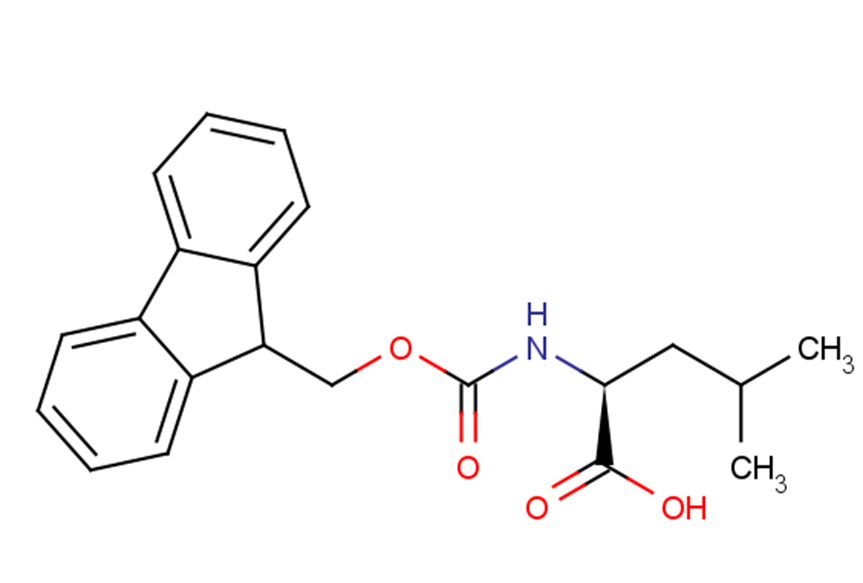
NPC 15199
CAS No. 35661-60-0
NPC 15199( FMOC-L-Leucine )
Catalog No. M22202 CAS No. 35661-60-0
NPC 15199 is an anti-inflammatory agent.NPC-15199 [(N-(9-fluorenylmethoxycarbonyl)L-leucine)], a novel anti-inflammatory agent, increases intracellular Ca2+ concentration ([Ca2+]i) in human bladder female transitional cancer (BFTC) cells.
Purity : >98% (HPLC)
 COA
Datasheet
HNMR
HPLC
MSDS
Handing Instructions
COA
Datasheet
HNMR
HPLC
MSDS
Handing Instructions
| Size | Price / USD | Stock | Quantity |
| 5MG | 35 | In Stock |


|
| 50MG | Get Quote | In Stock |
|
| 100MG | Get Quote | In Stock |
|
| 200MG | Get Quote | In Stock |
|
| 500MG | Get Quote | In Stock |
|
| 1G | Get Quote | In Stock |
|
Biological Information
-
Product NameNPC 15199
-
NoteResearch use only, not for human use.
-
Brief DescriptionNPC 15199 is an anti-inflammatory agent.NPC-15199 [(N-(9-fluorenylmethoxycarbonyl)L-leucine)], a novel anti-inflammatory agent, increases intracellular Ca2+ concentration ([Ca2+]i) in human bladder female transitional cancer (BFTC) cells.
-
DescriptionNPC 15199 is an anti-inflammatory agent.NPC-15199 [(N-(9-fluorenylmethoxycarbonyl)L-leucine)], a novel anti-inflammatory agent, increases intracellular Ca2+ concentration ([Ca2+]i) in human bladder female transitional cancer (BFTC) cells. Using fura-2 as a Ca2+ probe, NPC-15199 (0.1-2 mM) was found to increase [Ca2+]i concentration-dependently. The response saturated at 2-5 mM NPC-15199. The [Ca2+]i increase comprised an initial rise, a slow decay, and a plateau. Ca2+ removal partly inhibited the Ca2+ signals. In Ca2+-free medium, pretreatment with 1 mM NPC-15199 abolished the [Ca2+]i increase induced by 1 microM thapsigargin (an endoplasmic reticulum Ca2+ pump inhibitor); and after pretreatment with thapsigargin, NPC-15199-induced Ca2+ release was dramatically inhibited. This indicates that NPC-15199 released internal Ca2+ mostly from the endoplasmic reticulum. Adding 3 mM Ca2+ increased [Ca2+]i in cells pretreated with 1 mM NPC-15199 in Ca2+-free medium. Together, the findings suggest that in BFTC bladder cancer cells, NPC-15199 induced Ca2+ release from the endoplasmic reticulum and activating Ca2+ entry.
-
In Vitro——
-
In Vivo——
-
SynonymsFMOC-L-Leucine
-
PathwayOthers
-
TargetOther Targets
-
RecptorAnti-inflammatory
-
Research Area——
-
Indication——
Chemical Information
-
CAS Number35661-60-0
-
Formula Weight353.41
-
Molecular FormulaC21H23NO4
-
Purity>98% (HPLC)
-
SolubilityIn Vitro:?DMSO : 50 mg/mL (141.48 mM)
-
SMILESCC(C)([H])C[C@]([H])(NC(=O)OC[C@@]2([H])c1ccccc1c3ccccc23)C(=O)O
-
Chemical Name——
Shipping & Storage Information
-
Storage(-20℃)
-
ShippingWith Ice Pack
-
Stability≥ 2 years
Reference
1. Jan C R , Yu C C , Huang J K . NPC-15199, a novel anti-inflammatory agent, mobilizes intracellular Ca2+ in bladder female transitional carcinoma (BFTC) cells[J]. Chinese Journal of Physiology, 2000, 43(1):29-33.
molnova catalog



related products
-
Senecivernine N-oxid...
The herbs of Senecio inaequidens D.C
-
3a,3b,3c-tri-O-methy...
3a,3b,3c-tri-O-methylcyperusphenol?D
-
Neoartanin
Neoartanin is a betaine pigment isolated from the fresh root of red beet with antioxidant capacity.
